[Seoul District News] Seongdong-gu Officially Certified as a 'Fair Trade City'... Seongbuk-gu Issues Integrity Alert Ahead of Chuseok Holiday... Jongno-gu Creates an Easy-to-Understand 'Development Activity Permit Guide'...
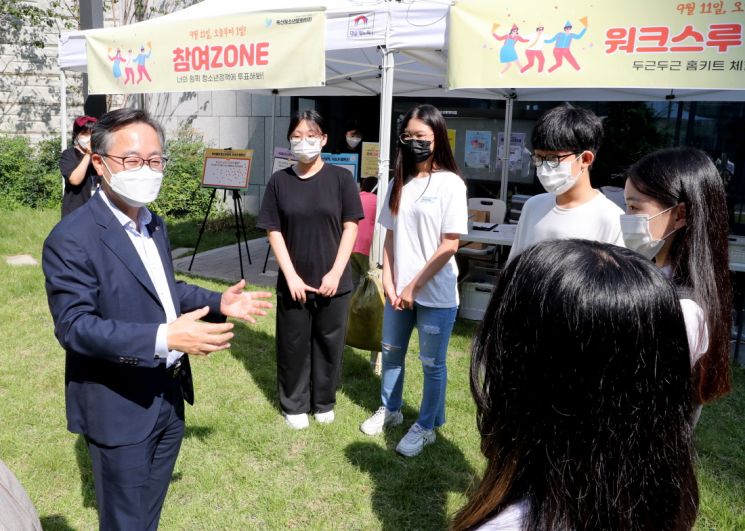
[Asia Economy Reporter Park Jong-il] Geumcheon-gu (Mayor Yoo Seong-hoon) held an opening ceremony for the Doksan Youth Culture House, a dedicated space for youth, at 2 p.m. on the 11th.
The ceremony was held online considering COVID-19 social distancing measures, sharing introductions to the Culture House facilities and projects, congratulatory messages from youth and related organizations, congratulatory performances by youth clubs, and activity videos.
The Doksan Youth Culture House is the first youth training facility established in Geumcheon-gu, created in July with a total floor area of 336㎡, spanning from basement level 1 to ground level 1. The basement floor includes a self-governing activity room, studio, and counseling room, while the first floor consists of free-use spaces and a karaoke room, designed as spaces for youth culture and leisure.
The Doksan Youth Culture House plans to operate various programs and youth participation activities tailored to youth needs, including ▲GBS Geumcheon-gu Youth Broadcasting Station ▲7th Street Flea Market ▲Neighborhood Walk ▲Newsports Club Visiting Schools ▲Youth Operating Committee ▲Youth Learning Mentoring ▲Geumcheon Art School ▲Imagination Hobby Class, among others.
Program schedules may change depending on future social distancing situations and can be checked via the Doksan Youth Culture House Facebook and KakaoTalk channels.
From September 11 to 17, the Doksan Youth Culture House is running special programs during its opening week. These include online programs using experience kits such as ‘Knock Knock Knock! Making Traditional Doorplates!!’ and ‘Making My Own Calligraphy Grip Tok,’ as well as visitor participation zones and a stamp tour event.
Yoo Seong-hoon, Mayor of Geumcheon-gu, said, “The Doksan Youth Culture House is meaningful as the first youth training facility established in Geumcheon-gu, serving as a space to support and encourage the dreams of youth.” He added, “I hope it will become a hot place where youth can rest, learn, and play, and a hub space where they can freely nurture their dreams.”
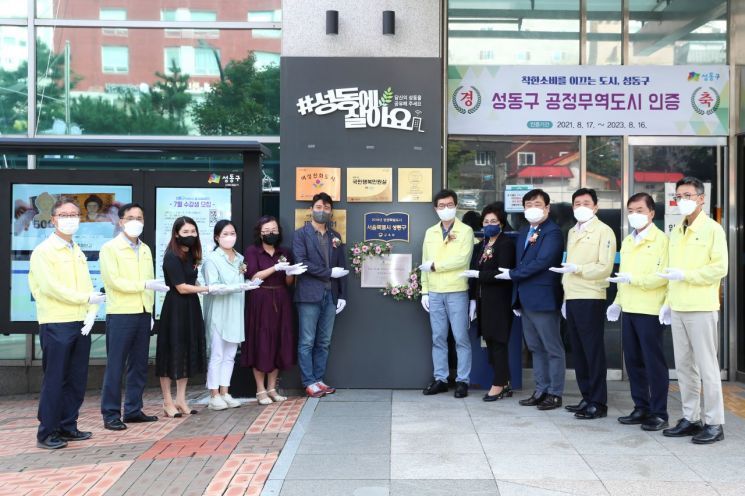
Seongdong-gu (Mayor Jeong Won-oh) received Fair Trade City certification (certification period: ’21.8.17~‘23.8.16) from the Korea Fair Trade Village Committee last month and held a certification plaque ceremony outside the Seongdong-gu Office building on the 9th of this month.
Fair trade refers to ethical trade that pays producers a fair price and supplies consumers with quality products. It emerged as a trade form and social movement to address issues such as wealth concentration, environmental destruction, labor exploitation, and human rights violations caused by unfair trade structures between developed and developing countries.
The Fair Trade City certification system is granted by the Korea Fair Trade Village Committee, the Korean certification body of the International Fair Trade Towns Committee, to cities that have exemplary fair trade practices through evaluation. To become a Fair Trade City, five major criteria must be met.
The criteria for certification include enacting a fair trade support ordinance, using and selling fair trade products, certifying fair trade practicing institutions, conducting education and promotional campaigns, and organizing committees and councils. Seongdong-gu achieved all these within about two years since declaring its fair trade city promotion in 2019.
Previously, in May 2019, Seongdong-gu declared its intention to become a Fair Trade City at the World Fair Trade Day Korea Festival and signed a joint agreement with the Korea Fair Trade Village Committee and Korea Fair Trade Council. To smoothly promote the fair trade village movement locally, it also established institutional foundations such as enacting a fair trade support ordinance (September 2019) and organizing a fair trade committee.
Additionally, to spread understanding and consensus on fair trade among residents, Seongdong-gu held events like the ‘Fair World We Connect’ featuring fair trade talk concerts, fair travel, and campaigns, as well as ‘Visiting Fair Trade Schools’ and training for fair trade activists to raise awareness and understanding.
It also continuously led good consumption in the region through fair trade experience events linked with local events like ‘Soyoung’s Market’ and producing fair trade guides.
In particular, the district has taken the lead in expanding fair trade product sales outlets so residents can easily purchase and practice fair trade products in daily life. As a result, it secured about 180 outlets (including franchise stores), far exceeding the initial target of 12 outlets (one per 25,000 population).
In April, the NGO ‘Mom Who Reads, Child Who Reads’ located in Oksu-dong was certified by the Korea Fair Trade Village Committee as the first institution in Seongdong-gu practicing fair trade through campaigns and use of fair trade products. Going forward, the district plans to promote fair trade through SNS challenges and training for fair trade activists, leading good consumption.
Jeong Won-oh, Mayor of Seongdong-gu, said, “I am pleased that the new attempts and efforts regarding fair trade have borne fruit in the form of Fair Trade City certification.” He added, “Seongdong-gu will actively promote the fair trade village movement so that more residents can empathize with and practice fair trade.”
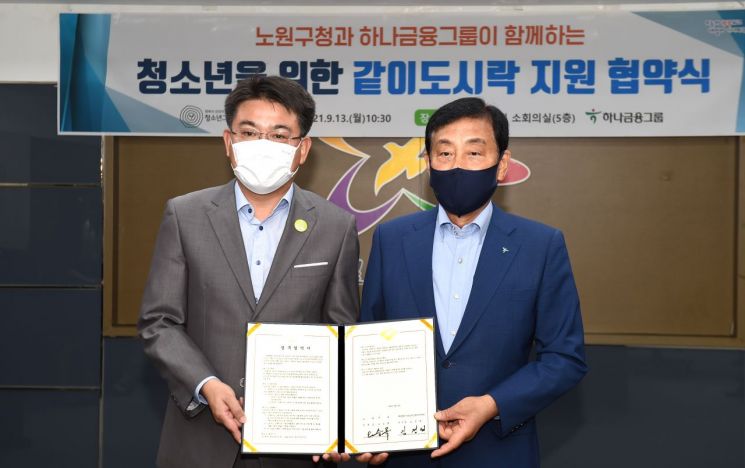
Oh Seung-rok, Mayor of Nowon-gu, attended the signing ceremony of the ‘Valuable Food, Shared Lunchbox’ project with the Youth Root Foundation at 10:30 a.m. on the 13th in the mayor’s office.
The ceremony was held to provide quality lunchboxes to children and youth in care blind spots due to the prolonged COVID-19 pandemic, aiming to solve nutritional imbalance and food shortage issues.
The Youth Root Foundation is a foundation under Hana Financial Group that promotes various welfare projects for youth to discover and nurture future talents.
Through this ‘Valuable Food, Shared Lunchbox’ project, 199 children and youth at risk of food insecurity in the region will receive support from the foundation.
The foundation will deliver lunchboxes once a week to the respective households for 10 months from September 2021 to June 2022 (worth about 240 million KRW in total). Each lunchbox is composed of a meal for 3 to 4 people, costing about 30,000 to 40,000 KRW per delivery.
The signing ceremony was held with the attendance of Mayor Oh Seung-rok, Kim Jeong-tae, Chairman of the Youth Root Foundation (also Chairman of Hana Financial Group), Kang Hyo-chang, Executive Director of the Youth Root Foundation, among others, followed by a commemorative photo session.
Mayor Oh Seung-rok expressed gratitude, saying, “Although everyone is struggling due to COVID-19, help for vulnerable groups, especially children and youth, is urgently needed. Thank you for helping children grow up healthily through nutritious food.”
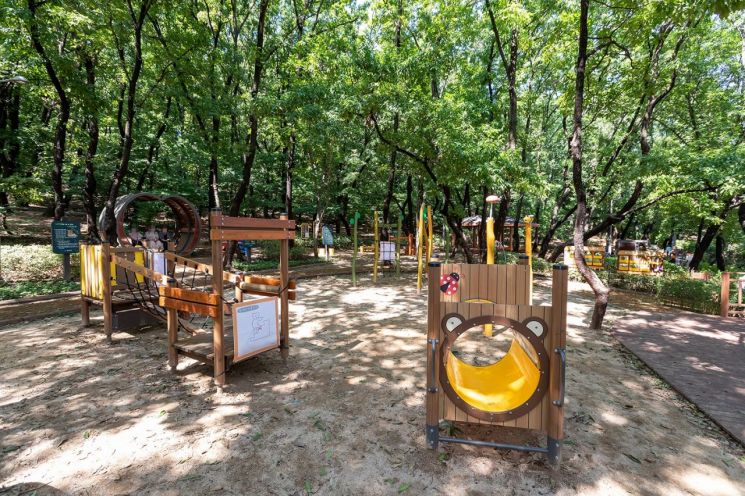
Bongjesan Forest Playground has been completely renovated as a leisure and rest space for residents.
Gangseo-gu, Seoul (Mayor Noh Hyun-song) announced that it has completed the maintenance project for the forest playground in Bongjesan Neighborhood Park (around 24-31, Deungchon-dong) and opened it to residents.
Until now, the playground’s play facilities were aging, and convenience facilities for residents were insufficient. Therefore, the district began the maintenance project in earnest from May to improve the park’s usage environment.
This maintenance project was selected simultaneously as a Gangseo-gu resident participation budget project and a Seoul City village architect space improvement project, with a total budget of 300 million KRW used for various facility repairs.
Considering it was a resident participation budget project, the district incorporated local residents’ opinions as much as possible from the design stage through project briefings. It also carefully consulted with Gangseo-gu village architects to create a park that residents want.
Instead of conventional play facilities, natural experience-type play facilities such as adventure stepping stones and tube passages were installed to create a space linked with various forest experience activities. Additionally, restrooms and dust removal facilities, which were highly requested by residents, were installed to improve convenience for park users.
The district plans to thoroughly manage the newly renovated Bongjesan Forest Playground so that it can become a healing space where residents of various ages can gather.
Mayor Noh Hyun-song said, “I expect more residents to visit Bongjesan Neighborhood Park through this playground maintenance project.” He added, “We will continue to expand leisure and rest spaces where residents can enjoy nature even in the city by actively reflecting community and resident opinions.”
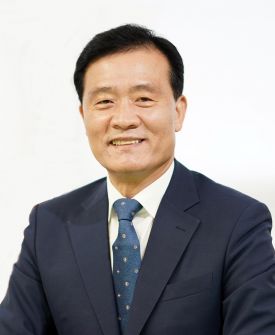
Seongbuk-gu (Mayor Lee Seung-ro) issued a Clean Government Advisory ahead of the Chuseok holiday to establish public service discipline.
The Clean Government Advisory is a system implemented since 2021 to issue warnings during vulnerable periods such as holidays, personnel changes, and vacation seasons when improper solicitations and corruption are likely to occur, aiming to foster a culture of integrity and anti-corruption.
The fourth advisory issued in 2021 is titled ‘No Giving or Receiving Holiday Gifts’ and will be in effect for 13 days from September 10 to 22, coinciding with the traditional Chuseok holiday.
Along with this, Seongbuk-gu plans to conduct internal duty inspections and special audits in vulnerable areas targeting all employees, actively responding to habitual solicitations, corruption, and bribery. Continuous audits will be conducted on violations of the public officials’ code of conduct, including unauthorized absence, false business trips, and inappropriate overtime work. The district will also actively check responses to security and disaster/safety management and restrict customary holiday gift-giving while operating a Clean Report Center at all times.
Mayor Lee Seung-ro said, “I ask all Seongbuk-gu employees and residents to actively participate in having a clean and frugal Chuseok holiday. Through this, we will strengthen the culture of integrity within the organization, eradicate corruption, and implement more transparent and trustworthy administration.”
Currently, Seongbuk-gu designates the fourth Wednesday of every month as ‘Clean Seongbuk Day,’ conducting self-diagnosis and a ‘Zero Corruption Clean Quiz,’ and promotes integrity practice among all employees through biweekly ‘Clean Morning Broadcasts.’ Additionally, ‘Clean Guardians’ are appointed in each department as integrity leaders, and various efforts are made to improve integrity by implementing department-specific clean policies suited to work characteristics and conditions.
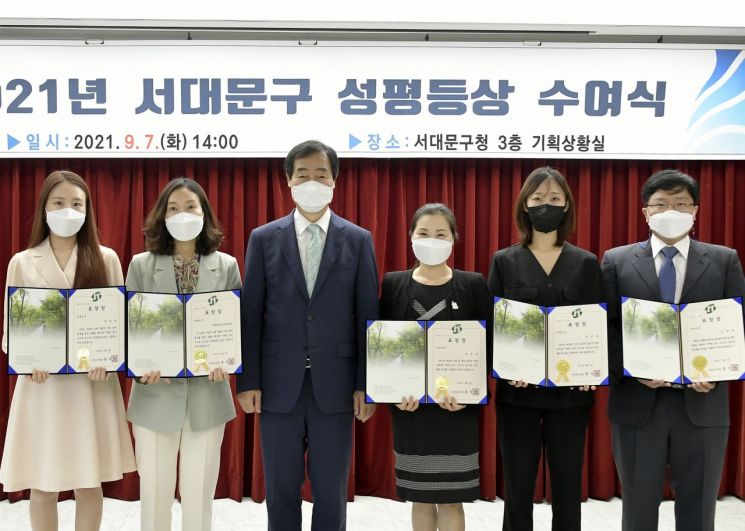
Seodaemun-gu (Mayor Moon Seok-jin) recently awarded the 2021 Gender Equality Awards to individuals and organizations active in the field of gender equality in the region, announced on the 13th.
The district publicly received nominations for candidates who contributed to realizing gender equality, expanding women’s social participation, and promoting women’s rights and interests from June 14 for one month.
After screening by the Seodaemun-gu Gender Equality Committee and the Public Evaluation Committee, four awardees and one organization were selected and awarded during Gender Equality Week (September 1 to 7).
The award ceremony was held simply on the 7th of this month in the district office’s planning situation room, with only the five awardees attending due to social distancing.
Among the awardees, Lee Eun-joo, who has been active since 2017 in the women’s organization ‘Seodaemun Women Leaders Samsam O-o,’ was recognized for planning and promoting various education and workshops to enhance women’s rights through participation in this year’s ‘Seodaemun-gu Gender Equality Fund Public Project.’
Kim Young-jae received the Gender Equality Award this year for his long-term activities as a member of the Seodaemun-gu Women-Friendly City Creation Council, promoting women-friendly academies and forums.
Social worker Kim Man-sung, who actively supported victims of domestic violence and their children at a protection facility, and social worker Jeong Eun-bi, who has worked to support single mothers and women’s social participation at the Seodaemun Comprehensive Social Welfare Center, also received the Seodaemun-gu Gender Equality Award.
The Seodaemun Urban Management Corporation, which remodeled the ‘Seodaemun Women’s Center,’ previously focused on hobby and cultural lectures, into the ‘Seodaemun Women’s Room Center,’ a space supporting women’s employment, entrepreneurship, and networking, received the group award.
Mayor Moon Seok-jin said, “I congratulate and thank those who have worked to spread gender equality culture in daily life across various fields, and I will strive to build consensus on gender equality with residents.”
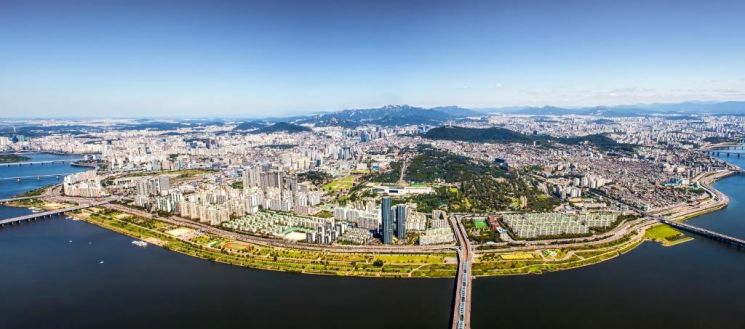
Yongsan-gu (Mayor Seong Chang-hyun) posted the ‘2021 Local Finance Disclosure’ based on the 2020 fiscal year settlement on the district website under Administrative Information (Budget/Finance Information).
Financial disclosure is a system that objectively discloses the results of financial management and matters of resident interest to residents through transparent procedures over one year.
As of the 2020 fiscal year, Yongsan-gu’s budget scale was 790.2 billion KRW, an increase of 164.4 billion KRW compared to 2019.
The budget scale includes ▲own revenue ▲transferred resources ▲internal transactions combined. Last year, the district’s own revenue (local taxes, non-tax revenue) was 214 billion KRW, transferred resources (local grants, adjustment grants, subsidies) were 401.2 billion KRW, and internal transactions (local bonds, compensation income, etc.) were 175 billion KRW.
In 2020, the budget scale was 261.6 billion KRW less than the average of similar local governments (1.0518 trillion KRW) and 518.3 billion KRW more than the average of shared property (1.7293 trillion KRW).
The total expenditure for the district in the 2020 fiscal year was 670.9 billion KRW, an increase of 154.4 billion KRW from 2019. The expenditure per resident was 2.56 million KRW, up 580,000 KRW from the previous year. The average annual expenditure growth rate over the past five years was 3.9%. The field with the highest expenditure ratio was social welfare, and the field with the highest expenditure growth rate was industry and small and medium enterprises.
The fund status for the 2020 fiscal year increased by 12 billion KRW from the previous year to 52.2 billion KRW, due to the expansion of disaster management funds, job funds, and SME development funds in response to COVID-19.
Besides common disclosures, the district made special disclosures on seven pending projects, including the construction of the Veterans Hall and veterans’ projects, the groundbreaking of the Yongmun-dong Resident Community Center, operation of the Yongsan-gu Disabled Community Center, and construction of the Lee Bong-chang Historical Echo Hall.
Mayor Seong Chang-hyun said, “In the disaster situation caused by COVID-19, we operated finances flexibly by reducing events and increasing support so that residents could receive many benefits. We will strive to further grow the district’s finances.”
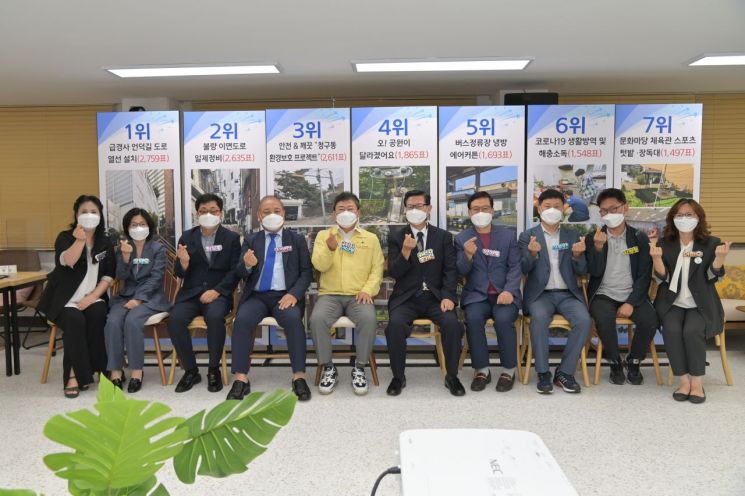
Jung-gu (Mayor Seo Yang-ho) announced that it will hold an online residents’ participatory budget general meeting from the 6th to the 27th of this month to select next year’s participatory budget projects.
The meeting will be held online (via Zoom) to prevent COVID-19 spread, presenting progress reports by each neighborhood, results of priority voting on resident-proposed projects, introducing activities by committees and major projects, and providing time for communication with residents on proposed projects.
In 2019, Jung-gu was the first in the nation to establish a neighborhood government department, transferring 77 tasks and budget proposal authority from the district office to neighborhood community centers, realizing true resident autonomy. Participatory budgeting is a core part of this. This year, 13.8 billion KRW was allocated through participatory budgeting.
Through committee activities, resident small groups, and SNS-based non-face-to-face public forums, the district collected 1,229 resident-proposed projects with an estimated budget of 50.8 billion KRW from May to August, a 20% increase compared to last year (976 projects, 29.8 billion KRW).
To encourage participation, the district diversified application channels including the website, mail, visits, and text messages, and promoted through resident group bands and chat rooms on various SNS platforms, producing and distributing promotional videos to increase participation.
Using professional facilitators, the district held 232 committee meetings, including online forums and small meetings, to concretize projects. The district’s departments reviewed project feasibility, legality, budget appropriateness, and duplication with existing projects, finalizing 309 projects (worth 17.8 billion KRW) for voting.
Priority voting was conducted online and offline from August 16 to 28, with 21,792 participants (17.7% turnout), significantly higher than last year’s 11,788 participants. High votes were received for projects addressing waste issues such as zero waste challenges, illegal dumping prevention flowerbed creation and CCTV installation; park and green space projects like Namsan-dong alley garden creation, Ssamsi Park environment improvement, and tree planting in Cheonggu-dong; and vulnerable groups and elderly welfare projects including side dish sharing, senior gardening classes, and fire alert systems in senior centers.
Euljiro-dong’s top priority was operating a resident participatory art school reflecting the neighborhood’s characteristics, with other projects including cultural heritage tours in Sogong-dong, historical and cultural preservation in Jungnim-dong, and art projects changing daily life and environment in Pildong.
Projects selected as priorities for the 2022 participatory budget will be reflected in the 2022 budget draft considering financial resources and finalized after district council review. Results will be published on neighborhood and district websites.
Mayor Seo Yang-ho said, “Participatory budgeting is the foundation of resident autonomy where residents decide on issues in their area. I thank residents for their high interest and participation and will do my best to ensure budgets are allocated to necessary projects.”
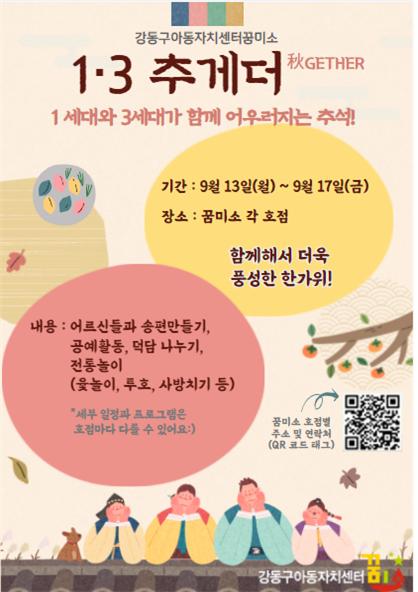
Gangdong-gu (Mayor Lee Jeong-hoon) will operate the Chuseok program ‘1·3 Chuge-der’ (秋+TOGETHER) from the 13th at the ‘Dream Smile’ child autonomy center, a shared space for 1st and 3rd generations.
‘1·3 Chuge-der’ means the 1st and 3rd generations coming together (TOGETHER) during Chuseok. The program includes making songpyeon (rice cakes), playing yutnori (traditional game), and exchanging good wishes between seniors at senior centers and children. The handmade songpyeon will be delivered with message cards to foreign workers residing in the district as well as senior centers.
Due to the extension of social distancing level 4, the program will be safely operated by limiting the number of users to less than 50% of capacity per time slot at each location, following quarantine guidelines.
The ‘Dream Smile’ child autonomy center is a shared space project for 1st and 3rd generations, using senior centers that are empty in the afternoon as after-school spaces for children. Currently, eight Dream Smile centers operate, running various integrated programs for seniors and children during holidays and Parents’ Day, such as traditional culture experiences and carnation giving.
Mayor Lee Jeong-hoon said, “Dream Smile, where 1st and 3rd generations come together, is a representative child-friendly public facility in Gangdong-gu. By November, the 9th center in Cheonho 1-dong and the 10th center in Dunchon 2-dong will open, totaling 10 centers.” He added, “I hope many use Dream Smile, where various intergenerational programs are operated.”
For more details about ‘1·3 Chuge-der,’ contact the 7th Dream Smile center or check the QR code on promotional materials for contact information of each center.
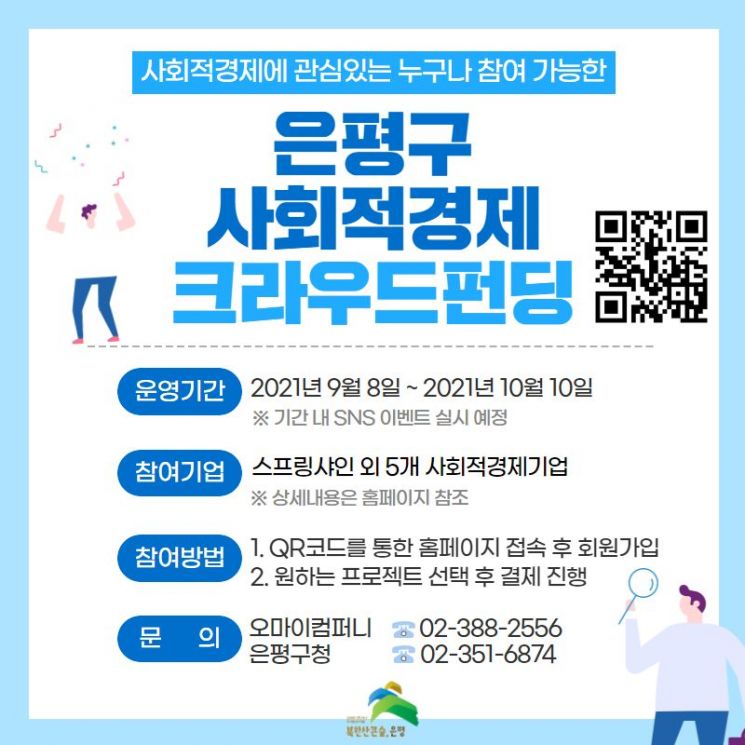
Eunpyeong-gu (Mayor Kim Mi-kyung) is operating the ‘Eunpyeong-gu Social Economy Crowdfunding Exclusive Hall’ from the 8th until October 10 to support the growth of social economy enterprises and revitalize the social economy in the region.
‘Crowdfunding’ is a term combining ‘crowd’ meaning the public and ‘funding’ meaning raising funds, referring to a method of collecting money from many people through online social networks.
The ‘Social Economy Crowdfunding Support Project’ is one of the 2021 district specialized projects selected through public competition, aiming to provide social economy enterprises with funding options and diversify sales channels.
Participation in the ‘Crowdfunding Exclusive Hall’ is possible by signing up on the social enterprise Oh My Company’s website (ohmycompany.com).
Mayor Kim Mi-kyung said, “I hope this crowdfunding support project will provide social economy enterprises in Eunpyeong-gu with opportunities to introduce products and develop sales channels, and induce consumers to practice ‘value consumption’ realizing social purposes, marking the first step toward revitalizing Eunpyeong-gu’s social economy.”
For further inquiries, contact the Eunpyeong-gu Social Economy Division or Oh My Company.
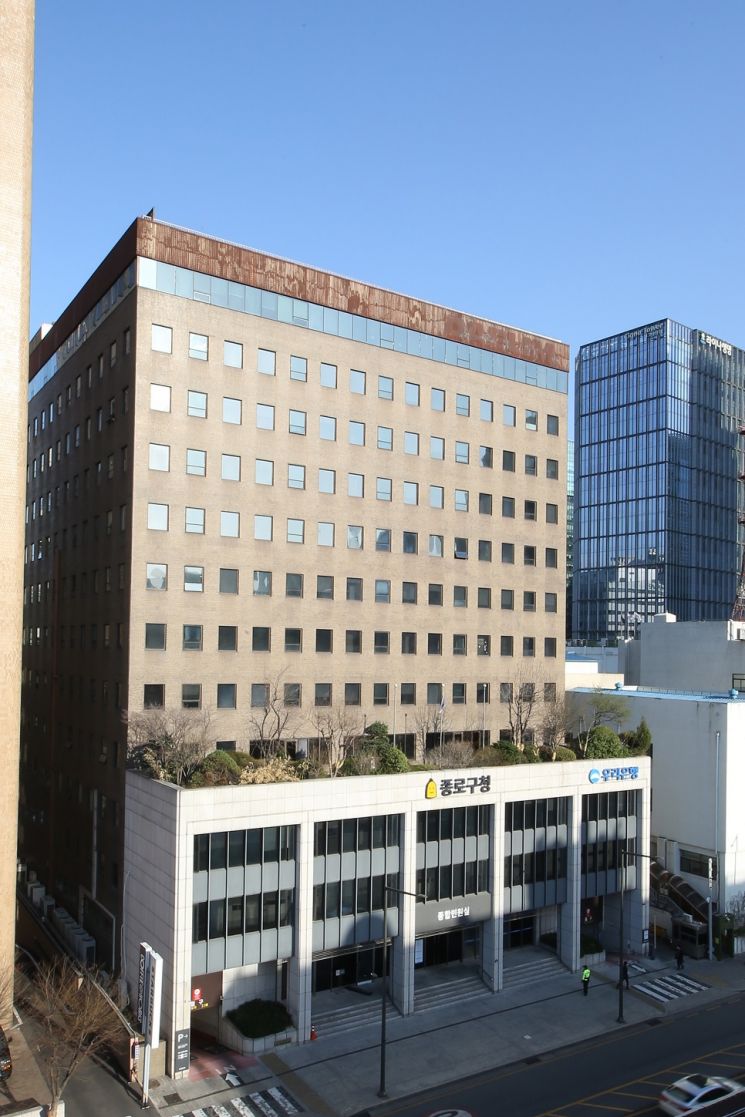
Jongno-gu (Mayor Kim Young-jong) produced the ‘Jongno-gu Development Activity Permit Manual’ to help residents and business stakeholders who wish to apply for development activity permits understand the process, and made it available on the district website.
Development activity permits are a system that ensures sustainable national land management and guarantees rightful property rights by harmonizing development and conservation. It aims to prevent indiscriminate development and manage land systematically by considering the appropriateness of plans, securing infrastructure, and harmony with surrounding landscapes and environment when deciding on permit issuance.
To review specific matters related to development activity permits stipulated by law, it is necessary to thoroughly understand the National Land Planning Act and Seoul Metropolitan City Urban Planning Ordinance, but these materials have been scattered, causing difficulties in work.
Therefore, Jongno-gu became the first among Seoul’s 25 districts to compile all scattered materials into one place and create the ‘Jongno-gu Development Activity Permit Manual’ written in an easy-to-understand manner for anyone.
The manual allows quick understanding of related permit procedures, improving convenience and practicality for stakeholders. It is freely accessible on the district website.
The manual includes inquiries and responses from the Ministry of Land, Infrastructure and Transport and the Legislation Office on unclear legal matters that caused difficulties in decisions, aiming to minimize disputes with residents applying for development activity permits.
It also contains reference materials for applications, such as diagrams explaining building floor height and basement floor calculation standards, building height calculation methods, annual processing status of development activity permits (landform changes), status of preservation areas (notices), and dates, locations, and areas of accident site designations.
For more details about the manual, contact the Urban Development Division. Mayor Kim Young-jong said, “We compiled various information related to development activity permits, which felt difficult and complex, into one manual and made it publicly available for anyone to view. We expect it to be useful when applying for permits and will continue to pursue meticulous administration focusing on resident convenience and work efficiency.”
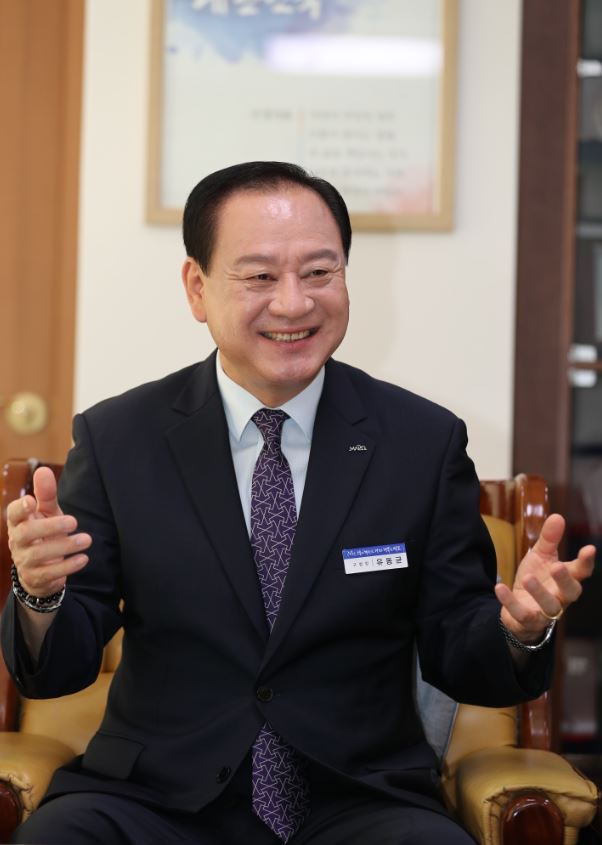
Mapo-gu (Mayor Yoo Dong-gyun) announced on the 13th that it has prepared comprehensive measures in various fields to ensure residents have a safe and comfortable Chuseok holiday and is pushing forward with thorough implementation.
The key focus areas are COVID-19 prevention, safety, transportation, cleaning, and convenience.
First, the Mapo-gu Comprehensive Situation Room, which will act as the control tower for Chuseok comprehensive measures, will operate from the 17th to the 22nd. A total of 264 public officials will work in shifts to prepare for emergencies during the holiday and maintain daily and ad hoc situation reporting systems for emergency management.
The district expects increased movement compared to last Lunar New Year due to the expansion of family gatherings to up to eight people and will strengthen COVID-19 prevention measures.
COVID-19 screening clinics will operate normally during the holiday.
The health center screening clinic operates from 9 a.m. to 6 p.m. (closed from 1 p.m. to 3 p.m. for disinfection), the temporary screening clinic at Hongik Cultural Park operates from 9 a.m. to 1 p.m. (closed on Sundays), and the Seogang temporary screening clinic operates from 9:30 a.m. to 5 p.m. (closed on Sundays and from 12 p.m. to 1 p.m. for disinfection).
To manage confirmed cases during the holiday, a ‘24-hour COVID-19 Special Quarantine Task Force’ will disinfect confirmed patients’ homes and movement paths and ensure transport to isolation facilities.
Additionally, the district will transport overseas entrants arriving in Mapo-gu to self-quarantine locations and operate a COVID-19 call center from 9 a.m. to 6 p.m. to respond to related inquiries.
In safety, inspections of tourist accommodations, cultural assets, construction sites, gas facilities, and park facilities will be completed before the holiday to prevent accidents.
A disaster safety countermeasure headquarters will be formed, and a system will be established for officials to respond immediately to typhoons and heavy rains to minimize flood damage.
In transportation, a traffic countermeasure situation room will operate alongside the comprehensive situation room to guide public transportation operation and punctuality and crack down on illegal parking and taxi refusal.
Village buses serving visitors will operate normally at holiday levels after consultation with 18 village bus companies, minimizing transportation inconvenience during the holiday. Vehicles will be inspected before Chuseok and disinfected at least four times daily.
For cleaning, to reduce inconvenience of storing garbage at home during the long five-day holiday, household waste will be collected on two days, the 19th (Sunday) and 22nd (Wednesday).
A cleaning situation room and patrol teams will be organized to promptly collect garbage on roads and prevent safety accidents and maintain urban aesthetics.
To reduce waste from Chuseok gifts, inspections on repackaging were conducted on August 24 at large stores, and oversized packaging inspections were completed on the 10th.
For convenience, to minimize medical service gaps, a ‘Health Center Emergency Medical Countermeasure Situation Room’ (☎02-3153-9004~7) will operate from the 18th to 22nd, providing information on duty medical institutions and holiday pharmacies.
Also, to solve parking difficulties when visiting family and relatives in residential areas, 23 paid public parking lots will be fully opened free of charge.
On the 1st, the ‘Chuseok Mapo Love Gift Certificate’ was issued with a scale of 10 billion KRW and sold at a 10% discount to buyers, easing concerns about holiday meal prices and revitalizing traditional markets and alley businesses.
Mayor Yoo Dong-gyun said, “Mapo-gu public officials are fully prepared in their respective fields to ensure residents do not experience inconvenience during the Chuseok holiday.” He added, “I hope residents enjoy a joyful Chuseok holiday with family and relatives within the allowed COVID-19 prevention guidelines.”
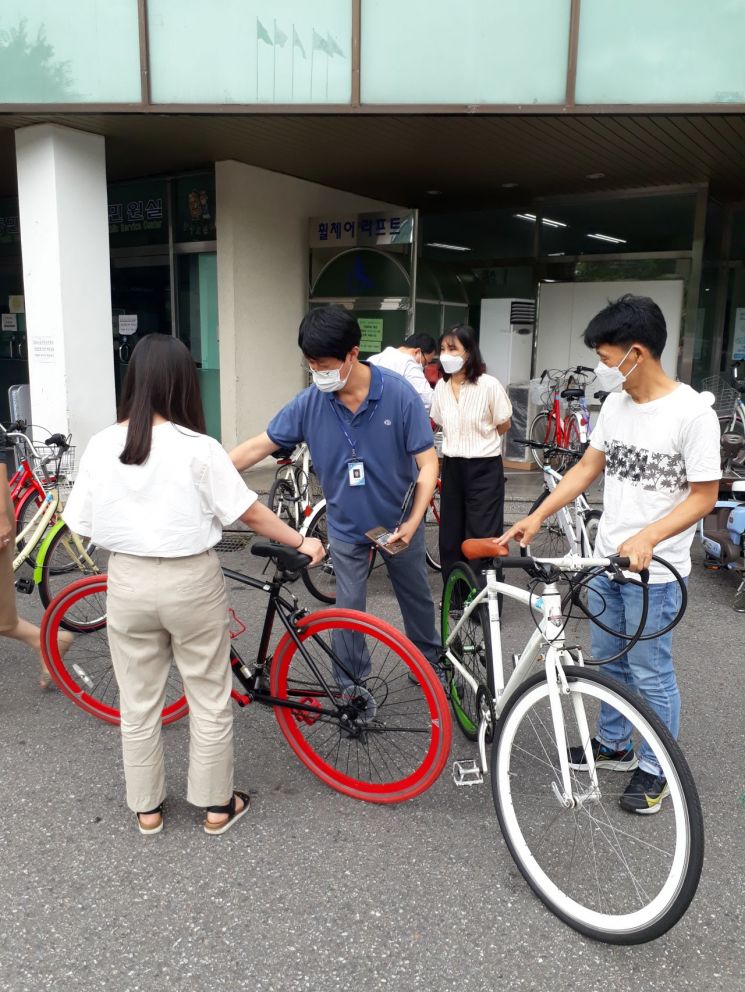
Gwangjin-gu (Mayor Kim Seon-gap) delivered 54 refurbished bicycles to low-income residents and public institutions on the 2nd through the ‘Refurbished Bicycle Sharing Project.’
The project collects abandoned bicycles that mar the urban landscape, cleans, replaces parts, and repairs them to make them usable again.
Since 2012, the district has been promoting this project, delivering 164 refurbished bicycles last year and 105 this year to low-income households and public institutions. Next year, the number of sharing events will increase from twice to four times annually.
Notably, the Gwangjin Regional Self-Support Center participated in the bicycle repair and refurbishment, contributing to job creation for vulnerable groups.
Mayor Kim Seon-gap said, “The refurbished bicycle sharing project has significance in resource recycling, job creation, sharing culture, and spreading bicycle use culture.” He added, “I hope the delivered bicycles become reliable transportation for neighbors in need.”
Gwangjin-gu has enrolled all residents in bicycle insurance to promote bicycle use and safety. So far, 68 claims totaling 21.1 million KRW have been made under the group bicycle insurance, receiving positive responses.
© The Asia Business Daily(www.asiae.co.kr). All rights reserved.



















