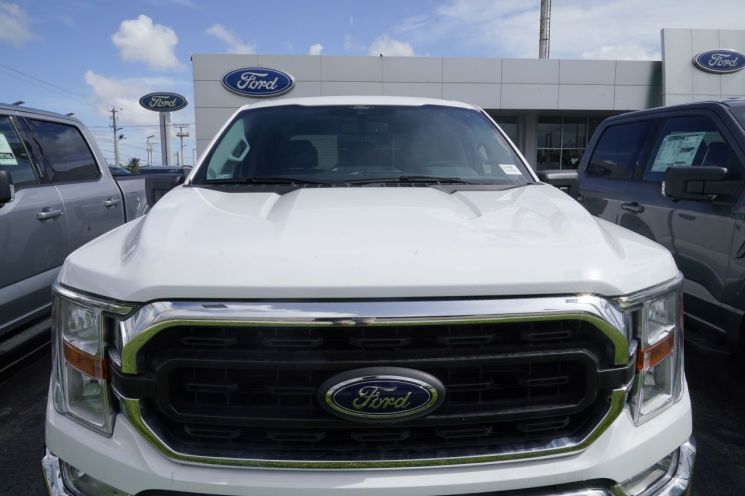
[Asia Economy Reporter Park Byung-hee] American automaker Ford announced on the 9th (local time) that it will cease production in India. Ford decided to withdraw from the market after being unable to bear a cumulative loss of over $2 billion over the past decade. In India, where Hyundai Motor and Maruti Suzuki dominate the market with a combined share of over 60%, Ford's market share was only 1.42% as of last month. Having decided to exit the Indian market, Ford is expected to focus more on targeting the Chinese market in the future.
According to Bloomberg News, Ford stated in a press release that it will immediately stop producing cars for sale, close its assembly plant in Gujarat, western India, by the fourth quarter of this year, and shut down its automobile and engine plants in Chennai, southern India, by the second quarter of next year. Ford said this move will affect about 4,000 employees and estimated the restructuring costs to be around $2 billion.
Ford CEO Jim Farley has made it clear that the company will no longer invest in marginal markets that are not profitable. Earlier in January, Ford ceased production in Brazil. Ford expects the costs related to its global business restructuring this year to be between $2.2 billion and $2.7 billion.
Instead, CEO Farley is focusing efforts on the world's largest market, China. Ford's luxury brand Lincoln sells more in China than in the United States. Given the decision to withdraw from the Indian market, Ford is expected to concentrate more on the Chinese market going forward.
In a statement, CEO Farley said, "It was a difficult decision, but we took the necessary steps to generate sustainable long-term profits and invest Ford's capital in the right sectors that create value." He added, "Ford made significant investments in India, but recorded operating losses exceeding $2 billion over the past decade, and new car demand in India did not meet our expectations."
Ford opened its first store in India about 100 years ago, in 1926. It withdrew from the Indian market in the 1950s but re-entered in the early 1990s.
Many global automakers have struggled in India, where Maruti Suzuki India's low-cost vehicles dominate the market. The Indian government's high taxes, imposing up to 28% on gasoline vehicles, have also been an obstacle. American electric vehicle maker Tesla demanded that the Indian government lower import tariffs before building a factory in India. Japanese automaker Toyota also announced last year that it would no longer increase its investment in India due to high tariffs.
Before Ford, the largest American automaker General Motors (GM) withdrew from the Indian market in 2017. Harley-Davidson also exited the Indian market last year.
After closing its plants, Ford plans to import and sell some vehicles, including the Mustang Coupe, in India. While direct production in India will cease, Ford is reportedly considering options such as partnerships or contract manufacturing in the future.
Ford's production halt has also cast uncertainty over the future of the EcoSport, a compact sport utility vehicle (SUV) launched in the U.S. in 2018. Ford produced the EcoSport in India and imported it to the U.S. for sale. U.S. sales of the EcoSport have declined by 22% this year.
© The Asia Business Daily(www.asiae.co.kr). All rights reserved.

















