Moderna Rapidly Expanded, Causing Confusion Among Vaccinees
Hospital Says "Health Center Supply Notified in the Morning"
Many Institutions Administering Two Types Simultaneously
Cases of Misadministration Including Cross-Vaccination Errors Increase
[Asia Economy Reporters Seo So-jeong and Kim Ji-hee] "Today is the day for my COVID-19 vaccination, but I still don't know which vaccine I will receive."
Mr. Kim, a man in his 30s living in Dongdaemun-gu, Seoul, called the family medicine clinic where he had made a prior reservation on the 10th, ahead of his vaccination. He made the call out of frustration because the type of vaccine had not been disclosed until the day before. However, the clinic said, "It will be either Pfizer or Moderna, but we need to confirm again in the morning," which increased his anxiety. Mr. Kim said, "Since both are messenger RNA (mRNA) vaccines, there might not be a big difference, but it is unsettling not to know which vaccine I will get until the day of vaccination," adding, "It would be better if the vaccine type was informed in advance for recipients to understand possible side effects."
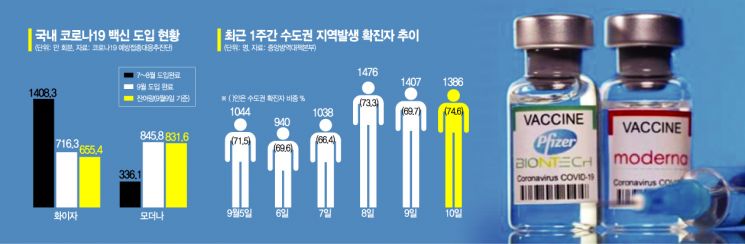
As 8.45 million doses of the Moderna vaccine, which had supply concerns, were introduced all at once this month and vaccinations rapidly expanded, confusion among vaccine recipients aged 18 to 49 continues. Many delegated medical institutions do not notify the vaccine type in advance, resulting in cases where recipients only learn the vaccine type just before vaccination. Mr. Cho, in his 40s living in Jongno-gu, said, "They did not tell me the vaccine type until I was sitting at the clinic, and only informed me right before vaccination," adding, "Since it was not the vaccine I expected, I hesitated for a moment about whether to get vaccinated." The clinic explained, "We receive the supply from the public health center and only get notified in the morning," adding, "Since we inform that it is an mRNA vaccine in advance, we do not separately notify the vaccine type."
Vaccine Type Informed Just Before Vaccination... Expansion of Moderna Vaccinations Among Younger People
The first vaccine for the 18-49 age group, which began on the 26th of last month, was Pfizer. However, as Moderna vaccines were released all at once two weeks later, the proportion of younger people receiving the Moderna vaccine has significantly increased. According to the COVID-19 Vaccination Response Promotion Team, out of 438,356 people who newly received their first COVID-19 vaccine dose the previous day, 24,607 received the Moderna vaccine. However, as many institutions administer Pfizer and Moderna vaccines simultaneously, concerns about incorrect vaccinations have also emerged.
Mr. Choi, in his 20s, said, "The dosage for Pfizer is 0.3 mL and for Moderna is 0.5 mL, and there are slight differences in side effects," adding, "Especially since cross-vaccination is not allowed for Moderna, I feel anxious."
As the government speeds up to achieve the goal of 70% first-dose vaccination nationwide before Chuseok, cases of incorrect vaccinations continue. The previous day, at a medical institution in Jindo, Jeollanam-do, 12 people who received the first dose of Moderna were mistakenly given AstraZeneca for their second dose. According to the Korea Disease Control and Prevention Agency, there have been 1,386 cases of incorrect COVID-19 vaccinations in Korea (as of the 6th), with 806 cases involving 'vaccine type and storage errors,' such as using expired vaccines or unauthorized cross-vaccinations. Kwon Geun-yong, head of the Adverse Reaction Investigation Team at the Promotion Team, explained, "There was inadequate management because the vaccine's own expiration date and refrigerated expiration period (within 31 days for Pfizer and 30 days for Moderna from the start of refrigerated thawing) differ," adding, "We are attaching warning labels on vaccine transport boxes emphasizing the first-in-first-out principle and strengthening education to ensure awareness of refrigerated expiration periods."
Concerns Over Nationwide Spread After Chuseok... "The Fourth Wave Could Become More Severe"
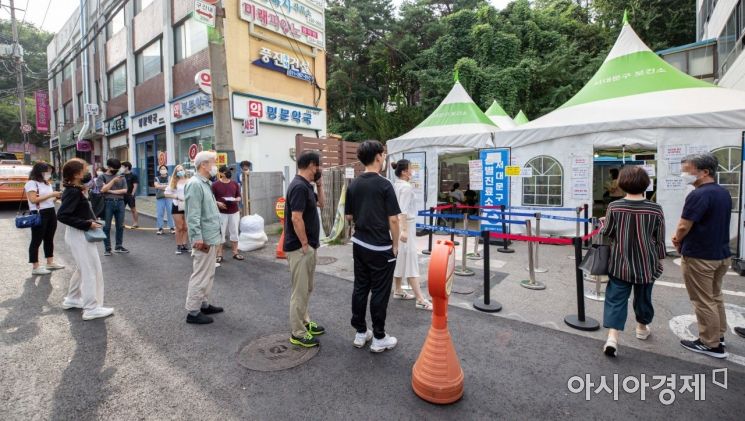 On the 10th, citizens who visited the screening clinic set up at Seodaemun-gu Public Health Center in Seoul, where new COVID-19 cases continue to occur in the late 1,000s to early 2,000s, are waiting to get tested. Photo by Kang Jin-hyung aymsdream@
With the Chuseok holiday in the Seoul metropolitan area just one week away, the spread of COVID-19 in the metropolitan area shows no signs of slowing. According to the Central Disease Control Headquarters, as of midnight on this day, 1,892 new COVID-19 cases were confirmed domestically, bringing the total to 269,362. In the metropolitan area, 1,386 additional cases were confirmed, and the average daily number of cases over the past week reached the 1,200s for the first time since the COVID-19 outbreak. Seoul reported 666 cases, the second highest ever.
There are concerns that the COVID-19 outbreak could become nationwide again as a large number of people move from the metropolitan area to non-metropolitan regions during the Chuseok holiday. Especially this Chuseok, considering social fatigue due to prolonged high-intensity quarantine measures, the allowed number of family gathering participants has increased to a maximum of eight, including four fully vaccinated individuals. Prime Minister Kim Boo-kyum said, "While cases in non-metropolitan areas have somewhat decreased, the outbreak is spreading again in the metropolitan area," adding, "If the vicious cycle of local infections occurs again during the Chuseok holiday, as it did during the vacation season, the fourth wave could last longer and become more severe."
© The Asia Business Daily(www.asiae.co.kr). All rights reserved.


















