Domestic Cumulative Investment Surpasses 3 Trillion KRW
Conversion of Domestic Manufacturing Plant Lines for High-Power Product Production
Investment in Next-Generation Solar Technology Based on Perovskite Tandem Cells
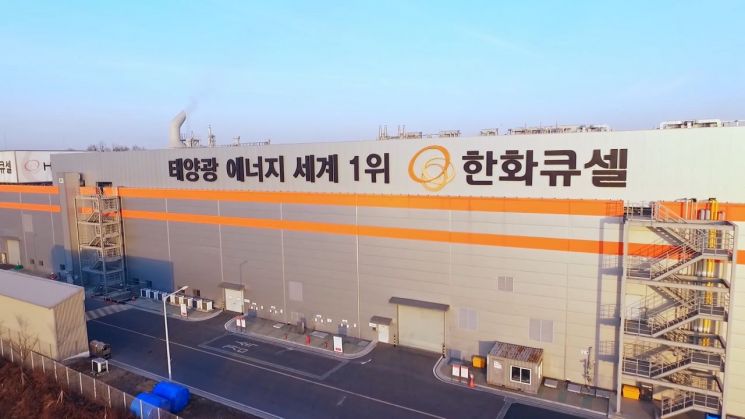 Hanwha Q CELLS' Jincheon Plant in Chungbuk, which became the first domestic renewable energy company to declare RE100 last February.
[Asia Economy Reporter Kim Hyewon] Hanwha Solutions Q CELLS Division (hereinafter Hanwha Q CELLS) announced on the 9th that it will invest 1.5 trillion KRW in domestic production and research facilities by 2025. Hanwha Q CELLS plans to invest in converting production lines for high-output products and researching next-generation technology such as perovskite-based tandem cells.
Hanwha Q CELLS' Korean factories located in Jincheon-gun and Eumseong-gun, Chungcheongbuk-do, are the largest solar cell and module factories in Korea, producing 4.5GW of solar cells and modules annually. These are core manufacturing facilities in which 1.5 trillion KRW has been invested up to last year. About 50% of the products are exported, and approximately 2,000 employees operate the factories.
With this investment, Hanwha Q CELLS' cumulative domestic investment will increase to 3 trillion KRW. The production capacity of cells and modules at the factories will expand to 7.6GW annually by 2025. This scale can produce household electricity sufficient for 12 million people annually based on domestic standards. Hanwha Q CELLS plans to supply solar cells to domestic module manufacturers if there is demand, as part of fostering the domestic solar industry.
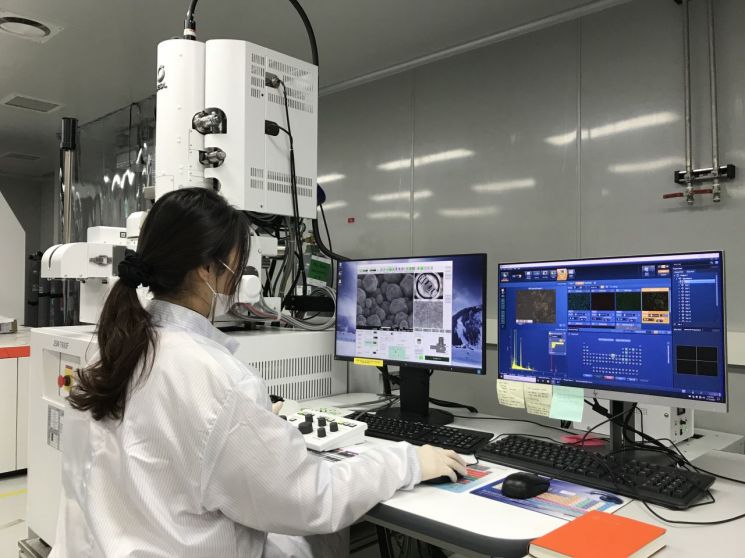
Hanwha Q CELLS is accelerating research on next-generation solar cells, tandem cells, at its Pangyo research center by forming a consortium with academia and small and medium-sized enterprises in materials, parts, and equipment. This consortium was selected as a national research institution for the tandem cell project in December last year. Tandem cells are made by stacking perovskite, a next-generation solar material, on top of existing silicon solar cells.
The perovskite layer on top absorbs short-wavelength light, and the silicon solar cell underneath absorbs additional long-wavelength light, achieving higher efficiency compared to existing silicon solar cells that mainly absorb long-wavelength light.
Lee Gu-young, CEO of Hanwha Q CELLS, said, "With this investment, we will strengthen Hanwha Q CELLS' leading industry position and secure the competitiveness of the domestic solar industry. Hanwha Q CELLS will continue research and investment to lead the future solar market."
The Q.PEAK DUO series produced at Hanwha Q CELLS' Korean factories is a core product group that has enabled Hanwha Q CELLS to achieve the number one market share in major solar module markets such as the United States, Germany, the United Kingdom, and Korea. Hanwha Q CELLS manufactures products under conditions up to three times harsher than the quality inspection standards of the International Electrotechnical Commission (IEC).
© The Asia Business Daily(www.asiae.co.kr). All rights reserved.


















