Operation of the Only Aviation College in the Southeast Region, Establishment of the Department of Air Traffic Management
Also Four New Departments: Companion Animals, Fire Safety, Food Cooking, and Future Convergence
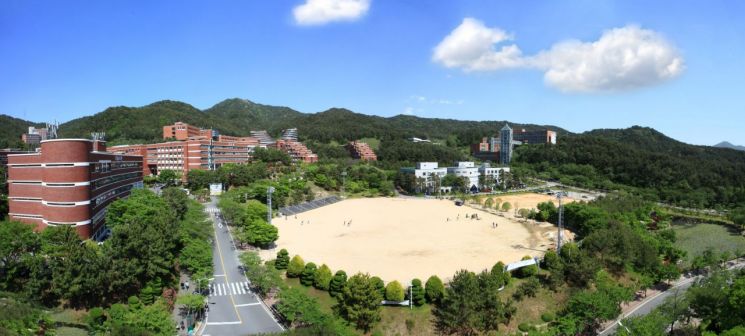
[Asia Economy Yeongnam Reporting Headquarters Reporter Kim Yong-woo] Silla University is rapidly moving towards a departmental system that targets future promising industries and prepares for those fields.
The university's motto is also "A Glocal University Leading the Student Success in the Era of the 4th Industrial Revolution." It is advancing as a university centered on future promising industries.
Silla University was selected as a "General Financial Support University" in the Ministry of Education's "2021 University Basic Competency Diagnosis," and has been recognized for its innovative capabilities in education, research, and industry-academia cooperation, focusing on nurturing specialized talents for "student success."
The "student success" pursued by this university focuses on helping each student achieve their academic, career, and personal goals independently.
What does Silla University see as future promising industries, and how has it envisioned departmental reorganization and student education directions?
Silla University established a mid- to long-term development plan called "Student Success Silla 2030" and carried out a student-centered departmental reorganization this year.
It newly established five specialized departments?Department of Air Traffic Management, Department of Companion Animal Studies, Department of Fire Safety, Major in Food and Culinary Arts, and Department of Future Convergence?and is welcoming new students for 2022.
◇ Department of Air Traffic Management
Silla University operates the only aviation college in the Southeast region, consisting of departments such as Aviation Operations, Aircraft Maintenance, Aviation Services, and Air Logistics.
This year, it established the Department of Air Traffic Management, equipped with optimal conditions to train aviation experts such as pilots, maintenance engineers, flight operations managers, cabin crew, and logistics specialists.
The Department of Air Traffic Management aims to nurture talents in three tracks: flight operations managers who handle flight plan preparation and changes, aircraft operation control and monitoring, and fuel consumption calculation; aviation safety management experts specializing in aviation safety, security, and transportation; and aviation dispute management experts who manage complaints related to noise, environment, altitude restrictions, and other aviation operations.
In 2019, the university was designated by the Ministry of Land, Infrastructure and Transport as a specialized education institution for "aircraft piloting" and "aircraft maintenance engineers," and in June this year, it became the sixth university nationwide to be designated as a specialized education institution for "flight operations managers."
This means it has all the government-certified infrastructure for training aviation professionals.
The designation as a flight operations manager education institution is unique to Silla University in the Southeast region, including Busan, Ulsan, Gyeongnam, as well as Daegu and Gyeongbuk. With the establishment of the Department of Air Traffic Management, students can now receive flight operations manager education at Silla University and take the qualification exam.
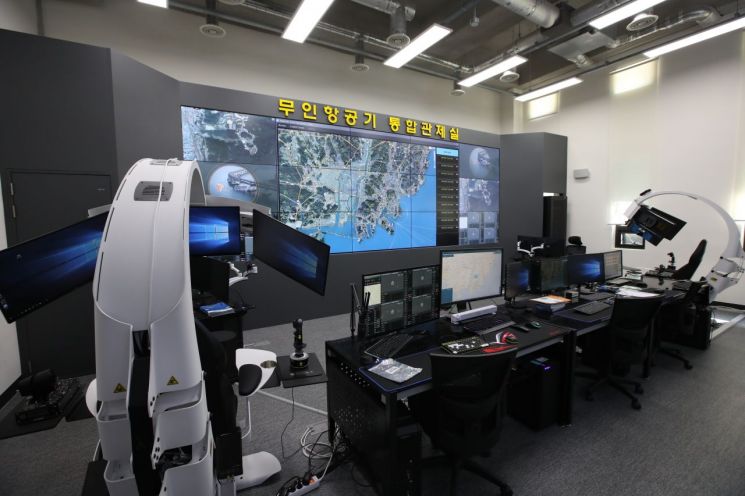
Equipped with the latest aviation simulators, aircraft hangars, and aircraft maintenance practice rooms, Silla University plans to build state-of-the-art training equipment this year, supported by the Ministry of Education, benchmarking Air Busan's flight control room to simulate weather conditions, airport and aircraft operation status, and more.
Additionally, the university has signed memorandums of understanding for practical training and employment with domestic and international renowned institutions such as Korean Air, Air Busan, T'way Air, airport ground handling companies, and the Air Force, solidifying students' employment foundations.
An admissions expert explained, "With the construction of Gadeok New Airport and the increase in demand for air logistics and air passengers, the outlook for local talent supply is bright."
◇ Department of Companion Animal Studies
Interest in animal-related careers is growing due to the increase in companion animal ownership and the rapid expansion of the pet economy.
To cultivate experts leading the companion animal industry, the university established the first four-year Department of Companion Animal Studies in the Southeast region.
The faculty, composed of opinion leaders in related fields including veterinarians, aims to nurture companion animal experts active in various areas through systematic education over four years.
To enhance employment and entrepreneurship capabilities, from the second year, students will complete modules each academic year on pet food, pet well-being, and pet-assisted therapy through curricular and extracurricular activities.
The curriculum is designed to enable students to acquire certifications such as animal health technician, companion animal manager, companion animal food manager, companion animal behavior correctionist, pet-assisted therapist, pet groomer, and laboratory animal technician.
Graduates of Silla University's Department of Companion Animal Studies have opportunities to enter various fields, including comprehensive animal hospitals affiliated with veterinary colleges nationwide, companion animal food companies, human and animal pharmaceutical companies, pet product companies, pet content companies, pet stylists, biotechnology research institutes, hotels, zoos, quarantine agencies, and public service.
A Silla University official stated, "Situated on a 540,000-pyeong low-carbon green campus designated by the Ministry of Environment, equipped with advanced educational facilities and various amenities, Silla University, selected as one of Korea's Top 10 Beautiful Campuses by the Korea University Newspaper, plans to establish a Pet Complex that will serve as a forward base for fostering the companion animal industry, including a pet theme park, solidifying its position as the nation's top educational institution based on the Department of Companion Animal Studies."
Although the population living with companion animals exceeds 10 million, there is a shortage of professionally trained companion animal experts.
Silla University plans to foster the companion animal industry as a strategic industry of Busan in cooperation with related institutions such as Busan City and aims to promote regional development and job creation by supplying professionals equipped with practical skills.
◇ Department of Fire Safety
As various facilities become taller, larger, and smarter, awareness of fire safety is increasing, and the demand for fire safety experts is urgently rising.
Silla University established the Department of Fire Safety reflecting social demand such as expanded recruitment.
Traditionally, Silla University has specialized programs tailored to teacher certification exams and national exams by department, producing many teachers, police officers, and librarian public officials.
The Department of Fire Safety will also form a dedicated study group for fire officer preparation, operate exclusive study rooms and physical training clubs, and offer major subjects for public official exams as part of the curriculum.
Additionally, extracurricular classes such as fire safety drone training will be conducted to train a large number of personnel in fire and safety fields alongside fire officers.
The Department of Fire Safety plans to operate programs for acquiring fire and safety-related certifications to enable students to obtain two certifications per person, including special recruitment exams for fire officers and earning additional points.
Relevant certifications include Fire Safety Educator, Fire Facility Manager, Fire Safety Manager, Fire Equipment Engineer, Hazardous Materials Industrial Engineer, Fire Technology Engineer, and Fire Investigation and Evaluation Engineer.
Since 2020, when fire officers were converted to national public officials, welfare for firefighters and the fire system have improved.
Also, based on the Industrial Safety and Health Act, companies with 10 or more employees are required to hire safety managers, which is expected to activate job creation in fire and safety fields.
Silla University's Department of Fire Safety aims to nurture field-adaptive fire safety professionals who can be immediately deployed on-site after graduation, based on customized theory and practical education related to fire safety.
◇ Department of Food and Culinary Arts, Major in Food and Culinary Arts
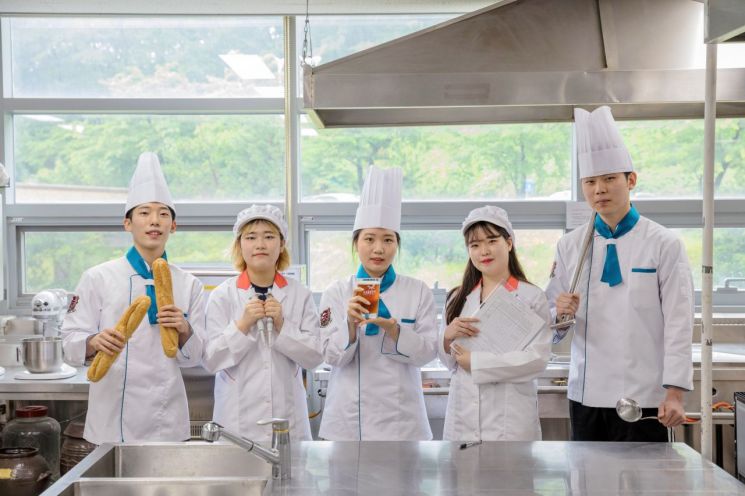
Silla University established the Major in Food and Culinary Arts reflecting the expansion of the food service industry market and the K-food wave.
The major plans to nurture talents in the food field equipped with both science and humanities through a four-year curriculum covering basic culinary courses as well as various programs including baking and pastry, beverages, ready-to-eat meals, craft beer, and traditional liquor fermentation.
Silla University annually transfers traditional liquor manufacturing, quality maintenance, and management technologies to residents of Busan, Ulsan, and Gyeongnam through the Makgeolli Globalization Research Institute and the Traditional Liquor Specialist Training Project.
Experts in the liquor industry provide specialized education in craft beer and traditional liquor fermentation, supporting students not only in employment at liquor companies but also in entrepreneurship.
Moreover, the major trains culinary artists who lead future food culture by integrating humanities imagination and scientific knowledge, covering promising post-COVID-19 industries such as manufacturing of ready-to-eat meals (HMR) and meal kits for food service businesses.
The Major in Food and Culinary Arts operates a comprehensive food expert course that includes pet food and inner food (edible cosmetics) development.
Additionally, customized education centered on individual students is designed, offering double majors, minors, convergence majors, and student-designed majors such as Fisheries Processed Food Convergence Major, Cafe Patissier Management Convergence Major, Food Service Culinary Management Convergence Major, and HACCP/GMP Convergence Major to support "student success."

◇ Department of Future Convergence
The Department of Future Convergence provides educational services tailored to adult learners through an innovative education system.
It operates curriculum focused on jobs and competencies leading future social trends.
Courses include real estate and stock investment, beauty design, practical dance and music, and railway vehicle systems engineering, supporting acquisition of national and certified qualifications and certificates for each course.
© The Asia Business Daily(www.asiae.co.kr). All rights reserved.



















