Local Currency Payments for Bulk Commodity Transactions Including Russian Aviation Fuel in Yuan
De-dollarization Is an Irreversible Trend...Arguing It as a Stepping Stone for Yuan Internationalization
[Asia Economy Beijing=Special Correspondent Jo Young-shin] China and Russia, which are sharply confronting the United States, have decided to expand yuan settlement in their trade transactions. China, which has been promoting de-dollarization for several years, expressed expectations that this expansion of local currency settlement will serve as a stepping stone for the internationalization of the yuan.
China's state-run Global Times quoted Alexander Dukov, CEO of Gazprom Neft, reporting on the 6th that China and Russia have agreed to expand yuan and ruble settlements in trade transactions. The state-owned Gazprom Group is one of Russia's top three oil and gas companies.
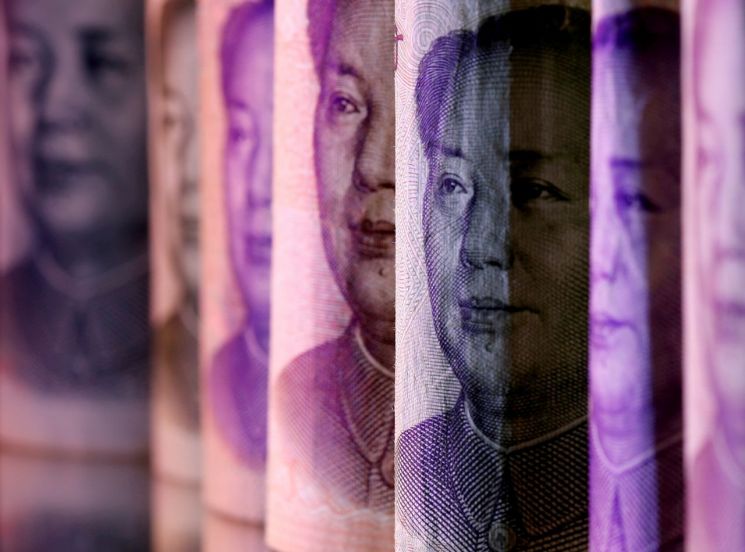
In an interview with Russian media, CEO Dukov said, "Gazprom Neft has completed negotiations with a Chinese state-owned oil company (aviation fuel supplier)," adding, "Chinese airlines can pay for aviation fuel in yuan or rubles." He added that while aviation fuel payments had been made in dollars until now, from this month onward, payment in yuan will be possible.
The Global Times reported that trade transactions between China and Russia have significantly increased, and that yuan will be used instead of the US dollar in bulk commodity trades such as oil, natural gas, and coal.
Song Kui, director of the China-Russia Regional Economic Research Institute, said, "China and Russia share the same view that de-dollarization must be promoted to prepare for unilateral US financial sanctions," emphasizing, "This move will be an opportunity to break away from the old US-centered global financial system dominated by dollar hegemony."
The Global Times pointed out that in April, the European Parliament passed a resolution to block Russia from the global financial messaging system SWIFT (Society for Worldwide Interbank Financial Telecommunication) due to the Ukraine issue, warning that the US could expand its crackdown to China's financial sector.
Li Xin, head of the Russia and Central Asia Research Center at the Shanghai International Studies Institute, argued, "Non-dollar transactions are an irreversible trend," and insisted, "To further activate currency transactions between China and Russia, the scale of currency swap agreements between the two countries should be expanded." China and Russia signed a currency swap agreement worth 150 billion yuan (about 27 trillion won) in 2014, which is renewed every three years. This is also interpreted as a measure to prepare for the possibility of the Russian ruble depreciating.
China is encouraged by the rise in the Renminbi Internationalization Index (RII). Although the Chinese leadership has been striving for the internationalization of the yuan for years, visible results had not been achieved. However, the expansion of the Belt and Road Initiative and the COVID-19 pandemic last year have led to an increase in the yuan settlement index.
According to the "Yuan Internationalization Report 2021" recently released by the International Monetary Research Institute of Renmin University of China, the yuan internationalization index recorded 5.02 at the end of last year, up 54.2% compared to the same period the previous year. This ranks third after the dollar (51.27) and the euro (26.17), while the yen and the pound stood at 4.91 and 4.15 respectively. The share of yuan settlement in international trade is 2.9%.
© The Asia Business Daily(www.asiae.co.kr). All rights reserved.
![Clutching a Stolen Dior Bag, Saying "I Hate Being Poor but Real"... The Grotesque Con of a "Human Knockoff" [Slate]](https://cwcontent.asiae.co.kr/asiaresize/183/2026021902243444107_1771435474.jpg)
















