[Asia Economy Reporter Yoo In-ho] Diplomatic circles are paying attention as signs have been detected that North Korea has restarted the Yongbyon plutonium reactor after two and a half years.
Experts interpret North Korea's intention to restart the Yongbyon reactor as a demonstration of its nuclear weapons production capability and willpower to the United States.
However, experts predict that it is still uncertain whether Kim Jong-un, General Secretary of the Workers' Party of Korea, will raise the nuclear disarmament card again and engage in dialogue or carry out military provocations.
In response, the South Korean and U.S. governments, having been aware of North Korea's Yongbyon reactor restart in advance and having conducted close consultations, plan to further strengthen their cooperation mode on North Korea policy.
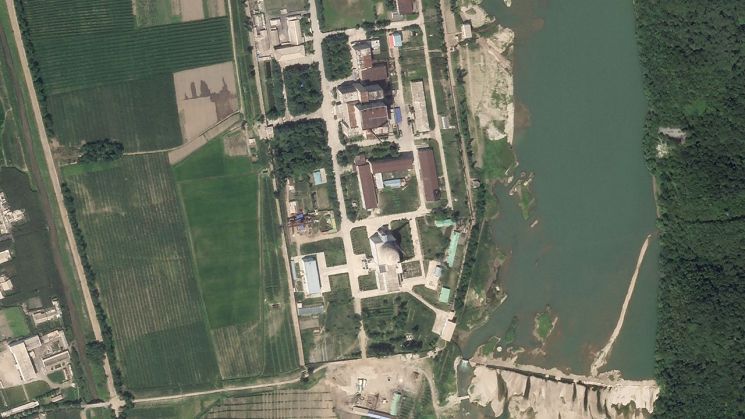
According to a recent report released by the International Atomic Energy Agency (IAEA), North Korea continuously operated the Yongbyon reactor radiochemical laboratory (reprocessing facility) from mid-February to early July this year. This is key evidence of the plutonium reactor restart.
The five-month period corresponds to the time North Korea has previously stated it takes to reprocess all spent fuel rods removed from the 5MW reactor to extract plutonium.
In fact, in April 2016, after the operation of the Yongbyon reactor radiochemical laboratory was detected, North Korea conducted its 5th nuclear test five months later. This is why there is a strong possibility of plutonium extraction by North Korea.
The 5MW reactor in Yongbyon, Pyonganbuk-do, has been North Korea's core nuclear facility in full operation since 1986. Spent fuel rods removed from the reactor are reprocessed in the radiochemical laboratory to extract plutonium, the raw material for nuclear weapons. The 5MW reactor and radiochemical laboratory are central to plutonium production for nuclear weapons among the Yongbyon nuclear facilities.
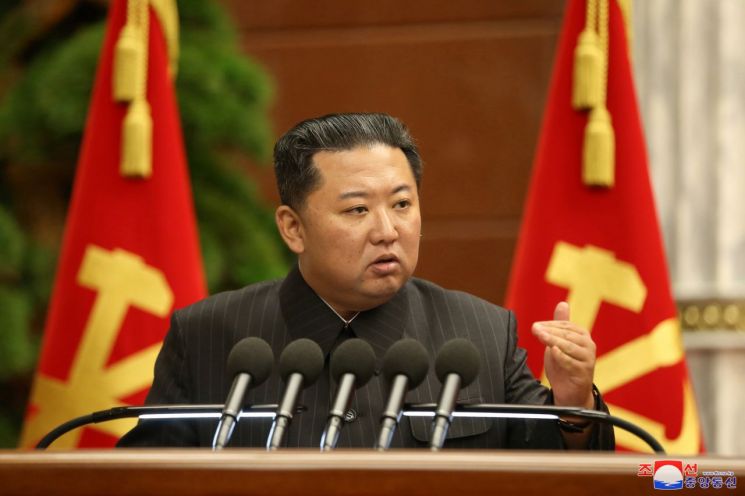
Experts view North Korea's restart of the Yongbyon 5MW reactor as either having begun work to produce plutonium and expand its nuclear weapons arsenal or intending to showcase this capability to the United States and other external parties.
North Korea promised to disable the 5MW reactor under the 2007 Six-Party Talks agreement on North Korean nuclear issues and demolished the reactor cooling tower in 2008. Afterwards, amid conflicts with the U.S. over nuclear facility declarations and inspections, North Korea declared a halt to disablement and repeatedly operated and suspended the reactor until 2018. It ceased operation from December 2018 following the Singapore North Korea-U.S. summit.
Some speculate that General Secretary Kim may be presenting the reactor restart as a card for North Korea-U.S. negotiations. Since the Biden administration claimed to implement the Singapore agreement but nothing has materialized, this may be interpreted as pressure to "show substantive actions, not just words."
However, since the South Korean and U.S. governments have continuously monitored the signs of restart and maintained close consultations, significant changes in inter-Korean and North Korea-U.S. relations are unlikely.
The fact that the two governments' responses after the IAEA report release remain unchanged from the existing stance of "closely monitoring North Korea's nuclear missile activities under tight South Korea-U.S. cooperation" also supports this.
In this regard, on the 31st of last month, Noh Kyu-duk, South Korea's Chief Negotiator for Peace on the Korean Peninsula, who visited the United States, stated, "The Biden administration firmly maintains a forward-looking, creative, flexible, and open attitude to resume dialogue with North Korea and achieve progress."
Although it was revealed through the IAEA report that North Korea restarted the reactor within the Yongbyon nuclear facility, both South Korea and the U.S. still adhere to the policy direction of resuming dialogue.
On the same day, Jen Psaki, White House Press Secretary, also indicated the U.S.'s willingness to engage in dialogue with North Korea by saying, "The offer to meet anytime, anywhere without preconditions remains."
© The Asia Business Daily(www.asiae.co.kr). All rights reserved.


















