[Asia Economy Reporter Lim Hye-seon] Kim Su-jin (39), a working mom living in Mapo-gu, Seoul, always checks the nutritional content when choosing ready-to-eat meal (MHR) products. Since the COVID-19 pandemic, the frequency of eating ready-to-eat meals at home has more than doubled compared to last year, and she wants to consume "healthier" products whenever possible. The first nutrient she looks at is sodium. Most soup and stew products contain sodium levels exceeding 90% of the daily recommended intake. Kim said, "Since I often eat ready-to-eat meals with my family while working, I try to find and buy products with low sodium content and high protein whenever possible."
Half of Daily Sodium Intake in One Ready Meal
According to the food industry and the Korea Consumer Agency on the 3rd, the sodium content in soup and stew ready meals ranges from 48% to 97% of the daily intake reference and nutritional standards. Eating just one meal means consuming half or even the maximum of the daily recommended amount. The sodium content of product A Yukgaejang reached 97% of the daily standard, higher than product B Naengmyeon (96%) and product C Ramen (90%). The domestic ready meal market continues to emphasize "taste" and "convenience," resulting in high sodium levels.
Overseas, the "Health & Wellness Ready Meal" market has already reached a scale of 10 trillion won. Evolving from the existing cost-effective ready meals emphasizing taste, quantity, and ingredients, it has become a segmented market reflecting consumers' diverse dietary habits and lifestyles, such as high-protein, low-fat, low-carb, and gluten-free options. Unlike the past, which focused mainly on organic or low-calorie products, the market is now evolving to segment overall health and nutritional balance by reflecting consumers' diverse dietary needs and lifestyles. The overseas brand 'Nestl? Life Cuisine' is a representative example. Nestl? offers products divided into four concepts for healthy eating: Low Carb, Meatless, High Protein, and Gluten Free.
The Booming Health Ready Meal Market
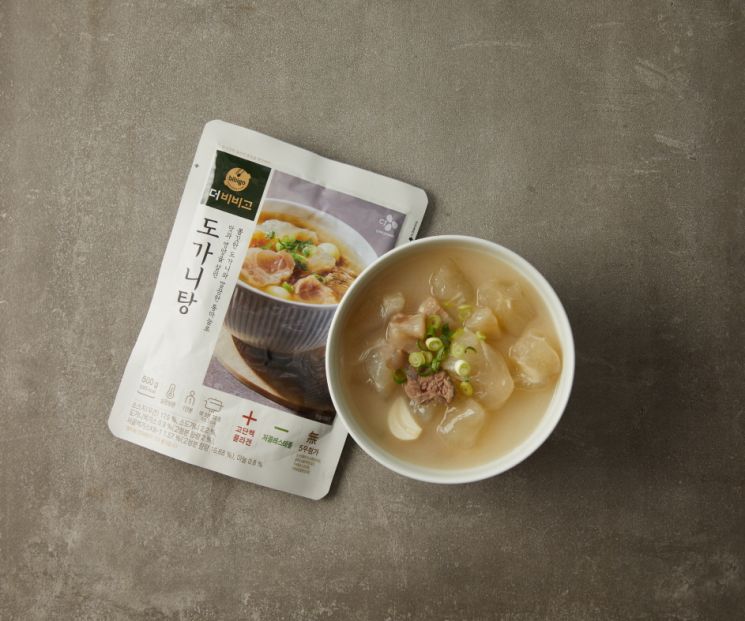
Health ready meals are being competed for by CJ, Daesang, and Hyundai Green Food. CJ CheilJedang's health ready meal brand 'The Bibigo' promotes next-generation Korean home meal replacements that combine home-cooked taste and quality with health and nutrition. Since its official launch in November last year, it has been selling six types of soup dishes (Ox Knee Soup, Ginseng Short Rib Soup, Abalone Flounder Seaweed Soup, Nutritious Duck Soup, Astragalus Chicken Soup, Nutritious Oxtail Soup) and five types of rice bowl sauces (Beef Brisket and Snail Soybean Paste Sauce, Mushroom Bulgogi Sauce, Tofu Cheonggukjang Sauce, Burdock Beef Sauce, Young Radish Soybean Paste Sauce).
'The Bibigo' was developed based on CJ's strict product design standard called the 'Nutrition Design Guideline.' This guideline, verified by the Korean Nutrition Society, applies standards for calories and five nutrients (fat, saturated fat, trans fat, sugars, sodium). Accordingly, 'The Bibigo' uses ingredients commonly used in healthy diets to reduce sodium and cholesterol, which are often consumed excessively in daily diets, while adding protein and dietary fiber, which are often lacking. Through 'health and nutrition design' based on the 'Food Labeling Standards' such as 'high protein,' 'protein fortified,' 'low sodium,' 'low cholesterol,' and 'contains dietary fiber,' it diversifies consumer choices. Additionally, using 'low sodium-based flavor preservation technology,' it researches flavor patterns by menu characteristics to create tasty health ready meals that are not salty. Since the beginning of this year, the average monthly sales of 'The Bibigo' have increased by more than 20% compared to last year.
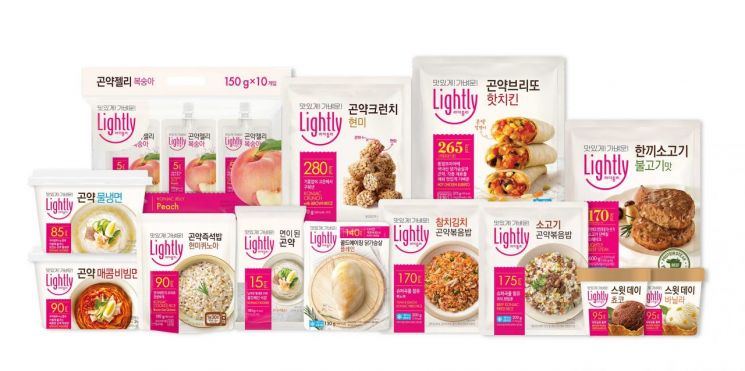
Daesang's 'Lightly' is an online specialty brand designed to allow consumers to enjoy various everyday menus deliciously without calorie concerns. Its popular product, 'Lightly Konjac Fried Rice,' contains 170-220 kcal per pack, about two-thirds the calories of a 200g bowl of rice (300 kcal), making it less burdensome.
Hyundai Green Food offers customized healthy meal plans in ready meal form through its 'Greeting' brand. Designed with lower sugar, sodium, and calories than a typical meal, it has received positive responses from patients needing health management. Samsung Welstory also launched the brand 'Lalamilz' with the concept of 'ready meals enhanced with premium nutrition.'
© The Asia Business Daily(www.asiae.co.kr). All rights reserved.
![Clutching a Stolen Dior Bag, Saying "I Hate Being Poor but Real"... The Grotesque Con of a "Human Knockoff" [Slate]](https://cwcontent.asiae.co.kr/asiaresize/183/2026021902243444107_1771435474.jpg)

















