Inauguration as President of the Nuclear Society on the 1st
Realizing Carbon Neutrality Requires a 'Pragmatic' Rather Than 'Ideological' Perspective
Strengthening Communication Between Government and Academic Societies
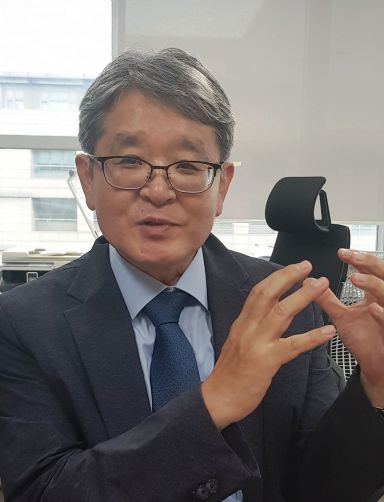
[Asia Economy Reporter Joo Sang-don] "Back in 2017, when the Moon Jae-in administration took office, the keyword ‘Japan Fukushima Nuclear Accident’ was still prevalent, and based on that, the nuclear phase-out policy was introduced. However, now the global agenda of ‘carbon neutrality’ has emerged. This is a challenge of a completely different dimension. To respond to the urgent climate crisis and realize carbon neutrality, the role of nuclear power, which emits no carbon, must be expanded."
On the 1st, Jeong Dong-wook, professor of the Department of Energy Systems Engineering at Chung-Ang University, who assumed the presidency of the Korean Nuclear Society, emphasized in an interview with Asia Economy that "the role of nuclear power is essential to achieving carbon neutrality." He said, "We must limit the global temperature rise to 1.5℃ by 2100, and there are barely 80 years left. Even now, the government must reconsider energy policy from a pragmatic perspective rather than an ideological one, recognizing the absolute threat humanity faces."
Jeong’s term as president is one year. This period coincides with the time when the government must establish various policies to achieve carbon neutrality, including the 2050 carbon neutrality scenario and the additional upward revision of the 2030 greenhouse gas reduction target (NDC). Therefore, the future of Korean nuclear power is likely to be decided during his term.
For this reason, Jeong plans to focus on strengthening communication between the government and academic societies during his term. He said, "Currently, there is not even an official channel for the nuclear society or industry to convey opinions to the government," adding, "Along with policy proposals, we will use various means such as social networking services (SNS) to promote the value of nuclear power."
Jeong also strongly criticized the carbon neutrality scenario recently announced by the Presidential Committee on Carbon Neutrality. He said, "Without reviewing the appropriate share of nuclear power for carbon neutrality, it simply followed the Moon administration’s nuclear phase-out policy of ‘no nuclear power.’ I question whether the final goal of the scenario is nuclear phase-out or carbon neutrality." This is because even the scenario with the highest net carbon emissions proposed a nuclear share of only 7.2%, about one-third of the current level.
Regarding the 2050 carbon neutrality scenario, he believes a re-examination of the energy mix by expert groups is necessary. He said, "There is not a single nuclear expert among the Carbon Neutrality Committee members, and the opinions of the nuclear society and industry were not sought at all during the scenario development process, which means the potential of nuclear power was not properly reviewed. While public opinion gathering is good, expert group discussions and verification on the energy mix must be conducted."
He also emphasized that nuclear power is a necessary energy source to strengthen renewable energy. Jeong explained, "Nuclear power is not in competition with renewables but serves as a means to complement the intermittency of renewable energy. The decisive factor in lowering the cost of solar cells, the main renewable energy source, is electricity prices, and cheap electricity from nuclear power will contribute to the expansion of solar power."
© The Asia Business Daily(www.asiae.co.kr). All rights reserved.

















