The Second Frozen Human in Korea Born
Body Frozen and Stored in Ultra-Low Temperature Freezer for 100 Years
Few Companies Like Alcor in the US and KrioRus in Russia Provide Cryopreservation Services
No Technology Yet to Safely Thaw Without Damaging the Body
"Hoping for Advances in Science and Technology"
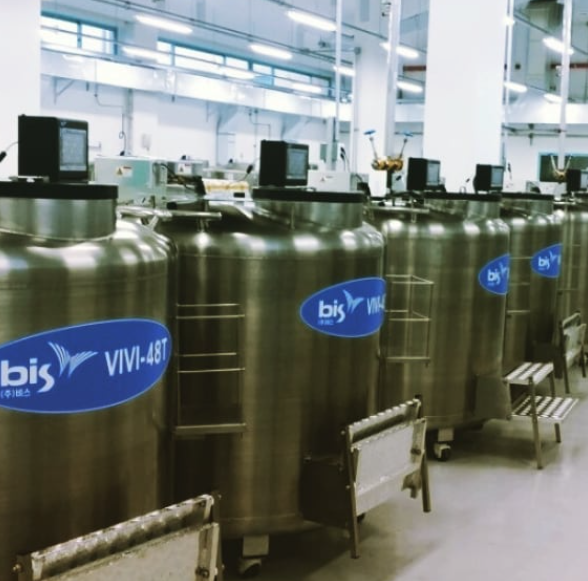
[Asia Economy Reporter Lim Juhyung] With the birth of the second-ever "frozen human" in South Korea, public interest is growing. A frozen human refers to a person preserved through cryopreservation, a process that stores the human body in a special freezer to maintain cells without damage for about 100 years. It is known that terminally ill patients or their families, facing death, choose cryopreservation in hopes of future medical advancements a century later.
However, public opinion on frozen humans remains deeply divided. While some welcome it as a source of hope to overcome incurable diseases, others are skeptical, viewing it as mere "false hope" for families unwilling to accept death.
◆Preserving the human body for 100 years... "Placing hope in scientific progress"
According to bio-cryotechnology company "CrioAsia" on the 30th of last month, Mr. A, in his 50s and residing in Mapo-gu, Seoul, requested the company to create a frozen human from his wife who died of bile duct cancer.
Mr. A's wife is currently at a hospital funeral home and is preserved in a special freezer maintained at minus 30 degrees Celsius. CrioAsia removed blood from her body and injected a cryoprotectant solution to prevent cell damage. They are currently manufacturing an upright cryopreservation chamber to house the body, expected to be completed by mid-next month.
Mr. A decided on cryopreservation because he could not fully let go of his wife. CrioAsia explained, "(Mr. A) was going through a difficult time after suddenly losing his wife to cancer, and upon learning about cryopreservation as a possible glimmer of hope, he found some comfort. Although it is uncertain if revival will be possible during their lifetime, he is placing hope in the advancement of scientific technology."
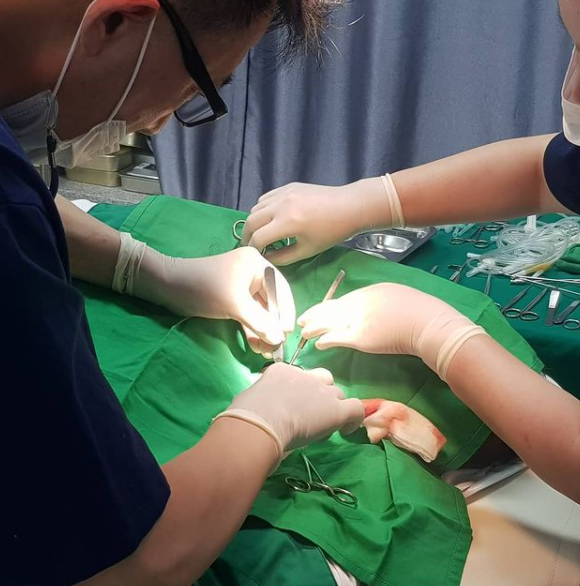 The wife of Mr. A, a man in his 50s who died of cholangiocarcinoma, became the second cryonically preserved person in South Korea. The photo shows the surgical scene of injecting cryoprotectant after drawing blood from Mrs. A. Photo by CrioAsia
Thus, Mr. A's wife became the second frozen human in South Korea's history. The first was a man in his 50s who cryopreserved his 80-year-old mother who passed away in May last year.
Cryopreservation involves lowering the body temperature below freezing, removing all blood, and injecting a cryoprotectant solution. When stored in a nitrogen freezer at minus 196 degrees Celsius, a frozen human can be preserved for about a century. However, the technology to safely "thaw" and revive a frozen human has not yet been proven, so cryopreservation is only performed on those who have been declared legally dead. Additionally, all family members must submit consent forms before the service is provided.
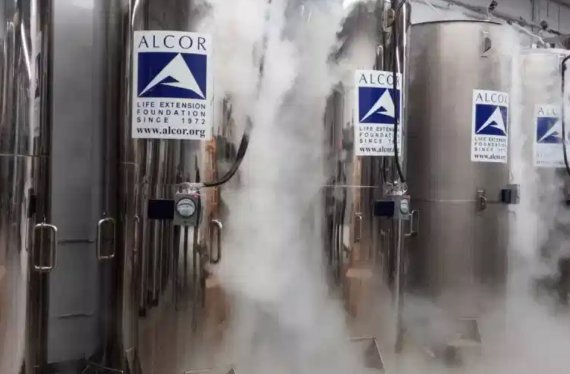
Recently, terminally ill patients placing hope in future medical technology and bereaved families longing for their deceased loved ones have chosen cryopreservation. Companies currently possessing cryopreservation technology include the Alcor Foundation (USA) and KrioRus (Russia). As of last year, approximately 600 people had requested cryopreservation services from these companies.
◆"Giving hope to patients and families" vs. "Astronomical waste on unproven technology"
Public opinion on cryopreservation is divided. Some view it positively as a technology that offers hope to patients and families, while others criticize it as a waste of vast sums on unproven technology.
Mr. B, a worker in his 20s, said, "It is positive in that it gives hope to patients suffering from rare or incurable diseases. Even if a disease cannot be cured now, who knows what the future holds?"
Another office worker, Mr. C (31), said, "If the person to be preserved has agreed, I don't see a problem. Whether they can wake up 100 years later is a gamble anyway, and since it only applies to deceased people, there are no ethical issues. If it can give hope to those left behind, it seems like a beneficial technology."
On the other hand, university student Ms. D (26) pointed out, "Isn't it a waste to pour astronomical amounts of money into a procedure that cannot even guarantee revival? I worry it might be a needless 'false hope' for families who cannot accept the death of their loved ones."
◆Collaboration with euthanasia companies overseas... "Could become a new funeral culture"
Industry insiders performing cryopreservation procedures predict that frozen humans could become a "new funeral culture."
Han Hyeongjin, CEO of CrioAsia, which has held an exclusive contract with KrioRus since 2018 to provide cryopreservation services in South Korea, said, "While promoting this business, we often use the term 'third type of funeral' externally. This is because we are aware of criticisms that American company Alcor and Russian KrioRus, which frequently mention human resurrection, are seen as unrealistic."
CEO Han added, "So far, to avoid legal issues, we only provide cryopreservation services for bodies declared legally dead. For this reason, foreign companies sometimes collaborate with euthanasia providers to perform cryopreservation together. Realistically, such business is impossible domestically, but we plan to enable service cost coverage through insurance companies soon."
Until now, CrioAsia has sent frozen humans to KrioRus's nitrogen freezer in Moscow, Russia, but is currently building a freezer domestically to enable long-term preservation.
CEO Han revealed that since publicly launching cryopreservation services in 2018, they have received over 10 requests in three years. He said, "At first, many people found frozen humans unfamiliar, but now children preparing for their parents' final moments or parents who have lost sons or daughters are requesting consultations. Public perception is gradually changing domestically. In the near future, frozen humans might become another form of funeral culture."
© The Asia Business Daily(www.asiae.co.kr). All rights reserved.



















