White House War Room Led by Economic Advisory Chairman
Political 'Focus and Prioritization' Ahead of Midterm Elections...Economic Issues Take Precedence
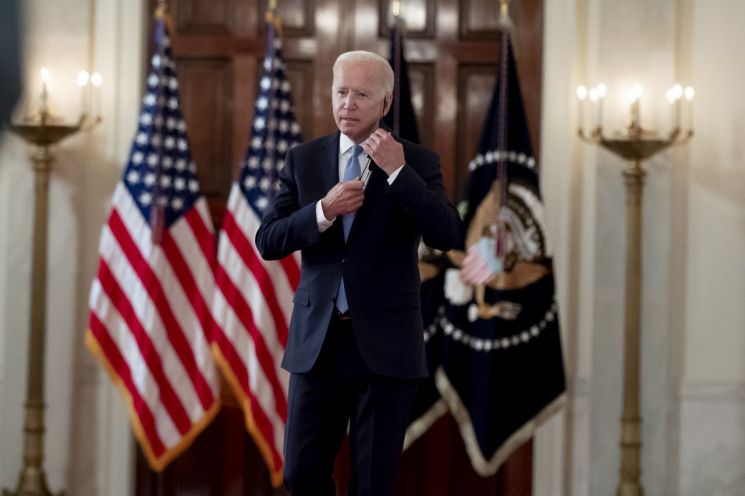
[Asia Economy Reporter Hyunwoo Lee] On the 31st of last month (local time), U.S. President Joe Biden, in a White House address to the nation, reaffirmed the justification for the withdrawal from Afghanistan despite domestic and international criticism. This is interpreted as a reassertion of the so-called ‘Biden Doctrine,’ which prioritizes U.S. national interests in foreign policy. It is analyzed that the administration is choosing to decisively abandon foreign issues that do not directly relate to U.S. national interests amid criticism, focusing its full efforts on managing the COVID-19 crisis and the economy, while concentrating on core security issues such as countering China.
According to The New York Times (NYT), since Kabul fell to the Taliban on August 15, the Biden administration has established and operated a war room within the White House. However, it is known that most of the main agenda items were not about Afghanistan but rather domestic economic issues.
The head of the war room was not a defense or foreign policy expert but rather Neera Tanden, chair of the White House Council of Economic Advisers (CEA). At a press conference on the 21st, Chair Tanden emphasized, "The Biden administration’s top policy priorities are the $1.2 trillion infrastructure investment bill and the $3.5 trillion relief package." Even during the ongoing Afghanistan situation, the top national issue remained the domestic economy.
President Biden also stressed in his national statement that day, "2,461 Americans lost their lives and over $2 trillion was spent without a clear purpose in Afghanistan," emphasizing the necessity to end the Afghanistan war, which caused enormous human and economic losses.
Foreign media reported that this clarifies the content of the ‘Biden Doctrine’ Biden announced externally when unveiling the Afghanistan withdrawal plan in May. The Biden Doctrine is a principle of decisively abandoning foreign and military operations unrelated to U.S. national interests, focusing on internal issues such as COVID-19 vaccination and economic recovery, and concentrating on the rise of China, which poses a core security threat.
President Biden said that day, "As we turn the page on the foreign policy that has guided us for the past 20 years, we must learn from our mistakes." He added, "The decision about Afghanistan is not just about Afghanistan," emphasizing, "It means ending major military operations to rebuild other countries." Foreign media analyzed this as the start of a new chapter in U.S. foreign policy.
U.S. political media outlet Politico also explained, "President Biden has entered a very cold political calculation," stating, "Even if criticism and suspicion arise at home and abroad over the withdrawal from Afghanistan, he is showing the leadership quality of accepting criticism if necessary for national interests."
Jennifer Palmieri, former White House Communications Director under the Barack Obama administration, pointed out in an interview with Politico, "The Afghanistan withdrawal issue has been settled anyway, and what remains for the Biden administration in the fall is still the rampant COVID-19 and the infrastructure investment bill."
Domestic experts also analyze that President Biden’s strategy, ahead of the U.S. midterm elections in November next year, is to focus on more sensitive domestic issues such as COVID-19, economic problems, and the China accountability narrative rather than Middle East issues.
James Kim, Director of the U.S. Research Center at the Asan Institute for Policy Studies, explained, "Within the Biden administration, there was a determination from the time the withdrawal deadline was announced that the Afghanistan withdrawal issue must be carried through despite some criticism. Considering the political factors ahead of the midterm elections, Middle East issues like Afghanistan are likely to be forgotten by the American public, but the immediate issues of COVID-19, the economy, and China will inevitably remain ongoing concerns."
© The Asia Business Daily(www.asiae.co.kr). All rights reserved.
![From Bar Hostess to Organ Seller to High Society... The Grotesque Con of a "Human Counterfeit" [Slate]](https://cwcontent.asiae.co.kr/asiaresize/183/2026021902243444107_1771435474.jpg)
















