KOSPI Turns Downward
Watching Bank of Korea Governor Lee Ju-yeol's Remarks and Jerome Powell's Speech on the 27th
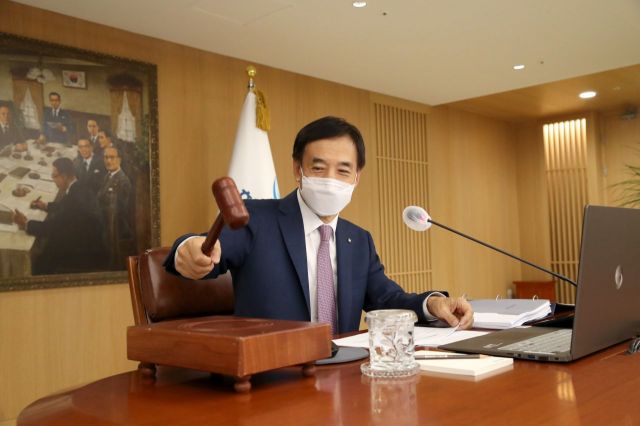
[Asia Economy Reporter Hwang Junho] As the Bank of Korea ended its 15-month era of ultra-low interest rates, the stock market turned cautious. Following the first interest rate hike since the COVID-19 pandemic, the KOSPI reversed into a decline.
As of 10:06 a.m. on the 26th, the KOSPI recorded 3,146.18, down 0.63 points. The market opened at 3,151.30, up 4.49 points (0.14%) following the rise in the U.S. stock market the previous day. However, early in the session, the market turned downward due to the Bank of Korea's Monetary Policy Committee decision to raise the base interest rate.
Although individuals and institutions tried to defend the index, they could not overcome the increasing net selling by foreign investors. Foreigners were net sellers of 51.9 billion KRW at this time. Meanwhile, individuals were net buyers of 3.1 billion KRW, and institutions were net buyers of 49 billion KRW.
The market entered a wait-and-see mode, focusing on the remarks of Bank of Korea Governor Lee Ju-yeol. Seosangyoung, a researcher at Mirae Asset Securities, said, "If Governor Lee makes dovish comments after the rate hike, the impact on the market may not be significant because this issue is already priced in. However, if hawkish remarks follow the rate hike, it could be interpreted as signaling further hikes, which would burden the market."
At the Monetary Policy Committee meeting, the interest rate was raised for the first time since May last year, from 0.50% to 0.75%. The previous hike was in November 2018, marking an increase after 2 years and 9 months. The consumer price inflation forecast was raised to 2.1%, up 0.3 percentage points from the previous estimate of 1.8%. The economic growth rate forecast for this year was maintained at 4%.
After the rate hike announcement, the top market capitalization stocks reversed into a decline. Samsung Electronics traded down 0.26% at 75,500 KRW. Samsung Electronics initially rose following a 0.8% increase in the Philadelphia Semiconductor Index and gains in U.S. semiconductor stocks the previous day, but then turned downward after the rate hike. NAVER fell 1.51% to 424,000 KRW, and Kakao dropped 0.66% to 150,000 KRW.
The won-dollar exchange rate, which closed up 0.21% at 1,168.10 KRW the previous day, fell 0.27% to 1,165.00 KRW. Kim Seunghyuk, a researcher at NH Investment & Securities, said, "The exchange rate will likely watch whether the 1,160 KRW support level holds as the Monetary Policy Committee's rate decision is observed. The acceleration of vaccine rollout and the resulting positive momentum in the U.S. stock market, along with rising U.S. bond yields, are grounds for risk appetite expansion, but they are expected to exert downward pressure today."
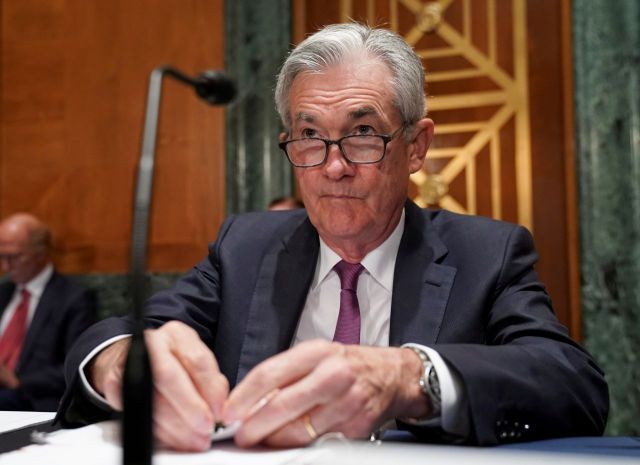
The next focus for market participants is the speech by Jerome Powell, Chair of the U.S. Federal Reserve, at the Jackson Hole Symposium on the 27th. The symposium's theme is "Macroeconomic Policy in an Uneven Economy," and it is expected to present diagnoses of indicators such as inflation and employment that justify interest rate hikes, rather than issues related to tapering. Ahead of this, the U.S. 10-year Treasury yield rose 0.05 percentage points to 1.349%, the highest level since early this month. This is interpreted as easing concerns about a slowdown in economic recovery due to the spread of the Delta variant.
Han Jiyoung, a researcher at Kiwoom Securities, said, "Since the Jackson Hole event is upcoming, its impact on the domestic stock market is expected to be limited. A cautious market is likely to continue, with trading battles in a sideways range following the previous trading day."
© The Asia Business Daily(www.asiae.co.kr). All rights reserved.


















