Emphasized at Policy Forum on 'Bidenomics and Challenges for the Korean Economy' Hosted by National Research Institute
"Tax Increase Should Be Judged Neutrally Considering Economic Conditions and Fiscal Capacity"
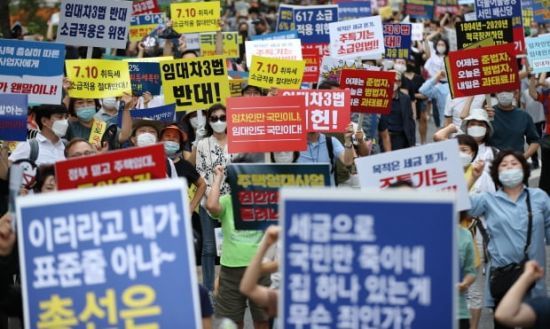
[Sejong=Asia Economy Reporter Kim Hyunjung] It has been argued that for the success of the Korean New Deal, a concrete financing plan for the project period must be prepared to address fiscal soundness issues. It was explained that if budget waste or improper fiscal management occurs during the operation process, the public may face 'tax resistance.'
On the 25th, Yoon Sungjoo, Head of the Fiscal Expenditure Analysis Center at the Korea Institute of Public Finance, stated this at the policy forum titled "Bidenomics and Challenges for the Korean Economy," jointly hosted by the Korea Development Institute (KDI), the Korea Institute of Public Finance, the Korea Institute for Industrial Economics & Trade, and the Korea Institute for International Economic Policy at the Bankers' Hall in Seoul. In the first session of the day (Monetary and Fiscal Policies of the Biden Administration and Corresponding Challenges), Yoon, who presented on "Fiscal and Tax Policies of the Biden Administration and Their Implications," explained, "In the U.S., large-scale government spending policies have raised major issues regarding financing methods and fiscal soundness. The Committee for a Responsible Federal Budget (CRFB) has also emphasized the need for specific financing plans by period."
Furthermore, he said, "If budget waste cases or improper fiscal management occur during the operation of the Korean New Deal, taxpayers may strongly resist tax increases when the time comes for additional taxation. According to recent survey results, among fiscal systems urgently needing improvement for efficient fiscal management, 'activation of budget waste reporting' and 'promotion of expenditure restructuring' ranked high." In fact, in a survey conducted by the Korea Institute of Public Finance in February last year targeting 2,000 general citizens on "Fiscal systems urgently needing improvement for efficient fiscal management" (multiple responses allowed), a significant number of respondents chose activation of budget waste reporting (40.2%) and promotion of expenditure restructuring (39.5%). This was followed by reform of habitual private subsidy projects (34.2%), prevention of fiscal leakage (29.3%), collaborative budget formulation (24.8%), and others (1.0%).
Yoon emphasized, "In a reality with high uncertainty about the future, such as health crises and natural disasters, mid- to long-term fiscal planning is necessary to enhance fiscal sustainability after COVID-19. For large-scale fiscal expenditure policies like the Korean New Deal, it is important to establish sustainable and predictable plans through bipartisan support beyond political factions and to gain market trust and support through consistent policy implementation."
Regarding the often-mentioned financing method of 'tax increases,' he expressed a negative view. He stated, "In the U.S., tax increases have been proposed as a financing method, but the Biden administration's tax increases mainly aim to address issues of tax fairness in the U.S. tax system following the TCJA, and it is difficult to say that a global trend of tax increases is emerging. The decision on whether to raise taxes in Korea should be made neutrally, considering the economic situation, fiscal capacity, and conditions of fiscal revenue and expenditure."
He also argued that to enhance the effectiveness of the Korean New Deal policy, continuous improvements should be made in ▲ project feasibility ▲ concretization ▲ cooperation with local governments ▲ private sector participation, so that the public can experience tangible results. He stressed, "If the project lacks concreteness, it negatively affects sustainability and is unlikely to gain market trust. If private sector participation is not induced, it may remain just a typical government fiscal project." He added, "There are also criticisms of state-led initiatives in the U.S.."
© The Asia Business Daily(www.asiae.co.kr). All rights reserved.

















