Iran Resumes Oil Exports to Afghanistan Last Week
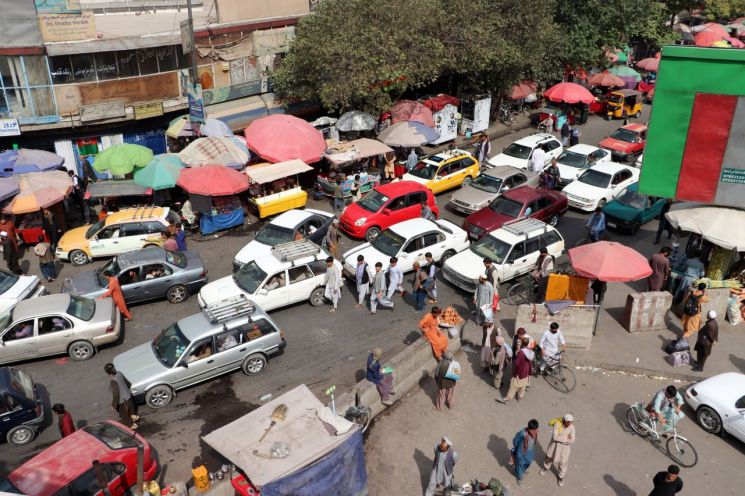
[Asia Economy Reporter Park Byung-hee] After the Islamic militant group Taliban took control of Afghanistan, gasoline prices within the country have soared.
As Afghan citizens attempt to flee abroad, gasoline demand has surged, while countries that supplied petroleum products to Afghanistan, such as Iran and Turkmenistan, have reduced their supply citing safety concerns. The Taliban urgently requested support from Iran, and with Iran responding positively, there are prospects for expanded cooperation between the Taliban and Iran in the future.
According to major foreign media on the 23rd, local gasoline prices in Afghanistan have surged to $900 per ton, and the Taliban requested Iran to resume petroleum supply.
Iran halted petroleum exports to Afghanistan on the 6th, citing inability to guarantee safety. However, after the Taliban sent a message requesting the border to be opened so intermediaries could continue transactions, the Iranian government resumed petroleum exports to Afghanistan last week.
Hamid Hoseini, spokesperson for the Iran Petroleum, Gas, and Petrochemical Products Export Union, said, "The Taliban sent a message asking if petroleum products could continue to be exported," adding, "Thanks to the message from the Taliban, Iran's concerns about the safety of intermediaries have lessened." It was also confirmed that Afghanistan reduced import tariffs on gasoline, diesel, and liquefied petroleum gas (LPG) by 70%.
Iran ranks fourth in the world in petroleum reserves. However, petroleum export volumes significantly decreased due to sanctions imposed by former U.S. President Donald Trump in 2018. Hoseini said, "With the withdrawal of U.S. troops, Iran and Afghanistan can trade more openly."
He added, "The new Iranian government will considerably expand cooperation with the Taliban government," and "The trade volume between Iran and Afghanistan will easily double." He also noted, "The previous Afghan government led by President Ashraf Ghani tried to reduce cooperation with Iran due to U.S. sanctions."
Afghanistan has not been able to develop its own petroleum industry. There are six small refineries in Afghanistan, and the refined products produced amount to only tens of thousands of barrels per day.
According to data from the Afghan government and chambers of commerce, Afghanistan imported the most energy from Iran from March 2020 to March this year. Iran's exports to Afghanistan, mostly energy products, amounted to $367 million. Next were Turkmenistan with $257 million and Uzbekistan with $236 million. The exports from Turkmenistan and Uzbekistan were also mostly petroleum products.
According to officials, Turkmenistan also stopped supplying condensate, an ultra-light crude oil, about a month ago but is expected to resume soon.
© The Asia Business Daily(www.asiae.co.kr). All rights reserved.
![From Hostess to Organ Seller to High Society... The Grotesque Scam of a "Human Counterfeit" Shaking the Korean Psyche [Slate]](https://cwcontent.asiae.co.kr/asiaresize/183/2026021902243444107_1771435474.jpg)
















