Jeongseon 'Naeyeonsamyongchudo' and 'Naeyeonsanpokpodo' Paintings
Evoking Scenic Charm with Waterfalls, Dragon Pools, and Steep Cliffs
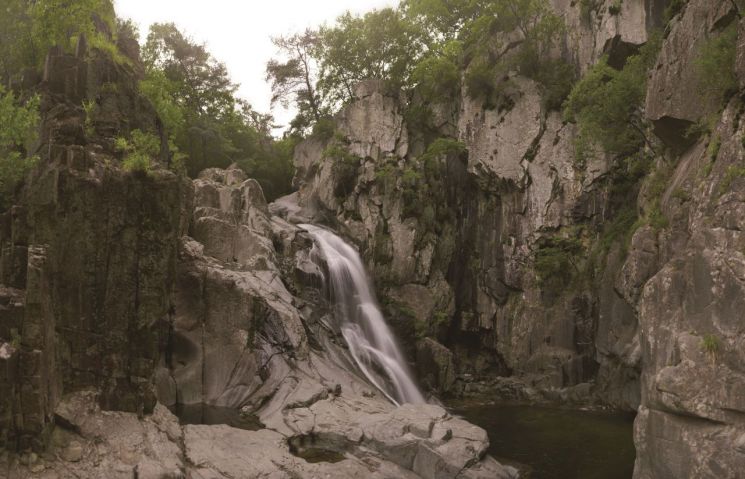
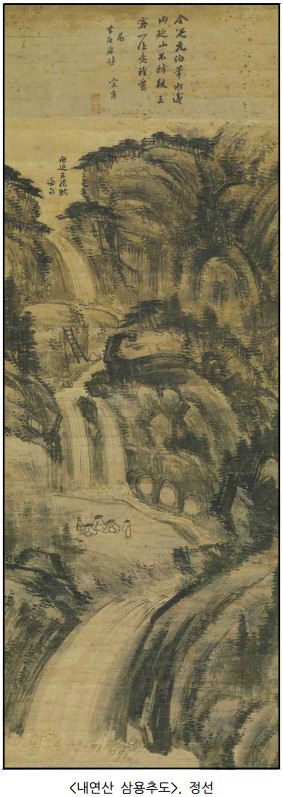
Gyeomjae Jeong Seon (1676?1759), who focused on Korea's famous mountains and scenic spots, served as the governor of Cheongha County for three years starting in 1733, during which he created works such as Naeyeon Samyongchudo and Naeyeonsan Pokpodo. Each piece is a true-view landscape painting filled with rugged cliffs and mist. Although he painted actual scenery and views, he emphasized the depiction of 'shin-sa (spirit), sa-sa (likeness), and jeon-shin (transmission of spirit),' the essentials of literati painting, rather than mere form copying (hyeongsa).
The base for these works, Naeyeonsan in Pohang, remains famous for its outstanding scenery. The erosional landforms include waterfalls, dragon pools (deep basins formed beneath waterfalls), sheer cliffs, and deeply carved valleys, all creating a refined and elegant atmosphere. The valley stretches about 10 km in a straight line. Surrounding it are green forests of Mongolian oak, ash trees, cornelian cherry, and bottlebrush trees. Among the jagged rocks scattered throughout, plants such as maidenhair fern, saxifrage, and ice plant grow.
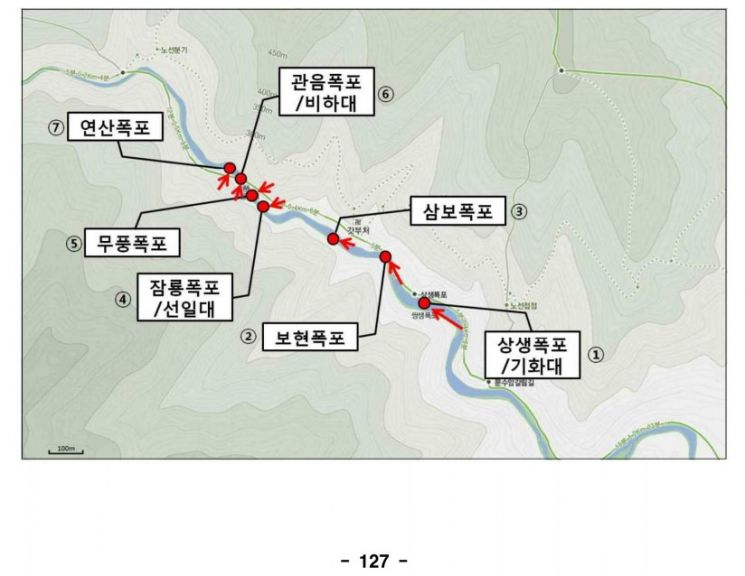
The Cultural Heritage Administration announced on the 23rd that it has named this area (691,013㎡) 'Pohang Naeyeonsan Waterfalls (浦項 內延山 瀑布)' and plans to designate it as a nationally recognized scenic site. Opinions from various sectors will be collected over a month, and the designation will be finalized after review by the Cultural Heritage Committee. The area, known as Cheongha Valley or Naeyeon Valley due to its clear and clean water, features waterfalls that can be encountered after passing the historic temple Bogyeongsa at the valley entrance. The abundant waterfall water flows into large and small dragon pools, evoking a refreshing sensation.
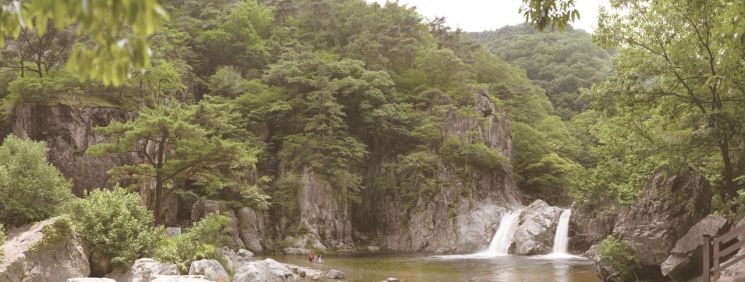
In particular, the largest waterfall, Yeonsan Waterfall (Naeyeon Waterfall), is widely known for its roaring water sound in summer and ice pillars in winter. Seo Sawon (1550?1615), a mid-Joseon scholar, described it in Dongyu Ilrok (Record of Eastern Travels) as follows: "A white cliff thousands of feet high stood guarding on both sides, and a waterfall hundreds of feet tall flew straight down. Below was a sacred pond of unfathomable depth. The strange rocks by the pond were naturally flat enough to seat dozens of people. Climbing up a ladder, it felt as if I were sitting in a celestial realm, and I shouted involuntarily."
The Cultural Heritage Administration stated, "Naeyeonsan and Samyongchu are recorded in Shinjeung Dongguk Yeoji Seungnam and Daedongyeojido, and the beauty of the waterfalls has been depicted in poetry, prose, and paintings such as Jeong Seon's Naeyeonsan Pokpodo and Naeyeon Samyongchudo, and Hwang Yeoil's Yuramrok." They added, "It has high historical and cultural value as it offers a glimpse into the lives of ancestors who lived alongside this natural heritage."
© The Asia Business Daily(www.asiae.co.kr). All rights reserved.
![Clutching a Stolen Dior Bag, Saying "I Hate Being Poor but Real"... The Grotesque Con of a "Human Knockoff" [Slate]](https://cwcontent.asiae.co.kr/asiaresize/183/2026021902243444107_1771435474.jpg)


















