Switch to Relative Evaluation as Early as the Year After Next
Number of Successful Candidates, Previously Around 20,000 Annually, Expected to Decrease
Gradual Implementation Considering Examinee Confusion
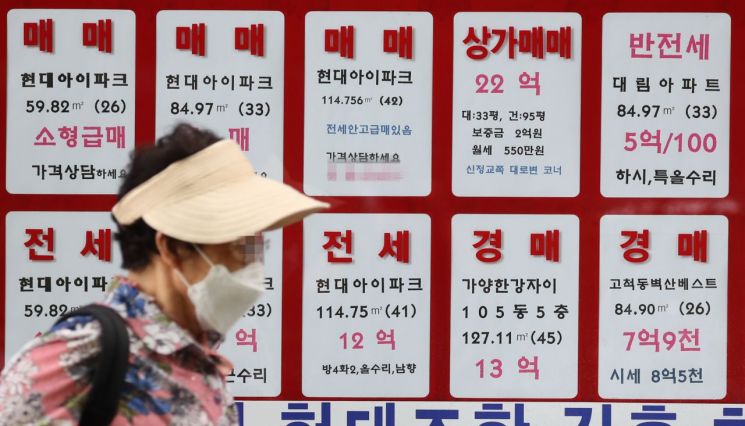
Starting as early as 2022, the Certified Real Estate Agent exam system will change from an absolute evaluation to a relative evaluation. This change reflects the industry's demand that the number of new certified real estate agents is excessive. Accordingly, the number of exam passers, currently around 20,000 annually, is expected to decrease significantly. Along with this, the government has decided to reduce brokerage fees for real estate sales and lease contracts to up to half of the current level.
On the 20th, the Ministry of Land, Infrastructure and Transport announced the finalized "Real Estate Brokerage Fees and Brokerage Service Improvement Plan," which includes these details. According to the reform plan, the government will improve the system by adjusting the difficulty of the broker exam and introducing relative evaluation. However, the Ministry plans to maintain the current absolute evaluation method at least until next year to minimize confusion and prevent disadvantages to existing exam candidates due to the system change.
Currently, the Certified Real Estate Agent exam uses an absolute evaluation system where candidates pass if they score above an average of 60 points in both the first and second parts, resulting in more than 20,000 passers in some years. In 2019, 27,078 candidates passed, and last year, 16,554 passed. The number of applicants is also increasing. This year’s exam, which recently closed registration, attracted 408,492 applicants, an increase of 65,481 from last year’s 343,011. This is the highest number since the Certified Real Estate Agent system was introduced.
Because of this, organizations like the Korea Association of Certified Real Estate Agents have long argued for switching the exam to relative evaluation to control supply and demand. However, many in the market opposed this, fearing that a decrease in the number of passers could lower the quality of brokerage services, so the change has been difficult to implement.
The Ministry of Land, Infrastructure and Transport was initially negative about switching to relative evaluation but reportedly accepted it as a carrot-and-stick measure alongside the reduction of brokerage fees. However, considering the backlash from current examinees and the market, the Ministry plans to approach the change cautiously. A Ministry official said, "The number of passers under the relative evaluation system has not yet been decided," adding, "We will carefully decide after research projects and statistical analysis."
Meanwhile, the reform plan includes a cap system for brokerage assistants. The Ministry plans to introduce a limit on the number of brokerage assistants hired per brokerage office, considering the number of certified real estate agents at each office. Additionally, to allow competitive brokerage corporations to enter the market, the current statutory minimum capital of 50 million won will be raised. Currently, tax accountants and appraisers have minimum capital requirements of 200 million won, which is higher than that for brokers. The Ministry also plans to improve regulations by relaxing restrictions on concurrent business activities of brokerage corporations to encourage them to provide comprehensive real estate services.
© The Asia Business Daily(www.asiae.co.kr). All rights reserved.
![User Who Sold Erroneously Deposited Bitcoins to Repay Debt and Fund Entertainment... What Did the Supreme Court Decide in 2021? [Legal Issue Check]](https://cwcontent.asiae.co.kr/asiaresize/183/2026020910431234020_1770601391.png)
















