High-Level Officials Interviewed by Major Foreign Media
Leadership Meetings Governed Under Supreme Leader's Command
Political Structure Similar to Former Taliban Regime
Plans to Establish New Defense Forces Including Former Government Troops
"Women's Policies Will Be Implemented Solely Based on Islamic Sharia Law"
Fear Politics Evident with Shooting at Protesters and Suppression of Journalists
[Asia Economy Reporter Kim Suhwan] A senior Taliban official stated that Afghanistan is not a democratic country and will be governed according to Islamic law. On the same day, during a large-scale protest against the Taliban regime, Taliban forces fired at civilians, resulting in more than three deaths, including an incident where a woman was shot and killed by forces presumed to be Taliban, signaling the onset of the Taliban's reign of terror.
Wahidullah Hashimi, who has access to the Taliban's decision-making process, said in an interview with a major foreign news agency on the 18th (local time), "The Taliban leadership council will govern Afghanistan, and the supreme leader Hibatullah Akhundzada will remain as the overall leader."
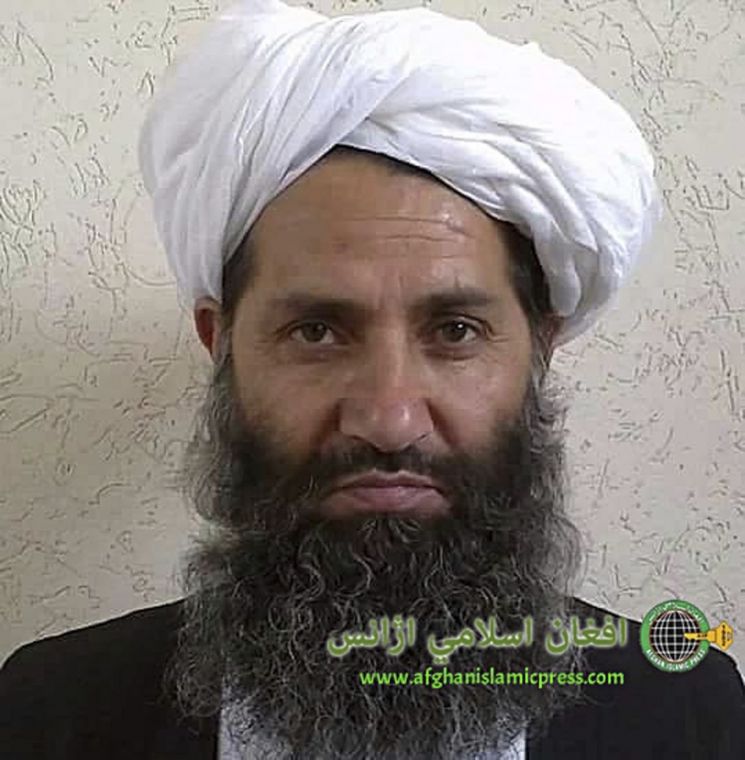
He emphasized that Afghanistan is not a democratic country, stating, "Our country is fundamentally not a democratic state, so there will be no democratic system," and added, "The political system to govern Afghanistan is clear. It is Islamic Sharia law."
Hashimi also mentioned that he plans to attend the Taliban leadership meeting scheduled for this week.
The political structure described by Hashimi resembles the Taliban regime that ruled Afghanistan from 1996 to 2001. At that time, the leadership council governed the country, and the supreme leader, Mullah Muhammad Omar, wielded actual power.
Hashimi said, "The Taliban's deputy leader is expected to perform the role of 'president.'"
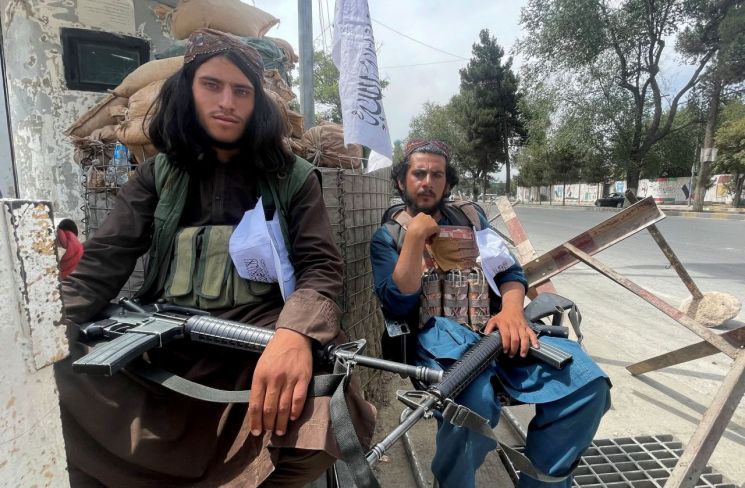
Currently, the Taliban leadership includes the supreme leader and three powerful deputy leaders. These deputies support the supreme leader and include Muhammad Yaqub, son of Taliban founder Muhammad Omar; Sirajuddin Haqqani, leader of the Taliban-affiliated armed group 'Haqqani Network'; and Abdul Ghani Baradar, the political leader.
Hashimi stated, "The Taliban will establish a new national military force," adding, "It will include existing Afghan government forces who wish to join."
He also said, "We will request Afghan Air Force pilots and soldiers to join, and neighboring countries are expected to return military aircraft that soldiers have taken."
The Taliban's desire for existing Afghan government forces stems from the fact that they currently lack air force personnel capable of piloting combat aircraft. Although helicopters and aircraft belonging to the government fell into Taliban hands during the government's collapse, there are no pilots to operate them.
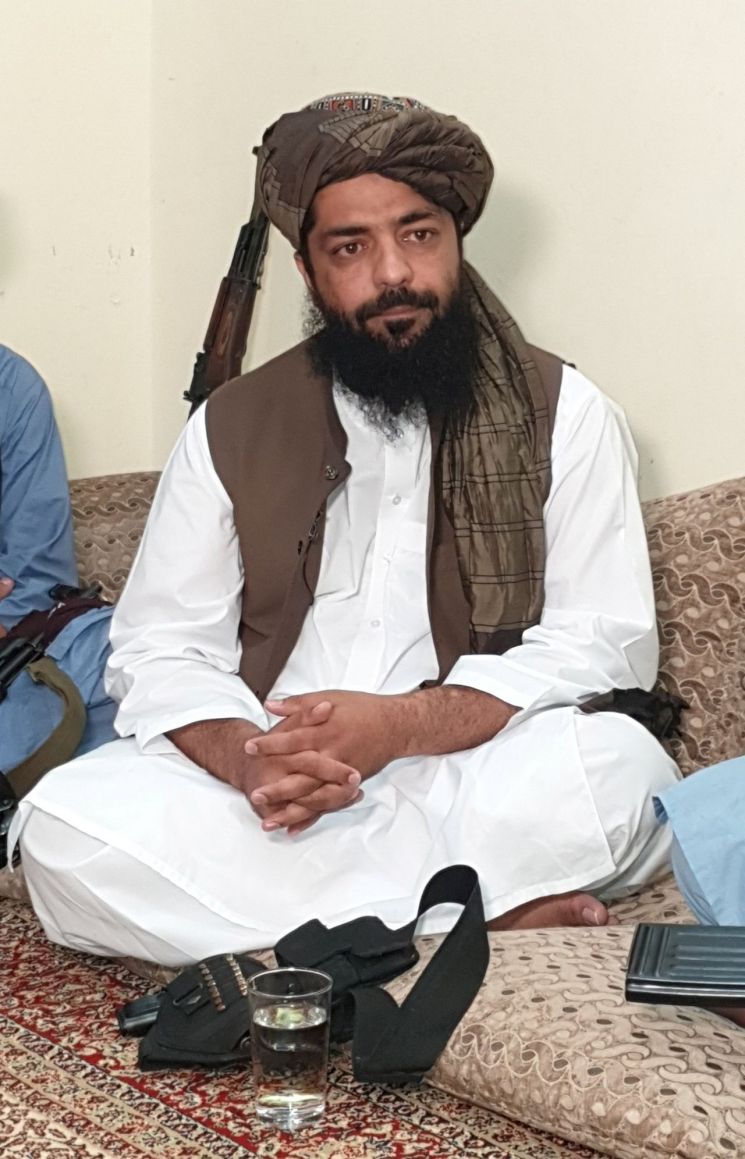
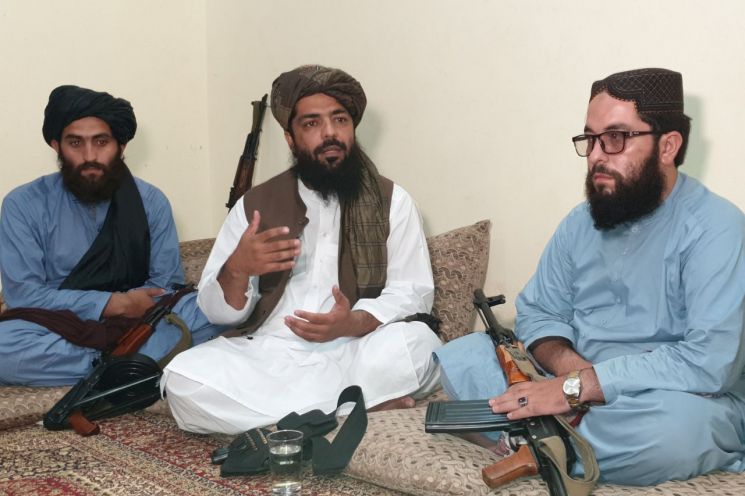 On the 17th (local time), Wahidullah Hashimi, a senior Taliban official, is conducting an interview with foreign media at an undisclosed location in the border area between Afghanistan and Pakistan.
 [Image source=Reuters Yonhap News]
However, foreign media have expressed doubts about whether Afghan government forces can smoothly join the Taliban. This is because Taliban insurgents have killed thousands of Afghan government soldiers, and recently, terrorist attacks targeting Afghan Air Force personnel trained by the U.S. military have occurred repeatedly.
Hashimi also explained that Islamic law scholars will decide on women's roles and whether female students will be allowed to attend school.
He added, "Whether women wear the hijab, burqa, or an abaya with a veil depends on the decision of the Islamic scholars."
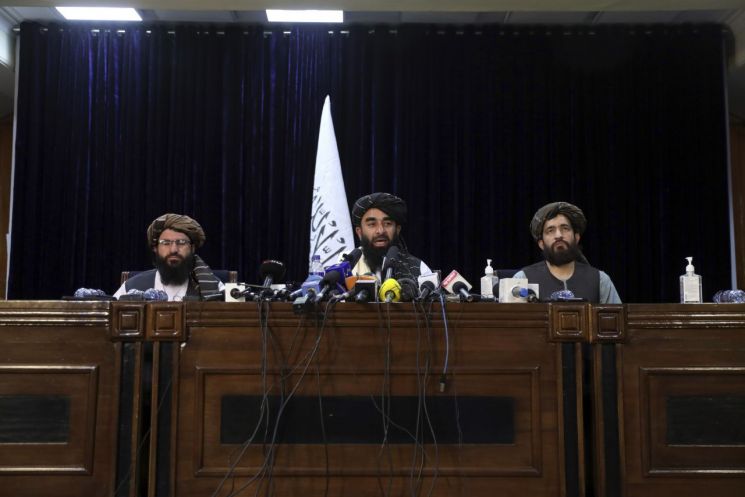 On the 17th (local time), Zabihullah Mujahid (center), spokesperson for the Islamic militant group Taliban, held a press conference in Kabul, the capital of Afghanistan.
 [Image source=Yonhap News]
The burqa is a garment that covers the face with black cloth, and the abaya is a long black robe covering from the neck to the feet, excluding the face.
Hashimi said there is a committee of Islamic scholars who will decide on these policies, asserting, "99.99% of the Afghan people are Muslim, and we must apply Islamic law."
Previously, the Taliban had made conciliatory gestures, promising to respect freedom of the press and women's rights. On the 17th, during their first public press conference since occupying Afghanistan, the Taliban stated, "We want independent civil media activities within Afghanistan," and "We will respect women's rights within the framework of Islamic law and plan to allow women's employment and education."
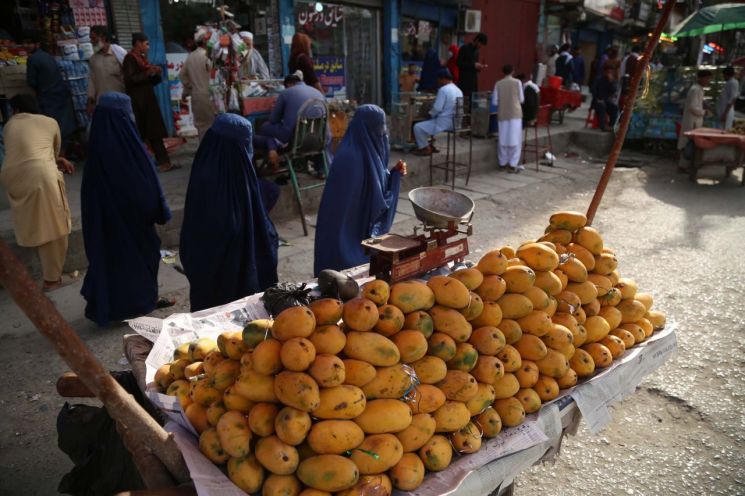
However, the next day, Fox News reported that a woman in Taloqan, the capital of Takhar Province in Afghanistan, was shot and killed for going out without a burqa.
Reports also emerged from another city where the Taliban threatened a woman who went out to buy groceries without wearing a burqa, forcing her back into her home.
According to the Committee to Protect Journalists (CPJ), Taliban forces raided the home of three employees of the German public broadcaster Deutsche Welle on the same day. Additionally, on the 9th, Tofan Omar, who worked for a private radio station, was killed by gunfire from armed forces presumed to be Taliban, and a private broadcaster journalist was reported kidnapped, CPJ said.
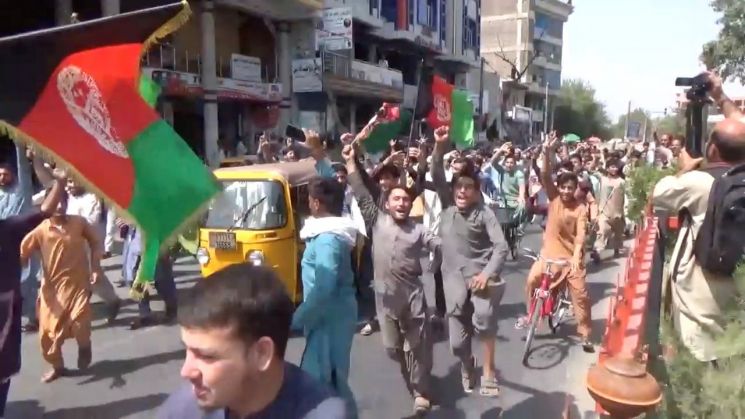 On the 18th (local time), a large-scale protest against the Taliban regime is taking place in Jalalabad, Afghanistan.
 [Image source=Reuters Yonhap News]
Furthermore, on the 18th, a large-scale protest against the Taliban regime took place in Jalalabad, a major city in Afghanistan, where Taliban forces fired at protesters, resulting in at least three deaths and dozens of injuries.
As signs of the Taliban's reign of terror become visible, international skepticism toward the Taliban's proclaimed conciliatory politics is growing.
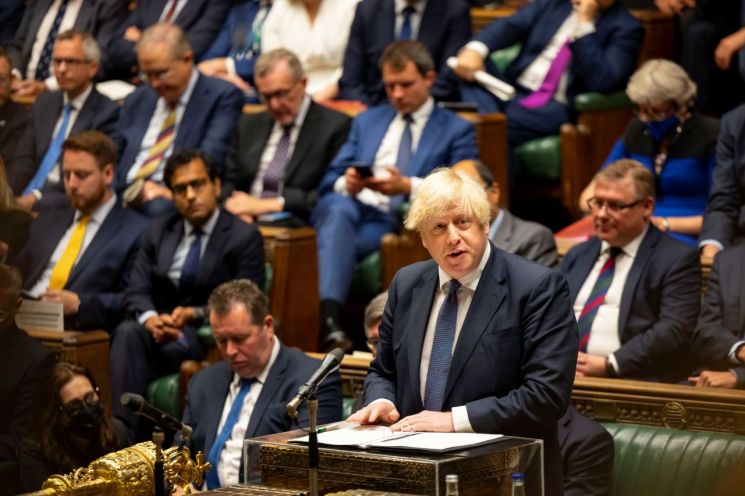
British Prime Minister Boris Johnson said in a parliamentary speech that "The Taliban will be judged only by their actions, not their words."
Earlier, the U.S. government also stated that it would officially recognize the Taliban government only if the Taliban respect women's rights and avoid extremist movements like al-Qaeda.
U.S. Senate Republican Leader Mitch McConnell strongly criticized the Taliban regime's claim of a "new Taliban," calling the organization "barbarians."
© The Asia Business Daily(www.asiae.co.kr). All rights reserved.



















