Non-residential Real Estate Lacks Official Price, Causing Discrepancy with Tax Standard Market Price
Apartments to Reflect Up to 90% of Market Price, 'Tax Bomb' Expected
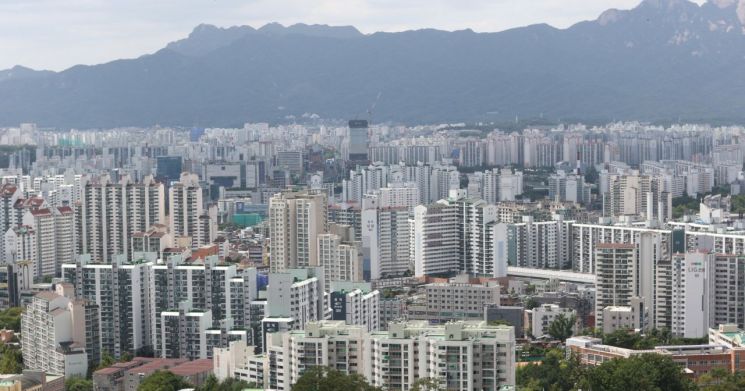
As demand avoiding regulations floods into non-residential properties such as residential-type lodging facilities (Saengsuk) and officetels, controversy over tax fairness has arisen. While apartment owners face sharply increased tax burdens due to overlapping government regulations, residential-type lodging facilities and officetels have not even undergone proper official price assessments.
According to industry sources on the 18th, the lack of official price disclosure for non-residential real estate has caused a significant gap between the tax base and market prices. Non-residential real estate refers to buildings other than houses, such as officetels, Saengsuk, condominium hotels, commercial buildings, factories, and offices.
The large discrepancy between the tax base, which serves as the basis for taxation, and market prices stems from the absence of price evaluation standards for non-residential real estate. Under the current system, land and houses are taxed based on officially announced prices. However, for non-residential real estate, there are no official prices, so local governments impose property taxes considering the tax base using the Ministry of the Interior and Safety’s standard market price for buildings. This standard market price does not reflect actual value factors such as the utility of each floor or rental levels, inevitably causing differences from market prices. According to the Korea Local Tax Research Institute, the reflection rate of actual transaction prices in the standard prices and market price standards for non-residential real estate was only 46.9% as of 2018.
In contrast, the official price realization rate for residential real estate such as apartments was 69% in 2020. In particular, the government plans to raise the realization rate to 90% of market prices by 2030 under the ‘Official Price Realization Roadmap.’ The issue of tax fairness between residential real estate, which faces concerns over a ‘tax bomb,’ and non-residential real estate inevitably arises.
The Ministry of Land, Infrastructure and Transport, the competent authority, had already established a legal basis in 2016 through amendments to the Real Estate Price Disclosure Act to introduce official prices for non-residential real estate. However, considering the economic burden on small business owners and self-employed individuals as well as social repercussions, the implementation has been repeatedly postponed.
Jang Kyung-seok, a researcher at the Legislative Research Office, said, “Because accurate status assessments of non-residential real estate have not been made, practical taxation is not being carried out,” adding, “There is a need for prompt official price disclosure.”
Minister Noh Hyung-wook expressed agreement during his confirmation hearing at the National Assembly in May, when concerns were raised that “tax issues in non-residential real estate act as loopholes,” responding, “This is something that should be reviewed from the perspective of tax fairness.”
© The Asia Business Daily(www.asiae.co.kr). All rights reserved.
![Clutching a Stolen Dior Bag, Saying "I Hate Being Poor but Real"... The Grotesque Con of a "Human Knockoff" [Slate]](https://cwcontent.asiae.co.kr/asiaresize/183/2026021902243444107_1771435474.jpg)
















