July Seoul Yeonlip Housing Sale Price 332.2 Million Won... 11% Increase YoY
Demand Concentrated Among 2030 With Insufficient Funds and Low Subscription Possibility
Jeonse Crisis Triggered by New Lease Law Adds Fuel to Fire
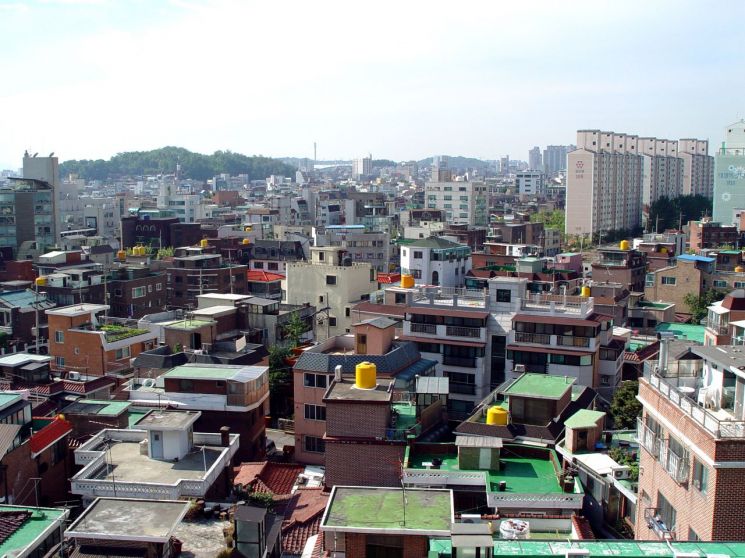
#In their 30s and preparing for a wedding this fall, office worker A gave up the dream of starting a newlywed life in an apartment. No matter how much they calculated, it was difficult to overcome the reality that even small apartments on the outskirts of Seoul were priced over 700 million KRW. A said, "Due to the nature of my job requiring early morning commutes, living in Gyeonggi Province is impossible, so I am looking into newly built villas."
As the apartment buying fever shifted to non-apartment properties, the average sale price of row houses in Seoul surged by more than 11% in just one year. Especially, demand from the 20s and 30s generation, who have slim chances of winning apartment lotteries and lack financial power, has poured in, causing newly built villas near subway stations to rise by over 100 million KRW within a few months.
◇Even Seoul villa prices rose 11% in one year= According to the KB Real Estate Monthly Housing Price Trend on the 15th, the average sale price of row houses in Seoul in July was 332.2 million KRW. Compared to 298.81 million KRW in July last year, it rose by 11.17% (33.39 million KRW). Row houses, commonly called villas, had not attracted much attention in the real estate market until a few years ago. The average sale price increase rate for the previous year (July 2019 to July 2020) was only 2.74%.
The row house market, once overlooked, was shaken by the panic buying of the 20s and 30s generation. According to the real estate platform Dabang, among non-apartment properties such as multi-family, multi-unit, and row houses traded in Seoul in the first half of the year, one in four was purchased by people aged 30 or younger. This is an increase of 5.1 percentage points compared to 19.5% in the first half of last year. As apartment sale and jeonse prices continued to soar, it is analyzed that the financially constrained 20s and 30s generation bought properties reluctantly.
For example, in June, a 76㎡ (exclusive area) villa near Hapjeong Station on subway lines 2 and 6 in Seogyo-dong, Mapo-gu, was traded for 593 million KRW. This is 93 million KRW higher than the actual transaction price of 500 million KRW nine months earlier. In Yongsan-gu, a 30㎡ villa near Sookmyung Women's University Station on subway line 4 was sold last month for 763 million KRW, up 163 million KRW from 600 million KRW in September last year.

◇20s and 30s turn to villas instead of unattainable apartments= The spread of buying fever among the 20s and 30s generation to non-apartments is analyzed as a ‘dead-end’ for home ownership. Apartment sale prices in Seoul are soaring rapidly, and the new lease protection law has worsened the jeonse shortage. For those with slim chances of winning lotteries and insufficient funds, buying villas has become a choice without alternatives.
According to the Seoul Real Estate Information Plaza, the number of multi-unit and row house sales in July was 3,594, exceeding apartment sales (3,182) by more than 400. Although the number is expected to increase as the reporting period for actual transactions remains, since both multi-unit/row house and apartment transactions are compared based on the same period, this trend is unlikely to change.
Especially, the increasing proportion of villa purchases by those under 30 is leading price rises. Compared to apartments, villas have poorer infrastructure such as green spaces, playgrounds, and parking lots. Nevertheless, the 20s and 30s generation have jumped into villa purchases reluctantly to secure at least minimal residential stability through home ownership.
◇Government policies are false hope= The government urges people to "wait" by unveiling pre-sale plans for the 3rd new town and others. However, most of the 20s and 30s who chose to buy villas are ‘lottery dropouts’ who gave up on apartment lotteries. If marriage or child requirements are not met, the pre-sale of 30,000 units is nothing but false hope. Moreover, the supply in Seoul’s city center, desired by the 20s and 30s, is limited, worsening the supply-demand imbalance.
A 30-something office worker B, who recently purchased a newly built villa in a redevelopment release area in the northern part of Seoul, said, "For dirt-poor workers like me who don’t marry but have decent income in a large company, lotteries are meaningless," adding, "I used my savings and lottery subscription to buy a villa that might become an apartment in about ten years."
◇Soaring jeonse prices fuel panic buying= The jeonse shortage triggered by the new lease law is fueling villa purchases by the 20s and 30s generation. According to KB Real Estate Monthly Price Trend, the average jeonse price of apartments in Seoul in July was 634.83 million KRW, up 135.62 million KRW from 499.22 million KRW in July last year when the new lease law was implemented. Compared to the increase of 35.68 million KRW in the previous year (July 2019 to July 2020), this is 3.8 times higher.
Song Seung-hyun, CEO of City and Economy, said, "The 20s and 30s generation have limited financial resources due to loan regulations and low lottery scores, making it difficult to aim for apartments through lotteries," adding, "Many are buying old villas hoping for redevelopment recently promoted by the government, along with newly built villas, aiming to move into apartments in the future."
© The Asia Business Daily(www.asiae.co.kr). All rights reserved.


















