White House "US Will Not Stand By"...Republicans "Significant Progress"
Hong Kong Residents Can Obtain Work Permits During Stay
China Protests "Interference in Internal Affairs"... "Hong Kong National Security Law Restores Stability"
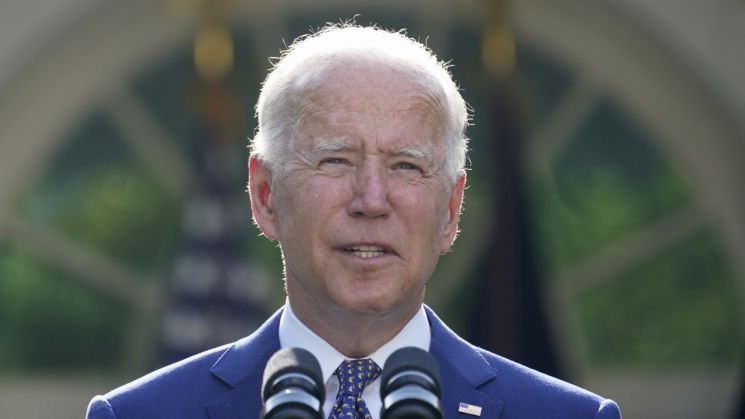
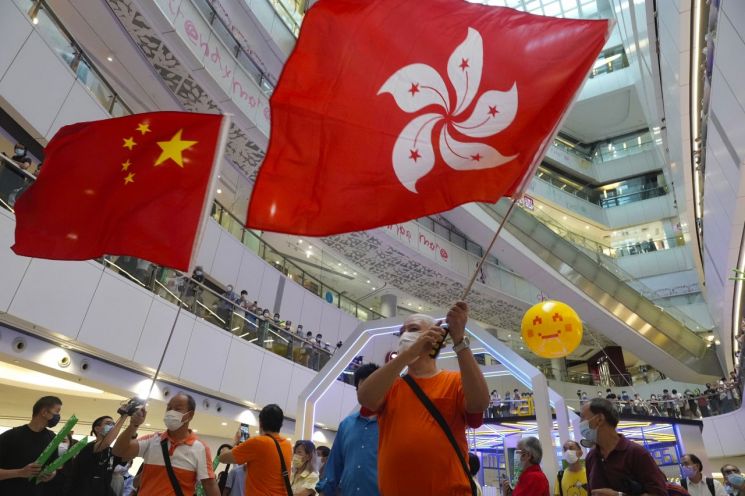
[Asia Economy Reporter Kim Suhwan] U.S. President Joe Biden has decided to suspend the deportation of Hong Kong residents currently residing in the United States. As the U.S. government steps up pressure on China over issues related to Hong Kong and the Xinjiang region, this move is seen as another direct blow to China.
On the 5th (local time), President Biden signed a memorandum suspending the deportation of Hong Kong residents residing in the U.S. for 18 months.
In the memorandum, President Biden stated, "The United States supports the human rights and fundamental freedoms of Hong Kong residents," and explained that the suspension of deportation was ordered because China has seriously violated these rights.
President Biden further emphasized, "Providing a safe haven for residents deprived of freedom in Hong Kong promotes U.S. interests in the region," and added, "The United States will remain steadfast in supporting Hong Kong residents."
He also pointed out that "China unilaterally enacted the Hong Kong National Security Law, undermining the enjoyment of rights and freedoms in Hong Kong."
He criticized that since the enactment of the law, at least 1,000 opposition politicians, activists, and protesters have been detained on charges such as separatism, subversion, terrorism, and collusion with foreign forces, and more than 10,000 people have been arrested on other charges related to anti-government protests.
Bloomberg News, citing senior officials, predicted that most Hong Kong residents currently residing in the U.S., except for some criminals, would be eligible for this measure. They will also be able to obtain employment authorization during their stay.
White House Press Secretary Jen Psaki issued a statement saying this measure "makes clear that the United States will not stand idly by when China breaks its promises to Hong Kong and the international community," and added, "We will continue to take actions supporting Hong Kong residents."
Republican Senator Ben Sasse also called it a "significant step forward" and emphasized that "the U.S. government must take further follow-up measures to provide full refuge to Hong Kong people."
This move is a continuation of policies that have pressured China over human rights abuses in Hong Kong, carried on from the Trump administration into the Biden administration.
Last month, the Biden administration imposed additional sanctions on Chinese officials in Hong Kong and issued warnings to U.S. companies operating there about business risks.
Additionally, last month the U.S. Senate passed a bill allowing Hong Kong residents residing in the U.S. to be granted refugee status.
Besides Hong Kong, the U.S. has also focused on the oppression of Uyghurs in China's western Xinjiang region, imposing sanctions on related individuals, banning imports of forced labor products, and issuing business activity alerts for U.S. companies, among various restrictions.
China strongly opposes these actions, stating that Hong Kong and Xinjiang issues are internal affairs and condemning them as malicious acts infringing on national sovereignty.
On the 4th, Wang Yi, China's State Councilor and Foreign Minister, at the East Asia Summit (EAS) Foreign Ministers' Meeting, claimed that the Hong Kong National Security Law "restored stability and fully established the rule of law in Hong Kong," and asserted that "70% of Hong Kong people are satisfied with the current situation."
He also fiercely criticized the U.S., saying, "Where does the term 'genocide' regarding the Uyghurs in Xinjiang come from?" and added, "Speaking of genocide, the real genocide was the massacre of Native Americans by the U.S. in the past."
© The Asia Business Daily(www.asiae.co.kr). All rights reserved.


















