Expectations for the World's Largest and Rapidly Growing Chinese Game Market Reflected in Game Stocks
Possibility of Extension of Private Education Regulations Continuing Since Late Last Month
[Asia Economy Reporter Gong Byung-sun] Gaming stocks were shaken by a single warning from a Chinese state-run media outlet. Since the relationship between gaming stocks and China has been deepening, concerns have been raised that if regulations materialize in the future, the sector could face a downturn.
As of 9:41 a.m. on the 4th, NCSoft recorded 801,000 KRW, down 1.23% (10,000 KRW) from the previous day. Although it rose to the 840,000 KRW range at the end of last month, it has fallen over two days, putting the 800,000 KRW level at risk. Pearl Abyss, Kakao Games, and Wemade also plunged 8.15%, 4.05%, and 11.27%, respectively, during the same period.
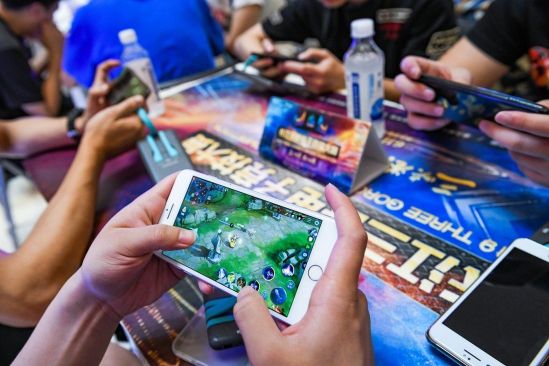
Concerns that Chinese government regulations could extend to the gaming industry pulled down gaming stock prices. The day before, Economic Information Daily, a sister publication of the Chinese state-run Xinhua News Agency, urged authorities to regulate, citing that Chinese students are becoming addicted to Tencent’s popular game “Wangzhe Rongyao” (Honor of Kings). The article even likened gaming to a mental opium, delivering harsh criticism.
In fact, the proportion of China in domestic gaming companies’ revenues is not high due to China’s policy of protecting its domestic gaming industry. Foreign gaming companies must obtain a new game license (panhao) to release games in China.
Nevertheless, domestic gaming stocks react sensitively to negative news from China because expectations for the Chinese gaming market?the world’s largest and highly growing?are reflected in stock prices. Since the deployment of THAAD (Terminal High Altitude Area Defense) in 2016, domestic gaming companies have been unable to enter China due to the ban on Korean cultural content (Hallyu ban), but it was anticipated that entering China’s gaming market, which is worth 47 trillion KRW, would yield enormous profits. When Pearl Abyss received the panhao for Black Desert Online last June, domestic gaming stocks surged on expectations that they could enter the Chinese market, which is why this happened.
The report from the state-run media the day before reinforced the view that regulation of China’s gaming market will become a reality. This is seen as an extension of the recent Chinese government crackdown on the private education market. On the 23rd of last month, the Chinese government banned the establishment of businesses teaching subjects other than arts and sports and required existing companies to convert to non-profit organizations.
Moreover, the Chinese government has long targeted the gaming market, making it likely that this will lead to actual measures. Despite already operating a shutdown system that limits gaming time for minors, the Chinese government has consistently expressed concerns. In March, Chinese President Xi Jinping stated before representatives in the education sector, “There are concerns about the mental health of young people due to online game addiction.”
Lee Seung-hoon, a researcher at IBK Investment & Securities, said, “The Chinese government may perceive the gaming industry as a sector that interferes with national affairs. While the intensity of regulations is hard to predict, it is a reason why investors should continuously pay attention.”
© The Asia Business Daily(www.asiae.co.kr). All rights reserved.

















