US July Manufacturing PMI 59.5 Contraction
China Also at 50.3...Concerns Over Weak Business Conditions
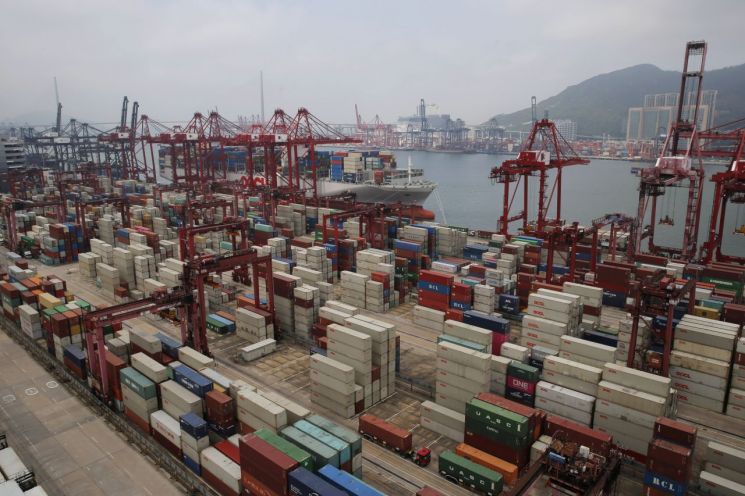
[Asia Economy New York=Correspondent Baek Jong-min, Reporter Kim Su-hwan] Warning signs have emerged indicating a slowdown in the economic recovery of the United States and China, which have been leading the global economic recovery since the COVID-19 pandemic. As Asian countries experiencing the spread of the COVID-19 Delta variant are also expected to face a decline in growth, it is analyzed that South Korea's exports and future economic growth will inevitably be affected.
On the 2nd (local time), the U.S. Institute for Supply Management (ISM) announced that the Manufacturing Purchasing Managers' Index (PMI) for July recorded 59.5. This figure not only fell short of June's 60.6 but also missed the Dow Jones consensus forecast of 60.8.
The U.S. manufacturing PMI had recorded over 60 for three consecutive months after reaching 64.7 in March, the highest since December 1983, due to the economic reopening effect. A PMI above 50 indicates economic expansion, while below 50 indicates contraction.
The sluggish manufacturing conditions in China, announced earlier than the U.S., were also sufficient to raise concerns. The July manufacturing PMI released by Chinese economic media Caixin on the same day stood at 50.3. This is the lowest level since April last year, shortly after the outbreak of COVID-19, when it was 49.4. The market had expected the July PMI to be 51.1.
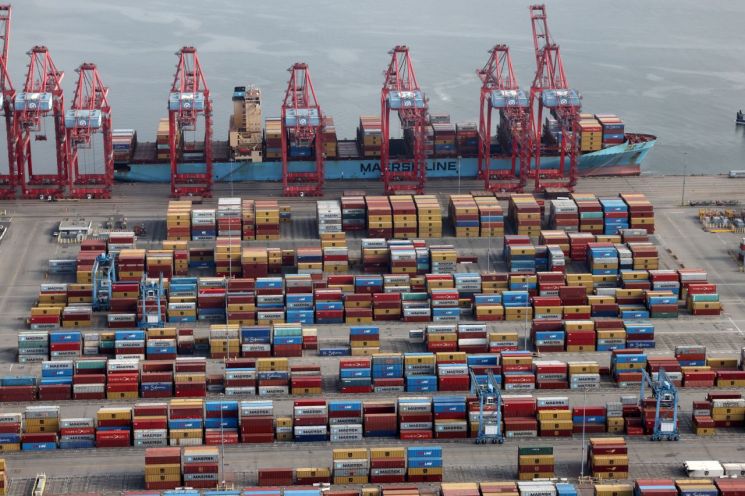
The July manufacturing PMI announced by China's National Bureau of Statistics on the 31st of last month also fell to 50.4 from 50.9 in the previous month, marking the lowest level in 17 months since February last year. Caixin PMI reflects the conditions of small and medium-sized enterprises, while the National Bureau of Statistics PMI reflects the conditions of large state-owned enterprises.
Although the current PMI levels still indicate expansion in manufacturing for both the U.S. and China, it is undeniable that the economy is on a downward trend. Mitul Kotecha, an analyst at TD Securities, explained, "PMI is declining due to decreases in production and new orders, as well as a contraction in trade."
Due to concerns over economic slowdown in the U.S. and China, the U.S. 10-year Treasury yield fell intraday to 1.151%. On the New York Mercantile Exchange, the September West Texas Intermediate (WTI) crude oil price closed at $71.26 per barrel, down $2.69 (3.6%) from the previous trading day.
Following China, the COVID-19 situation in Southeast Asian countries, where South Korean companies have concentrated production bases, is also raising concerns. On the same day, The Wall Street Journal (WSJ) diagnosed, "Unlike Western countries with high vaccination rates, Asian countries experiencing the Delta variant outbreak and setting record-high infection numbers are losing the advantages of being 'global production bases'." It also analyzed that the economic damage is greater in Asian countries with low vaccination rates.
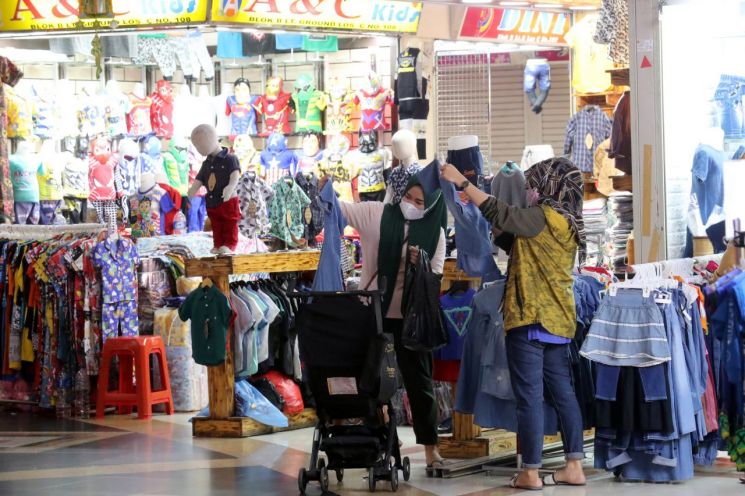
Malaysia ordered the closure of non-essential industry factories in early June, putting companies in non-essential sectors, including the garment industry, on high alert. In Indonesia, local businesspeople reported disruptions in securing raw materials due to lockdown measures in neighboring countries such as Vietnam.
The repeated lockdowns in Asian countries serving as global production bases are analyzed to potentially worsen the already troubled international supply chain issues.
Regarding this, WSJ pointed out that export-driven countries like China and South Korea are also "showing signs of a slowing export engine." In a report released on the same day, IHS Markit stated, "Economic risks due to the spread of the Delta variant virus in the Asia region are worsening," and "As travel restrictions targeting the Asia region continue, the recovery of South Korea's service trade may be delayed."
Furthermore, WSJ analyzed that the increase in new COVID-19 cases could complicate the monetary policy normalization plans of Asian central banks. Considering that the U.S. Federal Reserve (Fed) plans to announce tapering (asset purchase reduction) within this year, there is an increased risk of capital outflows from these countries.
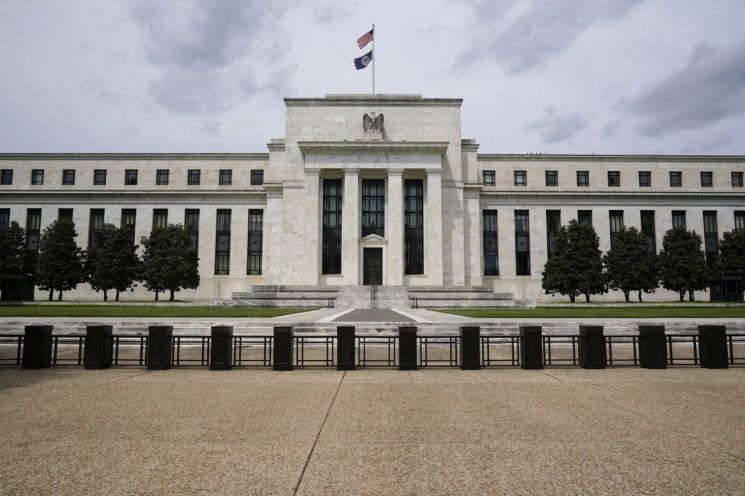 Exterior view of the Federal Reserve (Fed) building in Washington, USA [Image source=AP Yonhap News]
In fact, on the same day, Fed Governor Christopher Waller predicted that the Fed's tapering could begin as early as October. He cited employment increases of over 800,000 in August and September as conditions for tapering. The market expects a 880,000 increase in employment for July. Unless there is a major surprise, this is highly achievable. If his prediction holds, the scenario is that the Fed will announce tapering after the September Federal Open Market Committee (FOMC) meeting and begin reducing bond purchases from October.
© The Asia Business Daily(www.asiae.co.kr). All rights reserved.
![User Who Sold Erroneously Deposited Bitcoins to Repay Debt and Fund Entertainment... What Did the Supreme Court Decide in 2021? [Legal Issue Check]](https://cwcontent.asiae.co.kr/asiaresize/183/2026020910431234020_1770601391.png)

















