Laurel Hubbard of New Zealand Fails to Win Medal
"Silent Challenge on the Road Less Traveled" Applause
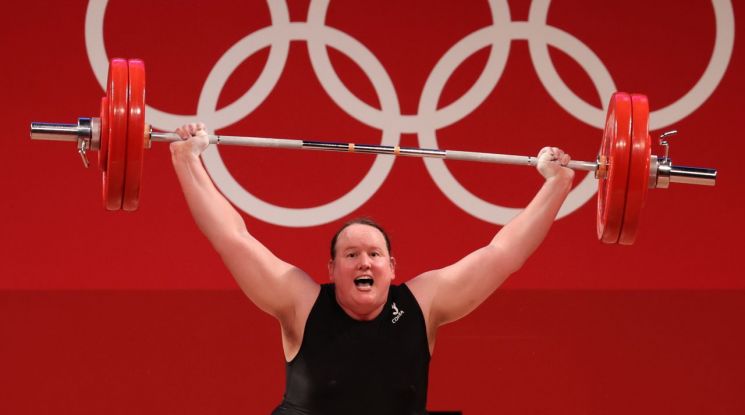
[Asia Economy Reporter Kwon Jae-hee] Laurel Hubbard (43) of New Zealand, the first transgender athlete in Olympic history to compete in women's weightlifting, ultimately failed to win a medal.
According to The Guardian on the 3rd (local time), Hubbard competed in the women's super heavyweight category (87kg and above) at the Tokyo International Forum the previous evening but failed repeatedly in the snatch. Weightlifting is divided into the snatch, where the barbell must be lifted directly from the floor to above the head, and the clean and jerk, where the barbell is first lifted to the shoulders and then jerked overhead, with three attempts allowed for each. However, if an athlete is disqualified in the snatch, they cannot proceed to the clean and jerk. Hubbard failed all three attempts at 120kg in the first snatch attempt and 125kg in the second and third attempts, finishing the competition without a medal.
Hubbard is considered one of the most closely watched athletes among those competing in the Tokyo Olympics and Paralympics this year. She is the first transgender athlete in Olympic history and, at 43 years old, the oldest female weightlifter at the Tokyo Olympics.
Her participation in the women's weightlifting category sparked controversy, especially due to her transgender history. When Hubbard was male, she competed as a New Zealand male weightlifter in the 105kg category under the name "Gavin." After undergoing gender reassignment surgery, she began competing in women's weightlifting from 2017 and was selected as a representative for New Zealand in accordance with International Olympic Committee (IOC) regulations in June. However, some raised concerns about fairness with other athletes and opposed her participation. As criticism against Hubbard grew, the New Zealand Olympic Committee stated, "We will do our best to protect the athlete" and "We will not tolerate online attacks."
In an interview with the press after the competition, Hubbard said, "I did not meet the standards I set for myself or the expectations my country had for me, but through this competition, I proved that sports are something anyone in the world can do regardless of gender, race, or age." She added, "I am aware that my participation has been controversial." She also expressed special thanks, saying, "Despite the controversy, the New Zealand Olympic Committee, the Japanese organizing committee, and the International Olympic Committee (IOC) all supported me generously."
Commentators said about Hubbard's performance, "It must have been mentally very challenging, but she did her best until the end," and "We applaud her for quietly taking on a path that others have not taken."
© The Asia Business Daily(www.asiae.co.kr). All rights reserved.