Bank of Korea 'International Financial Market Trends and Key Issues'
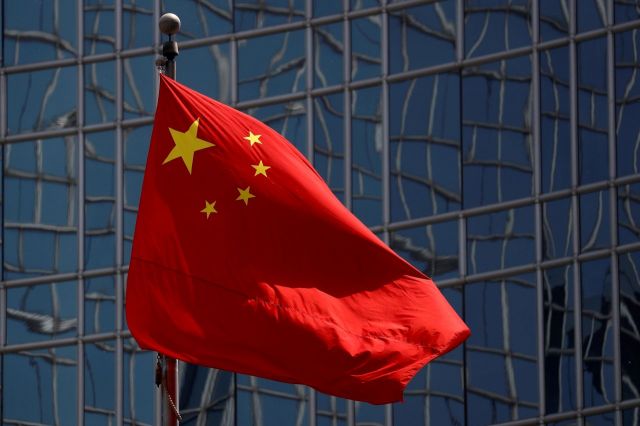
[Asia Economy Reporter Kim Eun-byeol] Although the Chinese government is strengthening regulations across various corporate sectors, leading to a risk-asset avoidance phenomenon, the prevailing view is that financial market instability will not last long.
According to the 'International Financial Market Trends and Key Issues' report released on the 2nd by the Korea Bank Foreign Exchange Operations Center, risk-avoidance sentiment has rapidly spread recently due to regulatory risks in China.
Since the cancellation of Ant Group's stock market listing in November last year, the Chinese government's regulatory tightening on large IT companies has expanded to other sectors. In particular, following the announcement of private education regulations on the 24th of last month, the stock prices of Chinese edutech companies listed in the U.S. plummeted, and between the 26th and 27th of last month, volatility increased in the Chinese stock market as well as in the government bond and foreign exchange markets. The Nasdaq Golden Dragon China Index, which tracks 98 Chinese companies listed in the U.S., fell 17.5% between the 23rd and 26th of last month.
Accordingly, the Shanghai Composite Index closed at 3,381 on the 27th of last month, the lowest since April this year, and fell 5.6% between the 26th and 28th. The Hong Kong Hang Seng Index dropped 8.9% between the 26th and 27th. Some media reported that unconfirmed rumors influenced the market, suggesting that offshore funds were selling Chinese assets due to concerns over possible U.S. government investment restrictions on China and Hong Kong.
This situation in the Chinese market also affected global financial markets, leading to declines in U.S. Treasury yields and stock prices, and strengthening of the dollar and yen on the same day. The Chinese government stated that it strengthened regulations on private companies to achieve various policy goals, including addressing population decline through reducing child-rearing and education costs, alleviating educational inequality, controlling the populace, pursuing capital market decoupling, and promoting common prosperity. Although these are based on its own policy objectives, they have dampened global investors' sentiment.
However, based on the accommodative stance of the People's Bank of China and flexible policy responses, as well as the continued improvement in economic fundamentals, the Bank of Korea's report conveyed that the possibility of widespread instability in the Chinese financial market is expected to be limited.
The Bank of Korea cited analyses from Cr?dit Agricole CIB and Australia and New Zealand Banking Group (ANZ), forecasting that the Chinese market will regain stability in the medium to long term. Meanwhile, the China Securities Regulatory Commission (CSRC) held an emergency online meeting with major investment banks on the 28th of last month, stating that "the impact of education policies will be limited to the relevant sector and is not intended to disrupt the capital market."
© The Asia Business Daily(www.asiae.co.kr). All rights reserved.

















