Q2 Revenue Surpasses Intel... "Impact of Soaring Semiconductor Demand"
Intel Declares Foundry Entry, Declares 'Battle' Against Samsung
Experts: "Competition Among Samsung Electronics, TSMC, and Intel Expected to Intensify"
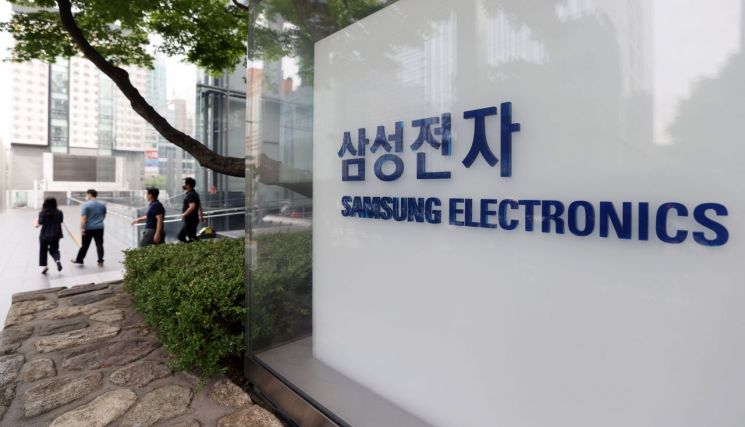
[Asia Economy Reporter Kim Suhwan] Samsung Electronics has reclaimed its position as the world's largest semiconductor company, surpassing the U.S. semiconductor firm Intel.
On the 1st (local time), The Wall Street Journal (WSJ) reported that Samsung Electronics' semiconductor division posted sales of $19.7 billion (approximately 22.7 trillion KRW) in the second quarter, overtaking Intel's sales of $19.6 billion (approximately 22.6 trillion KRW) during the same period.
WSJ analyzed Samsung's return to the top by stating, "This indicates a sharp resurgence in demand for memory semiconductors, Samsung's core business," and added, "The cost of manufacturing memory semiconductors is much lower than that of non-memory semiconductors, Intel's main business, which also seems to have contributed to Samsung's rapid sales growth."
Furthermore, there are forecasts that memory semiconductor growth will be even more pronounced this year. According to market research firm Gartner, sales of memory semiconductors are expected to increase by 33% compared to the previous year, while sales of CPUs (central processing units), representative of non-memory semiconductors, are projected to grow by only 4%.
Previously, Intel had held the throne as the world's largest semiconductor company for over 30 years since the 1980s. However, in 2017, Samsung Electronics became the world's largest semiconductor company for the first time by surpassing Intel's sales, driven by a surge in demand for memory semiconductors.
But due to a market downturn caused by an oversupply of memory semiconductors, Samsung Electronics' semiconductor division sales dropped by about 30% in 2019 compared to the previous year, allowing Intel to reclaim the top spot from Samsung after two years.
Recently, Samsung Electronics was able to regain the number one position in the second quarter after about two years, largely due to the ongoing semiconductor supply shortage, which caused memory semiconductor prices to soar and boosted Samsung's sales.
Last year, the outbreak of the COVID-19 pandemic led to a contraction in global economic demand, causing customers of semiconductor foundry companies, including Samsung Electronics, to cancel many semiconductor orders. Starting this year, expectations of demand recovery due to economic reopening led customers to increase semiconductor orders again. This supply bottleneck resulted in a supply shortage that drove up semiconductor prices, which in turn caused Samsung Electronics' sales to surge.
Meanwhile, Intel has declared its entry into the foundry market, viewing its growth potential positively. This move is interpreted as Intel's determination to create new revenue streams and reclaim its throne in the semiconductor industry.
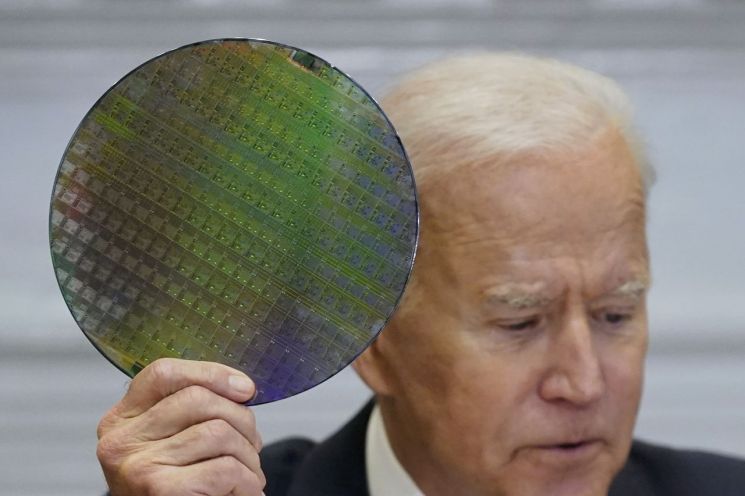
In addition, governments around the world, including the United States, have pledged to significantly increase subsidies to foundry companies to minimize damage caused by the semiconductor supply shortage. Recently, the Biden administration in the U.S. recognized semiconductors as a core national infrastructure and passed a bill in the Senate last June to provide $52 billion (approximately 60 trillion KRW) to secure a stable semiconductor supply chain.
Furthermore, as the U.S. government is expected to announce plans to provide massive subsidies to foundry companies producing semiconductors domestically, leading foundry companies such as Samsung Electronics and Taiwan's TSMC have announced plans for large-scale investments in the U.S.
Intel also announced plans earlier this year to build a foundry plant worth $20 billion (approximately 23 trillion KRW). In May, it revealed plans to expand a semiconductor plant in New Mexico, U.S., with an investment of $3.5 billion (approximately 4 trillion KRW).
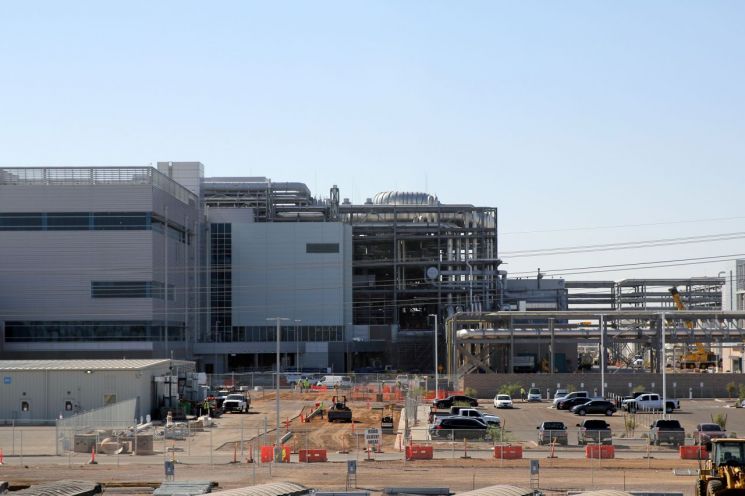
With Intel's full-scale entry into the foundry market, which had been dominated by Samsung Electronics and TSMC, the foundry market is expected to be reshaped into a 'three-way competition.' Although Samsung Electronics has reclaimed the world's largest semiconductor company position, competition is expected to intensify, making it difficult for Samsung to maintain the top spot.
Daily Guy, an analyst at market research firm Counterpoint Research, stated, "There is currently no company that can take the fourth position," and predicted that future competition in the foundry market will be among Samsung Electronics, TSMC, and Intel only.
Until last year, Intel was not in direct competition with Samsung Electronics.
However, with the appointment of Pat Gelsinger as Intel's new CEO earlier this year and his declaration to enter the foundry market, Intel has effectively issued a 'declaration of war' against Samsung Electronics.
CEO Gelsinger stated during last month's earnings announcement that before fully launching its foundry business, Intel expects to secure over 100 customers. Among them is Qualcomm, a U.S.-based semiconductor manufacturer for telecommunications and one of Samsung's major customers.
Especially, as the global semiconductor market is expected to experience rapid growth this year, driven by economic recovery after the COVID-19 pandemic, competition among semiconductor companies is anticipated to become even fiercer. Market research firm International Data Corporation (IDC) forecasts that the global semiconductor market will grow by about 12.5% this year, reaching a total market size of $522 billion (approximately 601 trillion KRW).
© The Asia Business Daily(www.asiae.co.kr). All rights reserved.
![Clutching a Stolen Dior Bag, Saying "I Hate Being Poor but Real"... The Grotesque Con of a "Human Knockoff" [Slate]](https://cwcontent.asiae.co.kr/asiaresize/183/2026021902243444107_1771435474.jpg)


















