2021 Tax Law Amendment
Tax Credit for IP Core Technology Patent Development
Expert: "Positive for Expanding SME Management Options"
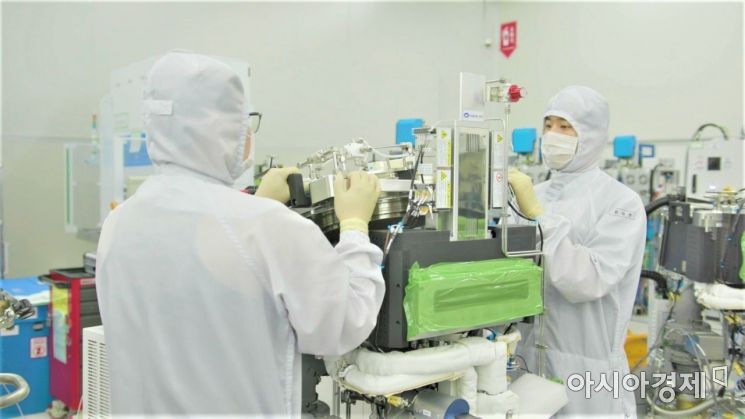
[Sejong=Asia Economy Reporter Moon Chaeseok] The tax reduction effect for small and medium-sized enterprises (SMEs) in this year's tax law amendment is 308.6 billion KRW. Beyond the amount, the fact that it opens up opportunities to generate income by developing intangible asset source technologies such as intellectual property (IP) is being positively evaluated. The tax system supports earning money solely from intangible assets even if the source technology patent is developed but commercialization fails despite investment from demand companies (large corporations).
The '2021 Tax Law Amendment' announced by the government on the 26th contains policy intentions to expand the IP market and induce technology development in SMEs. According to the government, the IP transaction market is in a state of oversupply. As of last year, supply was 86,000 cases, but demand was only 2,000 cases. To expand the market, the government decided to allow investment tax credits for acquiring IP.
Previously, tax credits were only given for tangible assets such as machinery and equipment, but now the scope of credits is expanded to include intangible IP assets acquired by SMEs and mid-sized companies. For SMEs, a basic 10% plus 3% of the increase compared to the average of the previous three years is credited. For mid-sized companies, 3% plus 3% of the increase compared to the three-year average is deducted.
The scope of tax reductions on income generated from transferring or leasing patent rights, etc., is expanded and the application period is extended. For technology transfers, the policy to reduce 50% of the tax on transfer income is extended for two years from the end of this year to December 31, 2023. For example, if mid-sized company A sells intellectual property patent rights, a 50% tax reduction is applied. For technology leasing, the existing 25% tax reduction benefit on SME technology leasing income is extended for two years until December 31, 2023. From next year, mid-sized companies will also be newly included in the application targets.
The government expects a significant R&D promotion effect following the activation of technology transactions. Even if commercialization by SMEs does not follow, there will be an effect of promoting R&D investment because profits can be made through technology transactions alone. Ultimately, it is judged that the possibility of commercialization of technologies developed by SMEs and mid-sized companies, which have been buried due to lack of capital and recognition, will also increase.
Experts also showed positive reactions to the policy intent and content. Professor Ahn Changnam of the Taxation Department at Gangnam University said, "It is evaluated as a policy that creates new opportunities and new markets where companies can sell their source technologies externally even if commercialization does not follow," adding, "In the era of the 4th Industrial Revolution, SMEs can develop IP source technologies to enjoy external effects, and there is infinite potential in this field, such as increased employment related to intangible assets."
Professor Park Gibaek of the Taxation Department at the University of Seoul said, "It is positive in that the government has laid the groundwork for SMEs to have various management options such as selling source technologies or continuing R&D to commercialization," adding, "Although valuation is difficult, it is clear that the intangible asset market will continue to grow, and if the value can be properly assessed, this field truly aligns with the purpose of R&D policy support."
© The Asia Business Daily(www.asiae.co.kr). All rights reserved.
![Clutching a Stolen Dior Bag, Saying "I Hate Being Poor but Real"... The Grotesque Con of a "Human Knockoff" [Slate]](https://cwcontent.asiae.co.kr/asiaresize/183/2026021902243444107_1771435474.jpg)
















