Afternoon of the 30th: Announcement of 'August Vaccination Plan'
Targeting 17 million unvaccinated aged 18-49
Expecting to resolve imbalance of increased activity and decreased vaccination rate
Main focus likely on Pfizer and Moderna mRNA vaccines
Prime Minister Kim: "No supply disruption of Moderna expected"
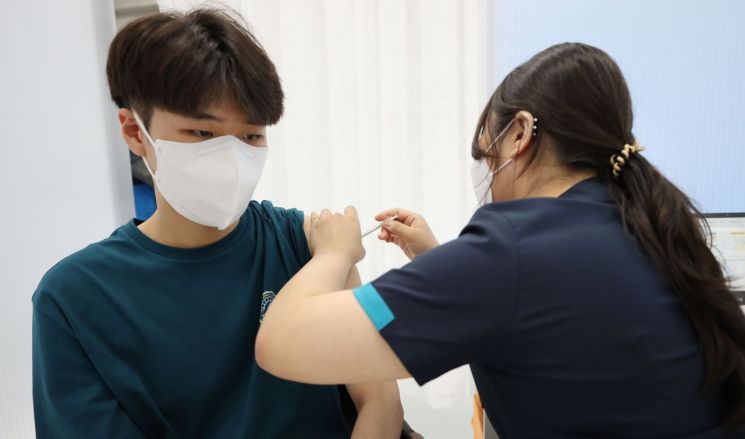 On the afternoon of the 12th, a conscript scheduled to enlist between July and September is receiving the Pfizer vaccine at the COVID-19 vaccination center set up at the Dongjak-gu Community Sports Center in Seoul. [Image source=Yonhap News]
[Asia Economy Reporter Lee Chun-hee] Starting next month, people in their 20s to 40s who were unable to receive COVID-19 vaccinations due to being deprioritized by 'age order' will also have the opportunity to get vaccinated. This is expected to significantly contribute to curbing the spread of COVID-19, especially since the imbalance where highly active individuals could not get vaccinated has been identified as one of the key factors in the rapid spread of the fourth wave.
Prime Minister Kim Boo-kyum presided over the Central Disaster and Safety Countermeasure Headquarters meeting on the morning of the 30th and said, "In August, we will accelerate vaccinations for all citizens aged 40 and under," adding, "The goal of completing the first dose for over 70% of the entire population by the end of September is fully achievable."
The COVID-19 Vaccination Response Promotion Team is scheduled to announce the 'August Vaccination Plan' in the afternoon, which includes vaccination plans for the general public aged 18 to 49. The total number of people included in this vaccination target is approximately 17 million. This figure excludes about 4.5 million people aged 18 to 49 who have already been vaccinated through priority vaccination for essential workers, reservists, medical staff, teachers, or through leftover vaccine doses out of the total 22.2 million in this age group. This is the largest single vaccination plan announced so far.
The sharp spread of the fourth wave has been partly attributed to the fact that people in their 20s to 40s, who have high activity levels and thus higher transmission rates, were not given the opportunity to get vaccinated.
In fact, during the third wave from December last year to January this year, out of 43,999 confirmed cases, only 5,478 (12.5%) were in their 20s. However, during this month’s peak of the fourth wave, out of 39,848 cumulative confirmed cases, 9,546 (24.0%) were in their 20s, doubling their share. Meanwhile, confirmed cases among those in their 60s dropped significantly from 7,032 (16.0%) to 2,459 (6.2%). As of last week, the first-dose vaccination rate was only 18.4% for those aged 18 to 29, compared to 85.4% for those in their 60s.
Especially among people in their 20s, there have been continuous complaints that "even if we want to get vaccinated, we simply cannot." Early in the AstraZeneca (AZ) vaccine rollout, when leftover vaccine doses were in high demand, vaccination was limited to those aged 30 and above, making it impossible for younger people to receive leftover vaccines. Although the start of mRNA (messenger RNA) vaccine inoculations at designated medical institutions using Pfizer and Moderna vaccines created some possibility, it was still considered "as difficult as catching a star in the sky."
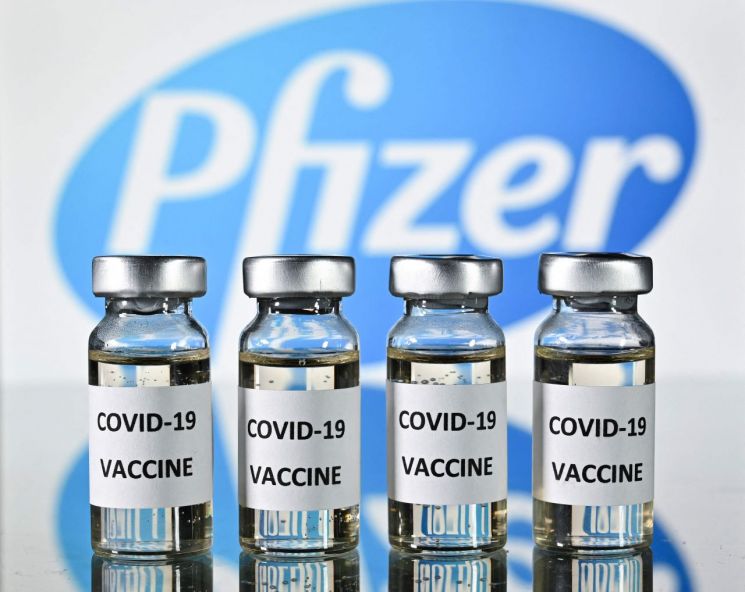
The vaccines scheduled for additional import in the third quarter are approximately 29 million doses next month and 42 million doses in September. Including previously imported vaccines, the total will reach about 100 million doses, enough to provide two doses to the entire population.
Among these, mRNA vaccines are expected to be the main vaccines used for people aged 18 to 49. Currently, AZ vaccines are only available for those aged 50 and above, and when Janssen vaccines are fully introduced, the vaccination age is also likely to be raised. Among mRNA vaccines, Pfizer, a global pharmaceutical company, is continuing to increase production amid soaring demand for booster shots and vaccine doses, ensuring smooth supply. However, Moderna, a smaller biotech company, is experiencing production difficulties, so Pfizer is expected to take the lead.
However, Prime Minister Kim stated, "About 1.3 million doses of Moderna vaccine are scheduled to be supplied domestically on August 6-7," and "Separately, negotiations have been finalized to ensure timely supply of 8.5 million doses within the month." Regarding supply concerns, he affirmed, "There has never been a case where quarterly import volumes were not delivered on time," and "As a result of close consultations, there will be no disruptions."
© The Asia Business Daily(www.asiae.co.kr). All rights reserved.


















