[Asia Economy Reporter Baek Kyunghwan] A 20-year-old biological mother who was prosecuted for leaving her 7-month-old daughter alone, causing her death, has been sentenced to 10 years in prison after a controversy over sentence reduction. She received a heavier punishment than the sentence given when she was a minor after becoming an adult during the trial.
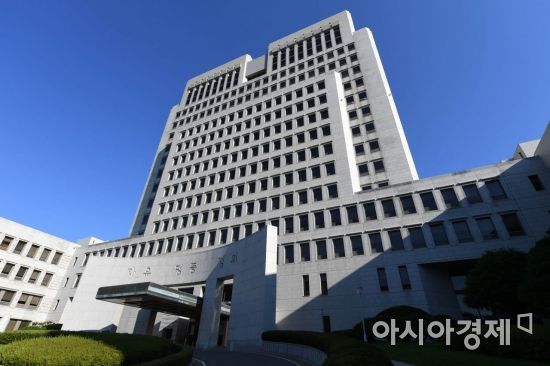
On the 30th, the Supreme Court's 2nd Division (Presiding Justice Jo Jaeyeon) announced that it upheld the original sentence of 10 years in prison in the appeal trial of A (20), who was charged with murder and corpse abandonment.
A and her husband B were prosecuted for leaving their 7-month-old daughter C alone at their home in Bupyeong-gu, Incheon, from May 26 to 31, 2019, causing her death. They were also charged with corpse abandonment for leaving the deceased daughter at home without notifying anyone and attempting to bury her in a nearby mountain.
They reportedly pushed childcare responsibilities onto each other, met friends separately to drink alcohol, overslept due to excessive drinking, and did not attend their daughter's funeral.
In the first trial held in 2019, considering that A was a minor at the time of the trial, an indeterminate sentence of 15 years maximum to 7 years minimum imprisonment was handed down. An indeterminate sentence is a punishment that can be given to minors, allowing early release before the maximum term after evaluation by correctional authorities upon serving the minimum term. B, who was an adult, was sentenced to 20 years in prison.
After the first trial, the prosecution did not appeal, and only A appealed the verdict. According to the principle of prohibition of disadvantageous changes, in cases where only the defendant appeals, a heavier sentence than the original judgment cannot be imposed. Accordingly, the appellate court sentenced A to the lowest 7 years in prison within the indeterminate sentence based on the principle of prohibition of disadvantageous changes, as the prosecution did not appeal. B was sentenced to 10 years in prison.
However, the Supreme Court's full bench ruled, "The upper limit of a determinate sentence that can be imposed in the appellate trial corresponds to the midpoint between the minimum and maximum terms of the indeterminate sentence," and remanded the case. The principle of prohibition of disadvantageous changes is intended to guarantee the defendant's right to appeal, not to provide the most favorable outcome for the defendant. On remand, considering that the co-defendant, the child's father, was confirmed to have a 10-year sentence and that the sentencing guidelines set by the Supreme Court prescribe a minimum of 10 years, A was sentenced to 10 years in prison.
© The Asia Business Daily(www.asiae.co.kr). All rights reserved.

















