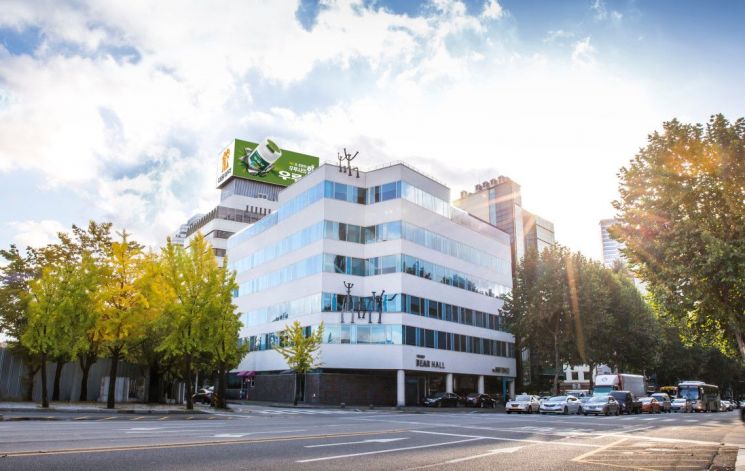
[Asia Economy Reporter Lee Chun-hee] Daewoong Pharmaceutical achieved its highest-ever quarterly sales in the second quarter of this year with sales of 289.7 billion KRW and operating profit of 18.7 billion KRW, successfully turning a profit compared to the same period last year.
Daewoong Pharmaceutical announced its consolidated operating (preliminary) results for the second quarter on the 29th. Sales for the second quarter reached 289.692 billion KRW, up 14.1% year-on-year, and operating profit and net profit were 18.72 billion KRW and 8.97 billion KRW respectively, marking a turnaround to profitability compared to the same period last year. On a separate basis, sales were 273.054 billion KRW and operating profit was 26.68 billion KRW.
The company analyzed that the sales of the botulinum toxin product ‘Nabota’ recorded an earnings surprise, while prescription drugs (ETC) achieved record-high sales approaching 200 billion KRW, and over-the-counter drugs (OTC) maintained solid sales.
Sales of Nabota soared more than fourfold from 5.6 billion KRW in the same period last year to 23.2 billion KRW this year. A Daewoong Pharmaceutical official explained, "With the litigation risk completely resolved, market share expansion in the U.S. has been actively achieved," adding, "Nabota, equipped with flawless quality through a patented botulinum toxin manufacturing process, gained a relative advantage, and domestic sales also increased." Nabota is accelerating efforts to pioneer new overseas markets including Latin America and the Middle East. Recently, successful top-line results from Phase 3 clinical trials in China were announced, putting Chinese product approval on the fast track, and Europe is planning a launch in the first half of next year.
The ETC segment recorded sales of 195.1 billion KRW, an 8.7% increase from 179.4 billion KRW in the same period last year. Sales volumes increased for product lines such as 'Urusa (prescription drug)', 'Lupier Depot Injection', and 'Creset', as well as imported products like 'Forxiga', 'Lixiana', and 'Sevika'. The OTC segment achieved sales of 28.6 billion KRW this year, slightly down from 29.6 billion KRW in the same period last year, but high-dose vitamin B complex 'Impactamin' and liver function enhancer Urusa (OTC) maintained stable sales volumes.
Revenue from technology fees through research and development (R&D) projects also contributed to the strong performance. Technology fee income of 11.1 billion KRW was recorded, including the U.S. license-out (L/O) contract for the new drug for gastroesophageal reflux disease, 'Pexuprazan'. The global technology export scale of Pexuprazan has surpassed 1 trillion KRW cumulatively to date.
Seung-ho Jeon, CEO of Daewoong Pharmaceutical, stated, “Following approvals in the U.S. and Europe, Nabota’s entry into China is also within sight. We possess a diverse innovative new drug pipeline, including Pexuprazan, the diabetes drug 'Inavogliflozin', and the pulmonary fibrosis drug 'DWN12088', which have attracted cooperation proposals from numerous global pharmaceutical companies. We will do our utmost to maximize shareholder value through the creation of R&D achievements.”
Meanwhile, Daewoong Holdings, the holding company, also announced its consolidated financial results for the second quarter on the same day. Sales grew 16.0% year-on-year to 381.498 billion KRW, operating profit rose 124.0% to 43.341 billion KRW, and net profit increased 139.1% to 27.6 billion KRW. The improvement in Daewoong Pharmaceutical’s performance, along with the growth in prescription drug sales by its major subsidiary Daewoong Bio, is credited with driving Daewoong Holdings’ earnings growth.
© The Asia Business Daily(www.asiae.co.kr). All rights reserved.

















