Shin Ramyun Price at Major Marts 676 Won → 736 Won, Jin Ramyun 550 Won → 620 Won
Samyang Foods Weighs Timing for Buldak Bokkeum Myun Price Increase
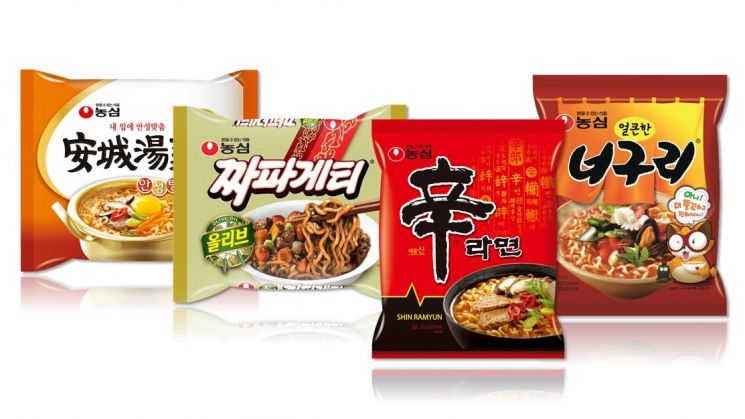
[Asia Economy Reporter Lim Hye-sun] Following Ottogi, Nongshim has also announced a price increase, causing ramen prices to rise one after another.
On the 29th, Nongshim announced that it will raise the shipment prices of major ramen products, including Shin Ramyun, by an average of 6.8% next month. The price increase rates for major products based on shipment prices are 7.6% for Shin Ramyun, 6.1% for Ansungtangmyun, and 4.4% for Yukgaejang Sabalmyeon. The price of Shin Ramyun, currently sold at an average of 676 won per pack in large supermarkets, will rise to about 736 won. This is the first time in 4 years and 8 months since December 2016 that Nongshim has raised ramen prices. In December 2016, Nongshim raised ramen prices by an average of 5.1%.
Earlier, Ottogi also decided to raise the prices of major ramen products, including Jin Ramyun, by an average of 11.9% next month. Jin Ramyun (mild and spicy flavors) will increase by 12.6%, and Snackmyeon by 11.6%. Based on large supermarket prices, the price of one pack of Jin Ramyun will change from the current 550 won to 620 won. Ottogi's ramen price increase is the first in 13 years and 4 months since April 2008. At that time, Ottogi raised ramen prices by an average of 9%.
Samyang Foods, which sells products such as Buldak Bokkeummyeon, has not yet finalized the timing but plans to raise ramen prices sometime next month. Samyang Foods has not raised prices since May 2017, when it increased them by 5.4%.
The background for the price increases by ramen companies is the expanded cost burden. So far, companies have internally pursued cost reduction and management efficiency, considering the impact of ramen prices on consumer prices, and have endured pressure from rising costs. A Nongshim official explained, "Due to the recent sharp increase in the prices of major ramen raw materials such as palm oil and flour, as well as labor costs, logistics costs, and selling and administrative expenses, we have inevitably decided to raise prices," adding, "Since ramen is closely related to the national diet, we adjusted prices at the minimum level."
© The Asia Business Daily(www.asiae.co.kr). All rights reserved.
!["The Woman Who Threw Herself into the Water Clutching a Stolen Dior Bag"...A Grotesque Success Story That Shakes the Korean Psyche [Slate]](https://cwcontent.asiae.co.kr/asiaresize/183/2026021902243444107_1771435474.jpg)
















