Failed to Hunt Gold Medals but Established as a Global Sport
Becoming a Lifestyle Sport Worldwide, a "Hope for 'Medal-Deprived' Countries"
Competition Between International Taekwondo Federation and World Taekwondo Federation Drives Globalization
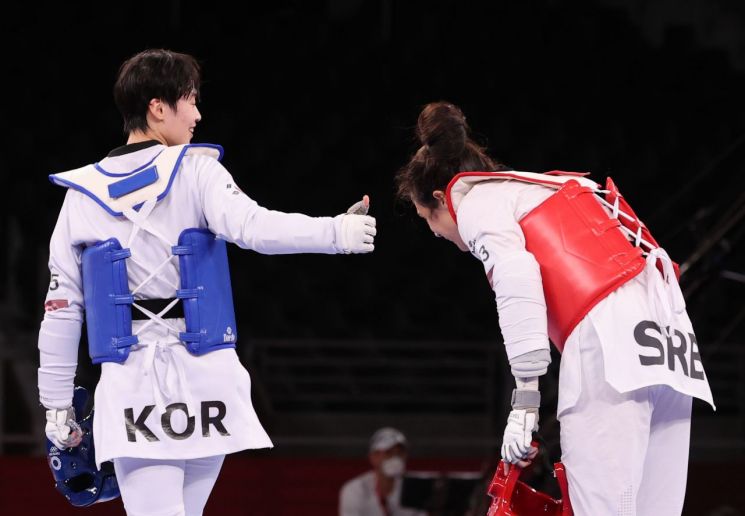
The Taekwondo national team won one silver medal and two bronze medals at the 2020 Tokyo Olympics. It was the first time in Olympic history that they failed to win a gold medal. They were held back by a lack of practical experience. Due to the COVID-19 pandemic, they were hardly able to participate in international competitions. Meanwhile, European athletes maintained their skills steadily through exchange matches. As a result, they took five out of the eight gold medals in the men's and women's events. These countries were Russia, Italy, Croatia, and Serbia. The remaining three gold medals went to Uzbekistan, Thailand, and the United States. In all these countries, Taekwondo has become a part of everyday life. The same applies to countries with poor sports environments. Since it can be practiced without special equipment, it produces outstanding athletes. The New York Times reported on the 25th that "Taekwondo has emerged as a hope for countries excluded from Olympic medals." Even without the 'K' attached to K-pop, K-content, or K-fashion, it has developed into a Korean culture known worldwide.
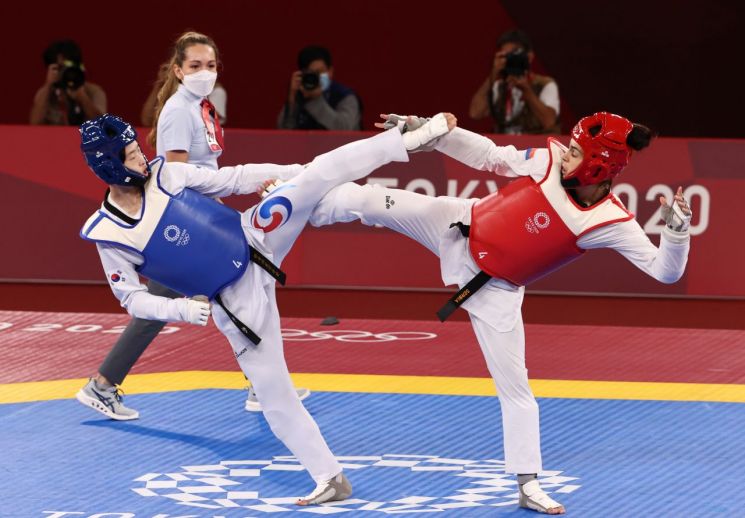
In fact, Taekwondo is a modern invention. It was created in April 1955 when several dojang masters agreed to unify their martial arts under the name Taesudo. Two years later, General Choi Hong-hee renamed it Taekwondo, considering its continuity with Taekkyeon. Taekkyeon originated from Goguryeo and was a type of Subak, a fighting technique mainly using the legs. Taekwondo, refined from this, developed into a global sport within half a century. It is no exaggeration to call it the origin of the Korean Wave. It has produced 80 million enthusiasts and 9 million holders of certificates and dan ranks. It was adopted as an official sport at the 2000 Sydney Olympics, spreading even to the sports periphery. Ivory Coast, Jordan, and Taiwan won their countries' first gold medals in Taekwondo. Niger, Vietnam, and Gabon won their first silver medals in Taekwondo. Afghanistan earned its only two bronze medals in Taekwondo. The New York Times introduced that 61 countries and three refugee teams participated in Taekwondo at the 2020 Tokyo Olympics, noting, "Although it has only been held five times since the 2000 Sydney Games, it shows tremendous diversity." It explained, "About ten of the Tokyo Olympic flag bearers were Taekwondo athletes," and "This shows the importance of Taekwondo among countries with small delegations."
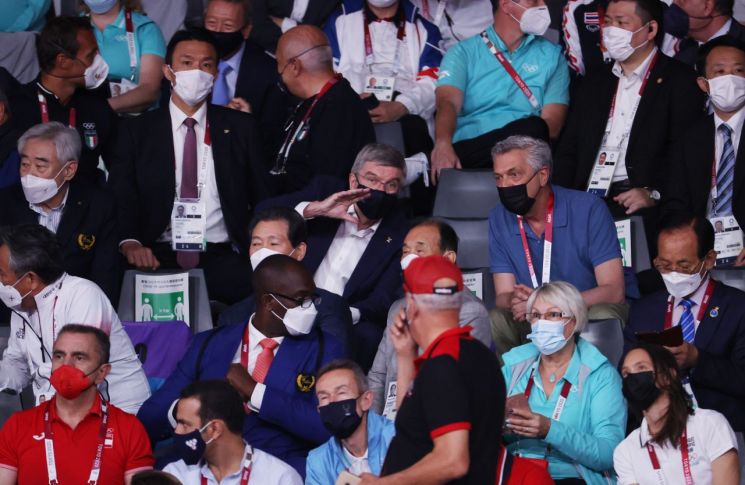
The main figure who spread Taekwondo worldwide was General Choi, who named the sport. However, his name is rarely mentioned. General Choi was imprisoned during the Japanese colonial period for trying to avoid conscription, and during his incarceration, he created a martial art combining Taekkyeon and Karate. After his release, he joined the newly established Korean army and taught martial arts. When the Korean War broke out, he formed an elite unit in Jeju Island, and the unit marched under a flag bearing his clenched fist drawn on the map of Korea. The so-called "Fist Unit" trained instructors to teach Taekwondo throughout the military. However, General Choi had to leave the army in 1961 when the Park Chung-hee regime came to power because he was part of a group that had sentenced Park Chung-hee to death in the 1940s. In 1966, he founded the International Taekwondo Federation to continue spreading Taekwondo but could not withstand ongoing pressure and went into exile in Canada in 1972. The International Taekwondo Federation remained under his control. In response, the government immediately established a rival organization, the World Taekwondo Federation, and even set up an intelligence agency to monitor him. The ensuing fierce competition ironically led to the globalization of Taekwondo, to the extent that the home country's status in the Olympics became almost meaningless...
© The Asia Business Daily(www.asiae.co.kr). All rights reserved.
![Clutching a Stolen Dior Bag, Saying "I Hate Being Poor but Real"... The Grotesque Con of a "Human Knockoff" [Slate]](https://cwcontent.asiae.co.kr/asiaresize/183/2026021902243444107_1771435474.jpg)













