Among 42 Supplementary Budget Cut Projects, 22 Are Defense Acquisition Program Administration Projects
F-35A Procurement Budget Cut by 92 Billion Won
Cut Without Passing Through National Assembly Budget Review
Nara Salrim Research Institute "National Assembly Budget Review Authority Seriously Undermined"
[Asia Economy Reporter Naju-seok] With the passage of this year's supplementary budget bill, it has been confirmed that the budget for the introduction of F-35A and other items was cut without even undergoing basic National Assembly budget review. This seriously undermined the National Assembly's budget review authority during the behind-the-scenes discussions of the supplementary budget at the last minute.
According to the Nara Salrim Research Institute on the 28th, among the 42 projects for which the National Assembly cut the budget during this year's supplementary budget review, 22 projects were confirmed to be related to the Defense Acquisition Program Administration (DAPA) and were not even included in the supplementary budget proposal.
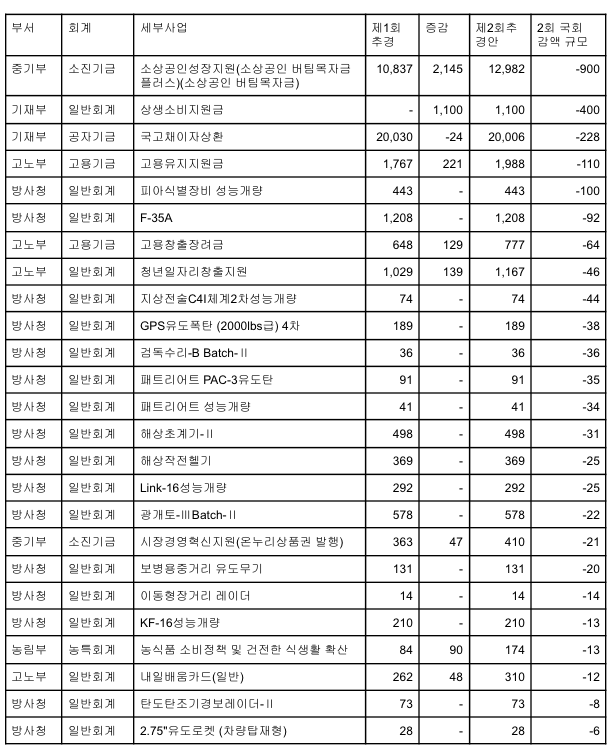
The cut projects include budgets for strengthening defense capabilities such as 'Identification Friend or Foe (IFF) equipment performance upgrade,' 'F-35A,' 'Ground Tactical C4I System 2nd performance upgrade,' 'GSP guided bomb 4th phase,' and 'Patriot performance upgrade.'
The problem is that it is unknown why these project budgets were reduced. Normally, when the government submits a budget proposal, the relevant standing committee of the National Assembly conducts a preliminary review, followed by a review by the Special Committee on Budget and Accounts. However, in the case of the 22 DAPA budget cuts pointed out above, there was no official discussion process in the National Assembly.
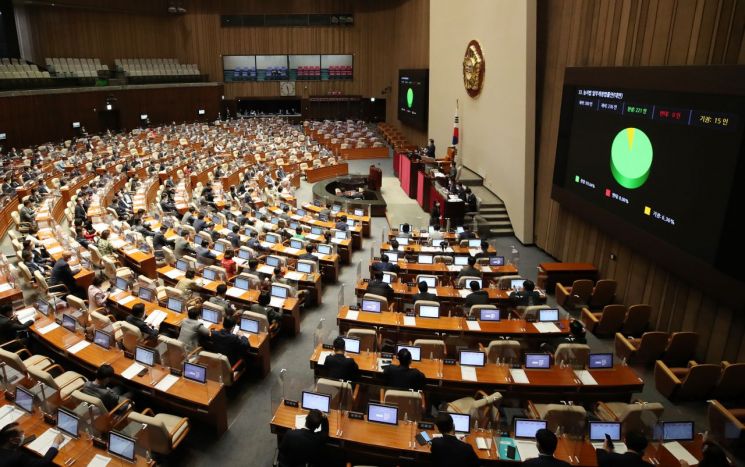
Earlier, the People Power Party explained in a press release on the 23rd regarding the results of the second supplementary budget review that they utilized 1.9 trillion won of the unused budget from the main budget as supplementary budget resources. Typically, the budget bill is reduced by the National Assembly, and within the reduced resources, increased budgets are allocated. However, in this supplementary budget, since the reduced budget alone was insufficient, even the funds expected to be unused in the plenary session budget were drawn upon. Thanks to this, it became possible to increase the total project budget of the supplementary budget without issuing additional government bonds.
Regarding the DAPA budget cuts, the Nara Salrim Research Institute analyzed, "Considering that the cuts proceeded without even a preliminary review by the National Defense Committee, it is presumed to be a reduction by adjusting the purchase timing." This means that while there is no change in the existing weapons plan, the payment schedule may have been adjusted. In this case, it is also possible to analyze that funds scheduled to be paid next year were brought forward to be used this year.
Regarding this DAPA budget cut, Lee Sang-min, senior research fellow at the Nara Salrim Research Institute, pointed out, "At the very least, the agenda should be officially submitted to the Budget and Accounts Committee and cut through an open discussion process and transparently disclosed." He added, "The fact that the National Assembly, the representatives of the people, cannot even grasp the meaning of the large-scale cuts to DAPA projects means that the National Assembly's budget review authority has been seriously undermined."
© The Asia Business Daily(www.asiae.co.kr). All rights reserved.


















