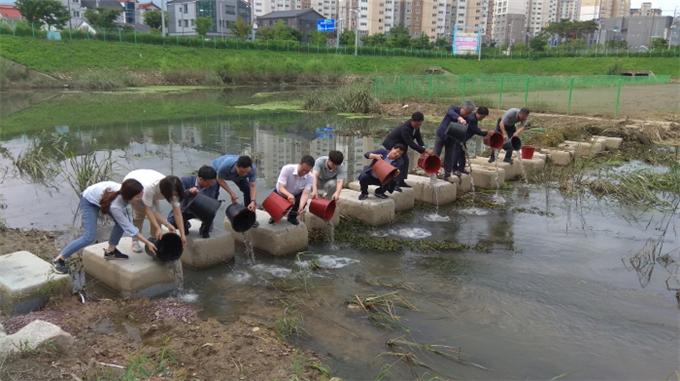
[Asia Economy Yeongnam Reporting Headquarters Reporter Lee Sang-hyun] Gimhae City, Gyeongnam Province, announced on the 26th that it will release 100,000 mudfish fry in the Jinyeong 2 housing site area, including the detention basin in Jinyeong-eup.
For this release, the city established a release plan on May 3rd, and after a preliminary disease inspection on the 14th of this month, it was confirmed by the Busan branch of the National Fisheries Products Quality Management Service that the fry were healthy. On the 20th, the city signed a contract with the fry supplier.
Since 2019, the city has been releasing mudfish in this area, spending about 6 million KRW annually to release approximately 50,000 fish for eco-friendly pest control and aquatic ecosystem restoration.
Overall, since 2006, the city has released an average of about 700,000 fry annually, including crucian carp and catfish. This year, it invested about 120 million KRW to release 500,000 Southeast Asian freshwater crabs in the first half of the year, and following this mudfish release, plans to release an additional 250,000 crucian carp in October.
Commonly known as an ingredient in chueotang (mudfish soup), mudfish are plumper than misgurnus and are called "Donggeuli," while the flat-bodied mudfish are called "Napjagi." They mainly feed on aquatic insect larvae, algae, and organic matter, making them natural predators of pests such as mosquitoes and mayflies.
© The Asia Business Daily(www.asiae.co.kr). All rights reserved.

![Clutching a Stolen Dior Bag, Saying "I Hate Being Poor but Real"... The Grotesque Con of a "Human Knockoff" [Slate]](https://cwcontent.asiae.co.kr/asiaresize/183/2026021902243444107_1771435474.jpg)















