5.9 Billion Won from City and District Budgets... Design to be Completed by Next Year, Landscape Improvement Construction Finished by 2023
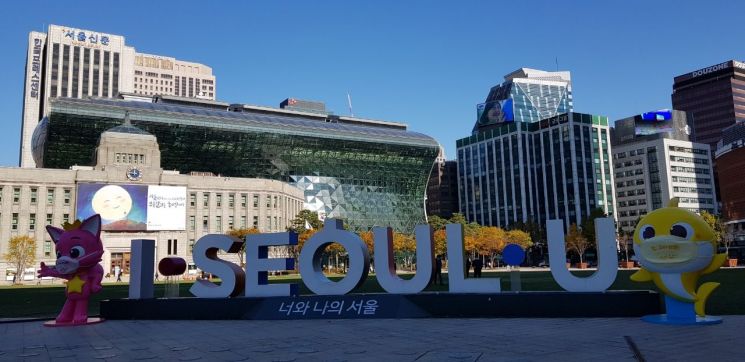
[Asia Economy Reporter Lim Cheol-young] # In Siheung-dong, Geumcheon-gu, Seoul, there is a 830-year-old protected ginkgo tree. This site was once the location of ‘Siheung Haenggung,’ a detached palace where King Jeongjo stopped during his procession to Suwon Hwaseong Fortress. The area around the ginkgo tree is the main route for the annual autumn royal parade, ‘King Jeongjo’s Royal Procession,’ the largest of its kind in Korea. However, it is not easy to find this historical significance in the surrounding street scenery. The Seoul Metropolitan Government plans to install facilities that allow citizens to easily understand the historical meaning of the protected ginkgo tree and to renovate the surrounding streets with a sense of unity.
Seoul is promoting an urban landscape project that creates attractive scenery by leveraging the characteristics of major areas that have historical, cultural value or regional revitalization potential but have been neglected.
On the 25th, Seoul announced that it will carry out urban landscape projects targeting five locations: Siheung Haenggung historical and cultural preservation in Geumcheon-gu, Bukchang-dong food alley in Jung-gu, Jahamun-ro area in Jongno-gu, Chang-dong alley market surroundings in Dobong-gu, and Jinhwangdo-ro in Gangdong-gu. Seoul plans to complete the design by next year and finish construction by 2023. Up to 1.5 billion KRW will be invested per area, totaling 5.9 billion KRW.
The urban landscape project is a public initiative to create a more pleasant and attractive Seoul landscape through direct support for major areas requiring landscape improvement. It includes various projects tailored to each site’s characteristics, such as street environment maintenance and improvement, greening, nighttime landscape maintenance, and formation of historical and cultural landscapes.
In an early-month public contest among autonomous districts, 11 project sites from 8 districts applied. Seoul comprehensively evaluated the suitability of the project sites, feasibility of project plans, participation plans for residents and experts, ripple effects of the projects, and cooperation potential, ultimately selecting five areas as final project sites.
The Siheung Haenggung historical and cultural preservation landscape project in Geumcheon-gu (around 1000-124 Siheung-dong) aims to preserve the landscape of the region’s historical and cultural resources, ‘Siheung Haenggung’ and the ‘protected tree,’ and improve pedestrian and street environments as well as nighttime scenery to create a harmonious environment of history and nature. The Bukchang-dong food alley landscape project in Jung-gu (Namdaemun-ro 1-gil, Bukchang-dong) focuses on preserving the unique character of the food alley, a representative Seoul food street formed since the 1970s and a must-visit spot for foreign tourists. Design elements will be applied to organize building facades and disorderly signboards, and the poor pedestrian environment will be improved to revitalize the stagnant street.
Additionally, the Jahamun-ro area landscape project in Jongno-gu (Jahamun-ro 4-gil, Tongui-dong) will transform the street, where Daelim Museum and others are located, into a cultural and artistic street that itself becomes a gallery. The plan demonstrates how everyday life can become another exhibition space. The project will be promoted with participation from nearby museum curators and installation artists.
The Chang-dong alley market surroundings landscape project in Dobong-gu (around 552-12 Chang-dong) is a busy area with markets such as Chang-dong Alley Market and Sinchang Market. It will create safe pedestrian spaces to enhance convenience for visitors. In connection with traditional market facility modernization projects, the image of the disorderly market surroundings will be renewed. The Jinhwangdo-ro landscape project in Gangdong-gu (145 Jinhwangdo-ro, Dunchon 2-dong) will create a street forest path in the only gray street space without greenery on Jinhwangdo-ro, improving it into a healing street and establishing rest areas.
Choi Jin-seok, Director of Urban Planning at Seoul City, said, “The urban landscape project discovers neglected and underdeveloped areas that could leverage their characteristics, directly supports them publicly to highlight their charm, and creates pleasant landscapes. We will continue to promote landscape improvement projects so that every corner of Seoul can become a representative neighborhood landscape.”
© The Asia Business Daily(www.asiae.co.kr). All rights reserved.
!["I'd Rather Live as a Glamorous Fake Than as a Poor Real Me"...A Grotesque Success Story Shaking the Korean Psyche [Slate]](https://cwcontent.asiae.co.kr/asiaresize/183/2026021902243444107_1771435474.jpg)
















