[Asia Economy Reporter Kim Ji-hee] A study has found that blood levels of CRP (C-reactive protein) and albumin can serve as new indicators for predicting the risk of diabetes.
Teragen Bio announced on the 22nd that it confirmed this fact through joint research with Professor Jeong Dong-hyeok’s team from the Department of Family Medicine at Yongin Severance Hospital. In this study, 5,904 Koreans aged 40 to 60 were divided into three groups based on the ratio of albumin to CRP levels (CAR): less than 0.2, 0.2 to less than 0.44, and 0.44 or higher, and were followed up for an average of 7 years and 6 months.
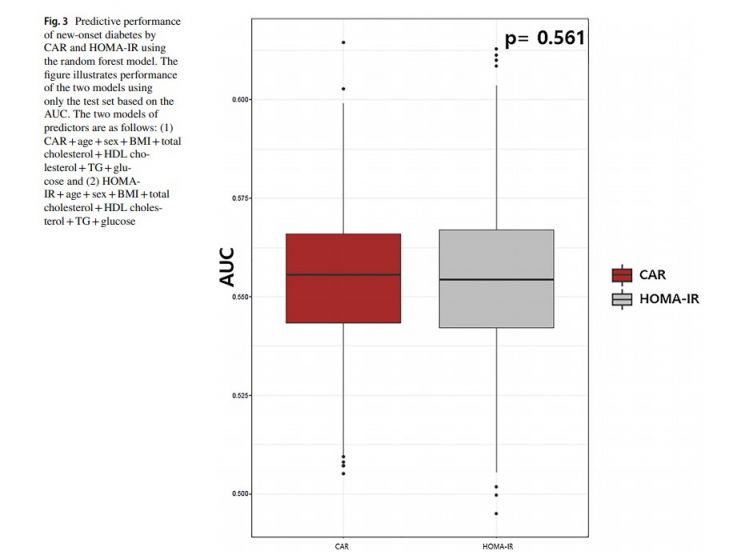
Among them, a separate analysis of 701 individuals diagnosed with diabetes showed that even if blood glucose levels were normal, the group with relatively high CAR had a 1.6 times higher probability of developing diabetes. Notably, CAR demonstrated a similar level of accuracy compared to the currently widely used diabetes prediction indicator, the insulin resistance index (HOMA-IR), despite having a simpler analysis procedure and lower cost.
Based on these research results, CRP levels, which have mainly been used for diagnosing and monitoring cardiovascular diseases, can now also be applied to predict diabetes risk. For individuals with normal blood glucose levels but high CAR, lifestyle improvements such as exercise, dietary therapy, and smoking cessation, as well as medication for diabetes prevention, can be recommended.
Additionally, the research team revealed that genetic markers related to iron metabolism and iron intake may increase the risk of diabetes. Excessive iron intake can induce diabetes.
Observing 6,413 Koreans from the same cohort over about 8 years, it was found that individuals with mutations in the genes ‘HFT’ and ‘HFE’ who consume a lot of ham or red meat have up to a 1.4 times higher incidence of type 2 diabetes. The research team explained that using these markers together with the existing insulin resistance index increases the diagnostic accuracy (AUC) for diabetes from 73% to 78%, a 5 percentage point improvement.
This study is also expected to contribute to diabetes prevention by improving diagnostic accuracy and enabling dietary adjustments for carriers of these genetic mutations when applied in diagnosis.
The research results were published in the latest issues of the international diabetes journals ‘Diabetes Research and Clinical Practice’ and the ‘European Journal of Nutrition’.
© The Asia Business Daily(www.asiae.co.kr). All rights reserved.
!["The Woman Who Threw Herself into the Water Clutching a Stolen Dior Bag"...A Grotesque Success Story That Shakes the Korean Psyche [Slate]](https://cwcontent.asiae.co.kr/asiaresize/183/2026021902243444107_1771435474.jpg)
















