Ministry of SMEs and Startups, Regional Commercial Act Passes Cabinet Meeting... Effective April Next Year
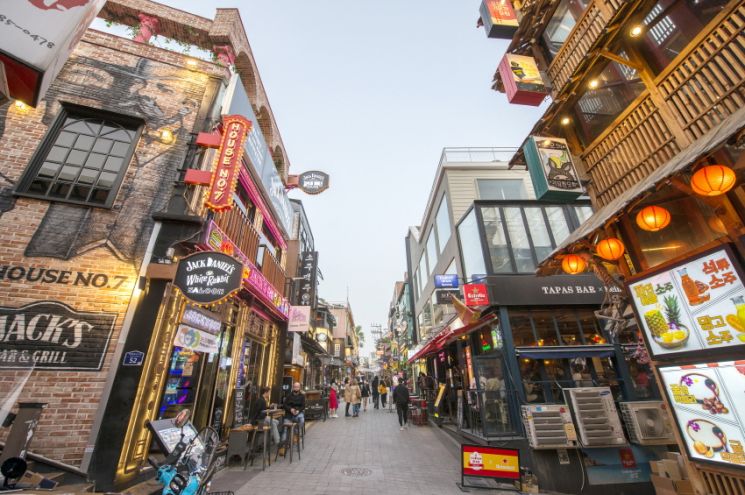
[Asia Economy Reporter Kim Jong-hwa] It is expected to be difficult for large franchise directly operated stores such as Starbucks or Olive Young to enter major commercial districts like Itaewon or Hongdae. This is because if more than two-thirds of local merchants and landlords agree to designate the area as a 'Regional Coexistence Zone,' the opening of large-scale stores with annual sales exceeding the amount set by the president will be restricted.
On the 20th, the Ministry of SMEs and Startups announced that the draft of the "Act on the Coexistence and Revitalization of Regional Commercial Districts (Regional Commercial District Act)" containing such provisions has passed the Cabinet meeting. The Regional Commercial District Act was proposed in the 20th National Assembly in 2016 with the intention of preventing gentrification (displacement), but it did not pass. However, in the 21st National Assembly, after gathering opinions from related ministries and holding public hearings, it was passed at the plenary session on June 29.
The core of the Regional Commercial District Act is to designate and revitalize areas where commercial zones account for more than 50% of the total area and where a certain number of stores, as determined by presidential decree, are concentrated to form a single commercial district as Regional Coexistence Zones or Autonomous Commercial Zones. Regional Coexistence Zones refer to new urban areas where there are concerns about rent increases, while Autonomous Commercial Zones refer to old downtown areas where the number of businesses, sales, and population have decreased.
Local merchants, commercial building landlords, and landowners enter into a 'coexistence agreement' that limits rent increases to within 5%, and if more than two-thirds agree, the area is designated as a Regional Coexistence Zone or Autonomous Commercial Zone. Once designated, local governments can prohibit or restrict the opening of directly operated stores run by franchise headquarters or chain headquarters with annual sales exceeding the standards set by presidential decree through ordinances.
The Ministry of SMEs and Startups plans to promptly prepare subordinate laws such as enforcement ordinances and enforcement rules to maximize the effectiveness of the policy. The Regional Commercial District Act will be promulgated on the 27th, and after a nine-month grace period, it is scheduled to be enforced from April next year.
Minister Kwon Chil-seung of the Ministry of SMEs and Startups said, "Through the Regional Commercial District Act, we will revitalize declining downtown commercial districts and prevent displacement within commercial districts to create conditions for the regional economy to take off again," adding, "Above all, we expect to establish a virtuous cycle of economic vitality in commercial districts facing difficulties."
© The Asia Business Daily(www.asiae.co.kr). All rights reserved.

















