The Definition That Yawning Involves Breathing May Need to Be Revised
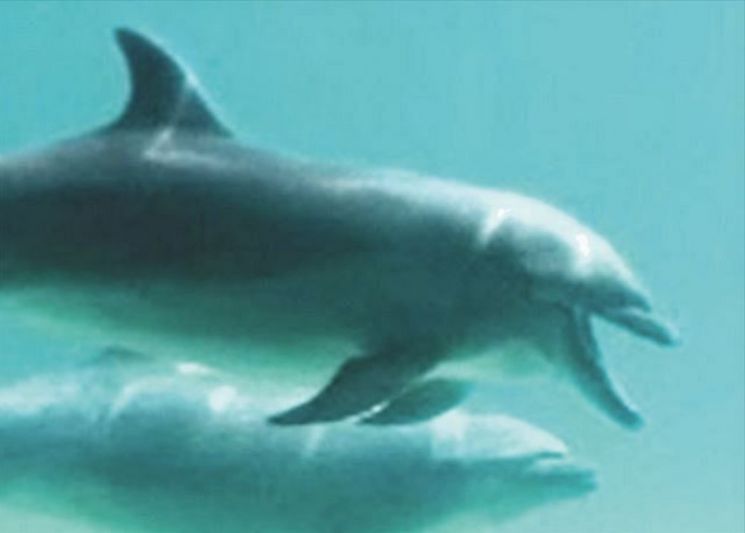
[Asia Economy Senior Reporter Jinsoo Lee] A bottlenose dolphin in an aquarium was captured yawning underwater.
According to researchers at the Whale Research Center affiliated with Mie University Graduate School in Japan on the 13th, yawning has never been observed in aquatic mammals until now. The observation results were published in the August issue of the international scientific journal specializing in animal behavior, Behavioural Processes.
The research team led by Professor Tadamichi Morisaka of the Department of Biological Resources at Mie University filmed three bottlenose dolphins being raised at Minamichita Beachland in Aichi Prefecture for a total of 120 hours. Video analysis confirmed five instances where the bottlenose dolphins slowly opened their mouths underwater and then closed them abruptly.
Until now, the reason why dolphins open their mouths underwater was unknown, so no one thought it was yawning. However, since the dolphins were observed resting underwater, swimming leisurely with their eyes closed, the researchers concluded it was underwater yawning. Dolphins breathe by surfacing and exposing their faces above water. But this is the first time yawning has been confirmed not only above water but also underwater in dolphins.
Yawning naturally occurs when sleepy. It is a common phenomenon among vertebrates such as humans, monkeys, birds, salamanders, and frogs. Yawning sends oxygen to the brain, temporarily sharpening consciousness. In animal behavior studies, yawning is defined as “slowly opening the mouth to inhale air, reaching maximum mouth opening, briefly exhaling air, and then closing the mouth.”
The underwater yawning captured in the bottlenose dolphins this time does not involve breathing. If yawning can occur without breathing, it does not fit the existing definition of yawning. Since dolphins cannot breathe underwater, this discovery suggests the need to revise the current definition that yawning involves breathing.
Professor Morisaka said, “The act of opening the mouth wide itself might have the effect of dispelling drowsiness.” In fact, there was a tendency for the dolphins’ behavior to become temporarily more active after yawning during the observation.
© The Asia Business Daily(www.asiae.co.kr). All rights reserved.
![Clutching a Stolen Dior Bag, Saying "I Hate Being Poor but Real"... The Grotesque Con of a "Human Knockoff" [Slate]](https://cwcontent.asiae.co.kr/asiaresize/183/2026021902243444107_1771435474.jpg)
















