Life Insurers Pay Infectious Disease Disaster Death Benefits
Different from Non-Life Insurers Classifying as 'Disease'
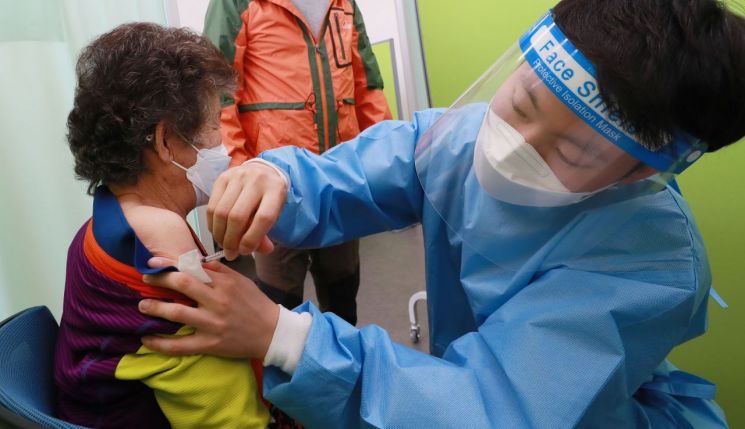
[Asia Economy Reporter Oh Hyung-gil] Financial authorities have rejected the life insurance industry's request to exclude infectious diseases such as COVID-19 from the disaster conditions required for insurance payouts. They maintained their original position that infectious diseases are fully covered under the general death coverage, which is the basic protection in life insurance.
Accordingly, non-life insurers, which classify infectious diseases as ‘illnesses,’ cannot pay accidental death insurance benefits, but life insurers, which define them as ‘disasters,’ can continue to pay accidental death insurance benefits as before.
According to the insurance industry on the 12th, the life insurance sector recently proposed to financial authorities to separate the current standard clause disaster classification table into a disaster classification table excluding infectious diseases and an infectious disease classification table for operation. The current life insurance standard clause recognizes first-class infectious diseases as disasters as defined by the Infectious Disease Control and Prevention Act. The life insurance industry complained that including diseases like infectious diseases in disasters makes risk management difficult.
Before the outbreak of COVID-19, the existing disaster classification table excluded ‘U-code’ diseases?temporarily assigned to new diseases with uncertain causes?from disaster coverage. However, this caused an issue where some infectious diseases like COVID-19, although classified as first-class infectious diseases, fell under the U-code. In response, financial authorities revised the classification table in July last year to cover all first-class infectious diseases as disasters.
Life insurers have been paying accidental death insurance benefits for deaths caused by COVID-19 according to this classification table. Generally, accidental death insurance benefits are reported to be more than twice the amount of general death insurance benefits.
The life insurance industry argues that first-class infectious diseases, which should be covered as disasters, should be classified separately because it is impossible to predict the types or risks that may arise in the future.
In particular, since the Director of the Korea Disease Control and Prevention Agency can designate additional first-class infectious diseases at any time, there may be situations where infectious diseases not covered at the time of insurance subscription must be covered later. From the insurer's perspective, this creates an unexpected variable that imposes unforeseen burdens.
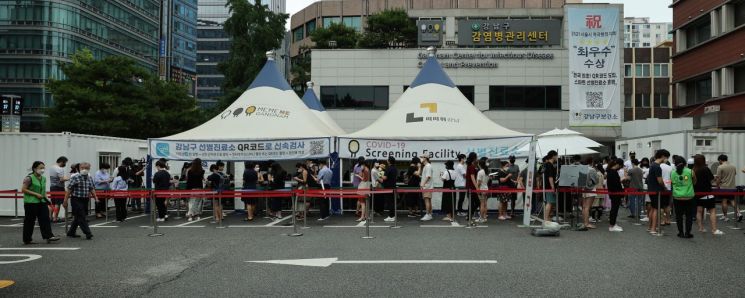
Death Insurance Benefits Related to COVID-19... Life Insurance 'Disaster' Non-life Insurance 'Illness'
Some argue that the difference in interpretation between non-life insurance and life insurance should be eliminated. Non-life insurance views injury as a ‘sudden and accidental external accident,’ so infectious diseases are interpreted as illnesses, not injuries.
Non-life insurance does not apply this disaster classification table, so controversy over death payments due to infectious diseases continues. Last year, the Daegu District Court ruled that death caused by COVID-19 could not be regarded as resulting from a sudden and accidental external injury to the body.
Considering these points, the industry conveyed to authorities the opinion to separately classify infectious diseases in the disaster classification table so that insurers can choose and use classification tables suitable for product development purposes and risk management.
However, the authorities concluded that "considering the traditional meaning of disaster in life insurance, consumers' reasonable expectations, and the purpose of compensation, first-class infectious diseases fall under disaster coverage." The disaster in life insurance refers to ‘accidental external accidents,’ so infectious diseases are also considered disasters.
A financial authority official explained, "The fact that infectious diseases are fully covered under the general death coverage, which is the basic protection in life insurance, means they can also be covered under disaster coverage. Since disaster coverage is operated optionally for additional protection, insurers can manage risks themselves by adjusting subscription limits, etc."
© The Asia Business Daily(www.asiae.co.kr). All rights reserved.
![Clutching a Stolen Dior Bag, Saying "I Hate Being Poor but Real"... The Grotesque Con of a "Human Knockoff" [Slate]](https://cwcontent.asiae.co.kr/asiaresize/183/2026021902243444107_1771435474.jpg)

















