[Asia Economy New York=Correspondent Baek Jong-min] Concerns over the spread of the COVID-19 Delta variant and delays in the global economic recovery have emerged as obstacles to the world economy. As forecasts that the US and Chinese economies could simultaneously decline spread, safe-haven assets such as US and German government bonds and the Japanese yen surged sharply, while risk assets like stocks and cryptocurrencies plummeted across the board.
On the 8th (local time) at the New York Stock Exchange, the Dow Jones Industrial Average fell 259.86 points (0.75%) to close at 34,421.93, the S&P 500 index dropped 37.31 points (0.86%) to 4,320.82, and the Nasdaq index declined 105.28 points (0.72%) to 14,559.78. The Stoxx 600 index, reflecting the overall European stock market, fell 1.7%. Most Asian markets, which closed earlier, also declined.
Major indices on the New York Stock Exchange showed strength despite a sharp drop in US Treasury yields the previous day but failed to maintain momentum. Cryptocurrencies also remained weak. On this day, Bitcoin fell 4.9%, while Ethereum and Dogecoin plunged 9%.
The global spread of the COVID-19 Delta variant is seen as a factor causing delays in the global economic recovery, emerging as a source of instability in the world economy.
The intraday drop of the US 10-year Treasury yield to 1.25% reflects the current uncertainty. Concerns over delayed economic recovery have triggered a preference for safe-haven assets, causing US Treasury yields to decline continuously in recent days. In March, Treasury yields rose to 1.78% amid concerns that the economy was recovering rapidly and inflation was surging.
The strength in government bonds is not limited to the US. German government bonds also fell to -0.321%, the lowest level since the end of March.
The global rise in government bond prices is interpreted as a signal predicting sluggish economic growth ahead despite inflation concerns. A major foreign news outlet commented that Treasury yields suggest that economic recovery and inflation increases will be weaker than expected.
The US economic indicators released on this day again signaled delays in economic recovery.
The US Department of Labor reported that initial jobless claims last week rose to 373,000, marking an increase after three weeks. This exceeded the previous week's figure by 2,000 and surpassed the market expectation of 350,000. The previous week's initial jobless claims were also revised upward from 364,000 to 371,000. Following the June unemployment rate announcement of 5.9%, which rose contrary to expectations, the increase in weekly initial jobless claims has reignited concerns about the labor market recovery.
The decline in the service sector Purchasing Managers' Index (PMI), which accounts for two-thirds of the US economy, followed by an increase in new unemployment claims, has strengthened the perception that the economic recovery has peaked. CNBC broadcast expressed concern, calling it an "unexpected increase" and suggesting that the smooth employment growth during the first half of the year may face "obstacles" ahead.
Fear that the US and Chinese economies will simultaneously enter a downturn has also spread. On this day, the Chinese State Council held an executive meeting chaired by Premier Li Keqiang and announced plans to strengthen support for the real economy using monetary policy tools such as lowering the reserve requirement ratio.
Daiwa Securities evaluated this as a signal that the upcoming Chinese second-quarter Gross Domestic Product (GDP) figures scheduled for next week will fall short of expectations.
The dominant analysis is that declines in the US and Chinese economies, which have led the global economic recovery since COVID-19, are likely to become obstacles to the worldwide economic recovery.
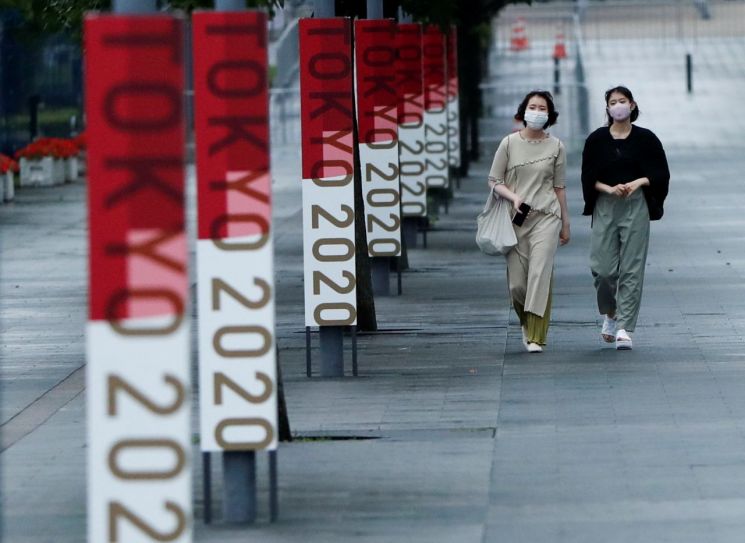
In addition to the global COVID-19 death toll surpassing 40 million the previous day, the declaration of a state of emergency in Tokyo and the decision to hold the Tokyo Olympics without spectators, announced on this day, have further fueled uncertainty in the global economy.
CNBC broadcast expressed concern that while the US has bought time through vaccinations, the spread of the Delta variant in Australia, Asia, and Africa suggests a similar situation could occur in the US this fall.
Lawrence Gostin, Director of the WHO Center for Global Health Law, predicted, "A major COVID-19 outbreak could occur in US states with low vaccination rates." It is also anticipated that relaxed mask-wearing policies in these areas may be reinstated.
Edward Park, Chief Investment Officer at Brooks Macdonald, said in an interview with The Wall Street Journal, "The situation in mid-June, when everything seemed Goldilocks, is increasingly being seen as not positive," and forecasted, "Delta or other Delta variants will highlight risks."
© The Asia Business Daily(www.asiae.co.kr). All rights reserved.

















