Through investigations of asset details and living conditions, efforts to identify low-income delinquent taxpayers in need of care... Wage garnishment prohibition criteria eased to 2.24 million KRW or less, applying Seoul-type living wage standards
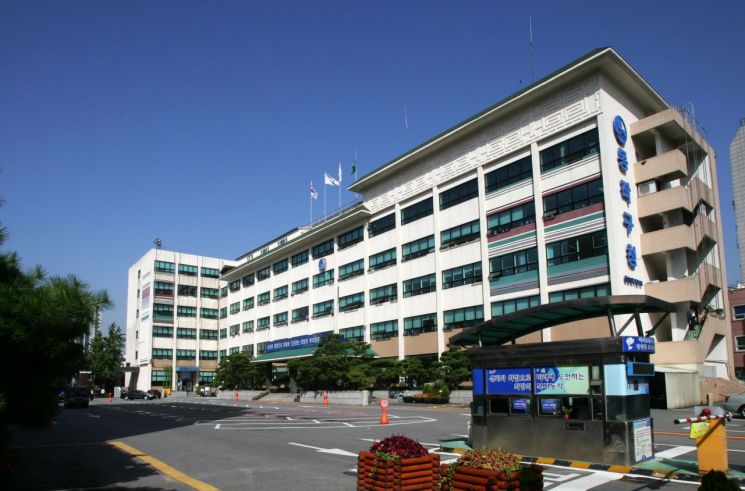
[Asia Economy Reporter Jong-il Park] Dongjak-gu (Mayor Chang-woo Lee) is supporting the economic recovery of "livelihood-type low-income tax delinquents" who are experiencing financial difficulties due to the prolonged COVID-19 pandemic by suspending tax collection actions and administrative sanctions.
"Livelihood-type low-income tax delinquents" refer to residents who are economically struggling due to having no assets, low income, or owning non-disposable or impractical assets, and who are delinquent in local taxes. Their living conditions are investigated and comprehensively assessed.
As the COVID-19 pandemic has prolonged and the number of livelihood-type low-income tax delinquents has increased, the district is considering the burden of delinquent taxes on their economic activities by deferring tax collection actions and administrative sanctions.
First, the district has lifted property seizures on real estate with an assessed official land price of 1 million KRW or less and on vehicles that have not been operated for over 15 years. For residents affected by COVID-19 or delinquent in local taxes, the wage seizure prohibition threshold has been relaxed from the previous 1.85 million KRW per month to 2.24 million KRW or less, applying the Seoul-type living wage standard.
Additionally, the district is deferring restrictions on various business licenses (government-permitted business restrictions) and the registration of public record information that limits financial transactions such as bank loans and credit card use, providing practical assistance for the economic recovery of tax delinquents.
Moreover, during delinquency consultations, those without income or who are struggling to maintain their livelihood due to illness or business closure are identified and selected as basic livelihood security recipients, with necessary welfare services linked accordingly.
So far, for tax delinquents aged 60 and over, property details and living conditions have been investigated, and visits and phone consultations conducted. A total of 39 individuals deemed in need of care have received economic recovery support including ▲welfare linkage ▲wage seizure relaxation ▲seizure release.
For example, Mr. Jang (in his 70s), residing in Sangdo-dong, was selected as a basic livelihood security recipient through living condition investigations and consultations, and is receiving welfare services linked with the local community center and social welfare department.
For further details, inquiries can be made to the Collection Division.
Im Jong-yeol, head of the Collection Division, stated, "We will actively identify tax delinquents in welfare blind spots caused by COVID-19 and help them recover to normal daily life. On the other hand, we will implement a two-track tax administration by strongly enforcing tax collection actions against malicious delinquents, distinguishing them from others."
© The Asia Business Daily(www.asiae.co.kr). All rights reserved.
![From Bar Hostess to Organ Seller to High Society... The Grotesque Con of a "Human Counterfeit" [Slate]](https://cwcontent.asiae.co.kr/asiaresize/183/2026021902243444107_1771435474.jpg)
















