Differences in COVID-19 Restrictions Between Seoul Metropolitan Area and Non-Metropolitan Areas
Some Seoul Residents Travel to Provincial Cities for 'Expedition Entertainment'
"Will You Take Responsibility If Social Distancing Is Tightened?" Local Residents Frown
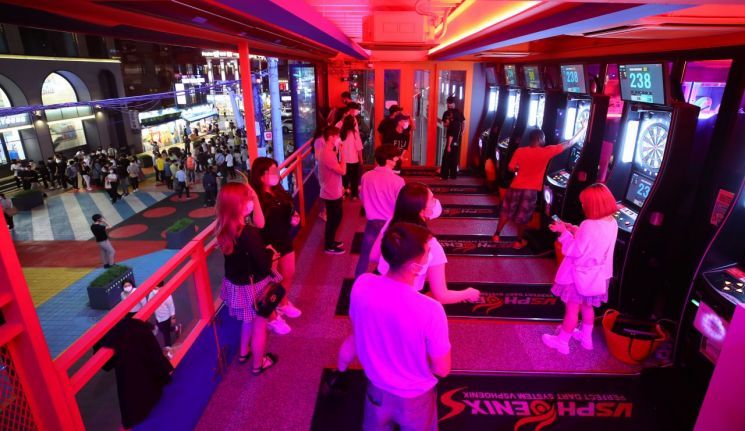
[Asia Economy Reporter Lim Ju-hyung] "If we can't gather in Seoul, we can just go down to the provinces.", "We're going on a club trip to Busan."
As COVID-19 spreads severely around the metropolitan area and quarantine guidelines are being strengthened, some citizens are causing frowns by heading to provincial cities for 'expedition entertainment.' Local residents are on edge. There are concerns that the influx of people from the metropolitan area could cause damage even to the provinces.
On the 6th, inquiries about visiting so-called 'hot places' in non-metropolitan cities such as Busan and Ulsan flooded social networking services (SNS) like Facebook and some online communities. Netizens posted messages like "Looking for a hot club in Busan," and "Please recommend a bar with a good atmosphere near Haeundae," sharing information about popular local entertainment venues.
The reason metropolitan citizens visit non-metropolitan entertainment venues is that quarantine policies differ between the metropolitan and non-metropolitan areas. Since the 1st, the newly revised Level 1 social distancing has been applied in non-metropolitan regions, with no restrictions on private gatherings or multi-use facilities.
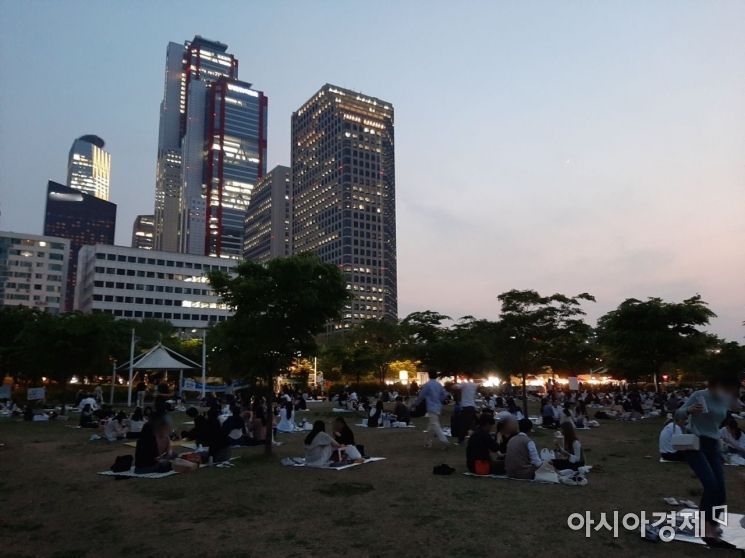 Citizens gathered at Seoul Hangang Park enjoying drinks after dusk last May. / Photo by Juhyung Lim skepped@
On the other hand, the metropolitan area has postponed the decision to apply the new social distancing measures until the 8th. Additionally, with strengthened quarantine guidelines to prevent COVID-19 spread, mandatory mask-wearing indoors and outdoors, and bans on drinking in parks and riversides after 10 p.m. have been added as restrictions.
Given this situation, some metropolitan citizens are deliberately gathering in non-metropolitan areas to enjoy entertainment and then returning, engaging in so-called 'expedition entertainment.'
The problem is that such population movement poses a high risk of spreading cluster infections not only in the metropolitan area but also in non-metropolitan regions.
The metropolitan area is already experiencing a rapid increase in COVID-19 infections. The average daily number of new confirmed cases in the metropolitan area over the past week is 546, which falls within the Level 3 (500 or more) range under the new social distancing criteria.
Moreover, the 'Delta variant,' known to be much more infectious than the existing virus, has already spread in the metropolitan area. According to the Central Disaster and Safety Countermeasures Headquarters (CDSCH), the proportion of the Delta variant among variants in Korea surged from 7.3% on April 4 to 18.2% last month. The Delta variant virus was also detected in the 'Hongdae native English teacher gathering cluster infection,' which has so far resulted in about 300 confirmed cases.
Meanwhile, cases of metropolitan confirmed patients visiting pubs and other venues in non-metropolitan cities and causing COVID-19 spread continue. On the 2nd, a cluster infection broke out after confirmed patients from Seoul visited a sentimental pub in Busan.
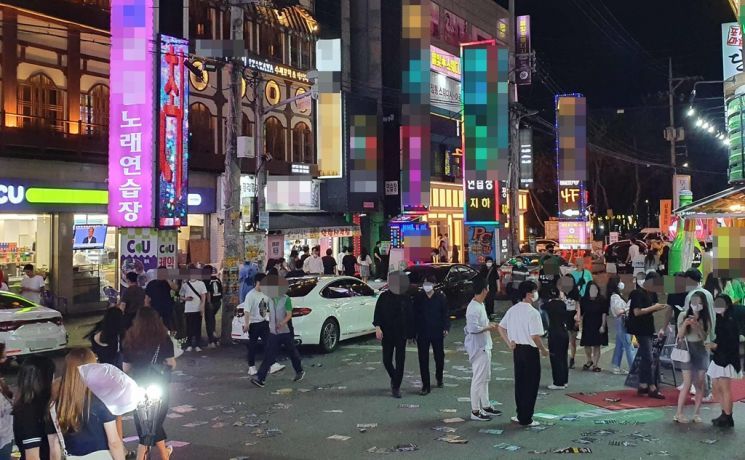 The scene of the entertainment district in Dujeong-dong, Cheonan-si, Chungnam at 10 p.m. on the 2nd / Photo by Yonhap News
Local residents are furious. There are concerns that some careless metropolitan citizens could jeopardize the local quarantine network.
A man in his 20s, A, who lives in Busan, said, "I don't understand why people from Seoul come all the way here and cause harm," adding, "If things continue like this and Busan's social distancing level is raised again, who will take responsibility?"
Another office worker, B (31), said, "With the vacation season approaching and residents already on edge, seeing people from Seoul coming down to the provinces and not properly following social distancing makes me angry."
Experts emphasize that nationwide participation in social distancing is crucial to prevent the spread of infections from the metropolitan area to other regions.
Professor Lee Jae-gap of the Department of Infectious Diseases at Hallym University Kangnam Sacred Heart Hospital appeared on MBC Radio's 'Kim Jong-bae's Focus' and pointed out, "If there is a gap in social distancing between the metropolitan area and other regions, many people who have nowhere to go in the metropolitan area tend to go down to the provinces."
He continued, "This could be the starting point for the spread of infections in local communities," urging, "The public must participate in social distancing and exercise restraint."
© The Asia Business Daily(www.asiae.co.kr). All rights reserved.



















