55 Public Accountants and Law Experts to be Announced
National Police Agency Requests Increase in Investigation Personnel
Reducing Workload and Enhancing Expertise
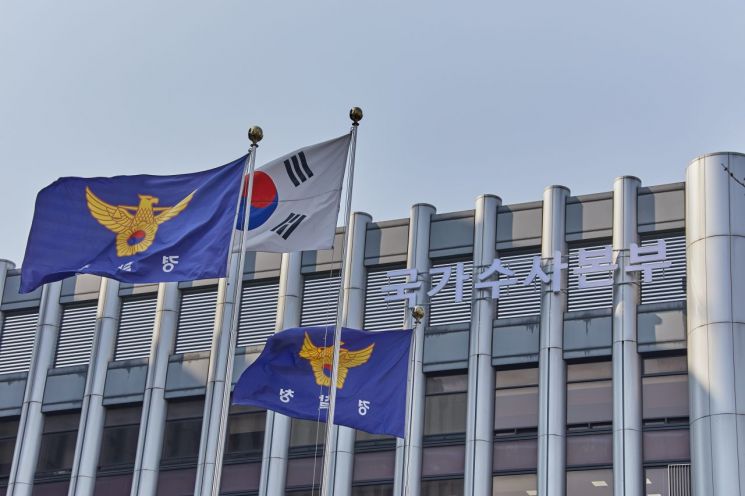
[Asia Economy Reporter Lee Gwan-joo] Marking half a year since the implementation of the adjustment of investigative authority between the police and prosecution, the police are pushing for a large-scale increase in investigators. This is a measure to reduce the increased workload of frontline investigators after the adjustment of investigative authority and to secure investigative expertise.
According to the National Police Agency on the 2nd, the police plan to announce a "Career Competitive Recruitment for Intelligent Crime Investigation Personnel" next week and select investigators. The recruitment fields are three areas: Certified Public Accounting, Tax Accounting, and Law, with a total of 55 people to be selected. In the Certified Public Accounting field, those who hold a CPA license and have completed practical training can apply, and the five selected will be appointed as Inspectors and assigned to the Crime Proceeds Tracing Investigation Team at the Metropolitan City and Provincial Police Agency. In the Tax Accounting field, 20 people will be selected, and in the Law field, 30 people will be selected, who will be assigned to economic and intelligence teams at city/provincial police agencies or frontline police stations.
The police have introduced career competitive recruitment for intelligent crime investigation personnel since 2013 and have selected a total of 320 investigators, including CPAs, over eight years until last year. Although career recruitment in each field has been conducted annually, it is the first time in three years since 2018 that a separate career recruitment announcement has been made specifically for intelligent crime investigation personnel. This is analyzed as an effort to secure expertise in economic and financial crimes after the adjustment of investigative authority. As crimes are becoming increasingly organized and sophisticated, especially account tracing and accounting book analysis are important not only for securing evidence but also for victim compensation, and the difficulty of investigation is relatively high, making expertise essential.
Along with this, the National Investigation Headquarters (NIH) of the National Police Agency is in consultation with the Ministry of the Interior and Safety to reinforce frontline investigator personnel. The NIH reports that while the workload of frontline investigators has increased after the adjustment of investigative authority, the number of investigative personnel has not increased at all, estimating that about 2,000 additional personnel are needed. Specifically, 42 essential practical personnel for investigation command and policy, 703 personnel for investigation review, and 161 personnel for case record management are required.
Additionally, to enable each city and provincial police agency to respond to important cases, they are requesting reinforcement of dedicated personnel for complaints and accusations (96 people), industrial safety and medical accident cases (34 people), telecommunication financial fraud (44 people), cyber investigations (75 people), and digital forensic analysts (64 people). The NIH also judges that frontline police station teams require additional personnel in economic teams for complaints and accusations (134 people), women and violent crime units (447 people), drug investigations (50 people), traffic investigations (111 people), and cyber investigations (206 people).
Organizational restructuring to strengthen investigation command and supervision is also being requested. Five city and provincial police agencies?Ulsan, Jeju, Gangwon, Chungbuk, and Jeonbuk?do not have investigation review officers, so their establishment is necessary. Furthermore, to ensure proper command and control by middle managers, there is a plan to divide the Investigation Division into Economic and Intelligence Divisions, and the Criminal Division into Criminal and Violent Crime Divisions. The separation criteria are 40 people for the Investigation Division and 70 people for the Criminal Division. A NIH official explained, "Since the adjustment of investigative authority, the number of investigative personnel has not increased at all, increasing the burden on frontline investigators," adding, "The purpose is to reduce workload and secure investigative expertise."
© The Asia Business Daily(www.asiae.co.kr). All rights reserved.
![Clutching a Stolen Dior Bag, Saying "I Hate Being Poor but Real"... The Grotesque Con of a "Human Knockoff" [Slate]](https://cwcontent.asiae.co.kr/asiaresize/183/2026021902243444107_1771435474.jpg)
















