Oil Demand Rebounds with Resumption of Games and Recovery of Travel Demand
Experts Say "OPEC+'s Production Increase Is Far from Enough"
OPEC+ Meeting to Decide Oil Supply Policy Postponed by One Day
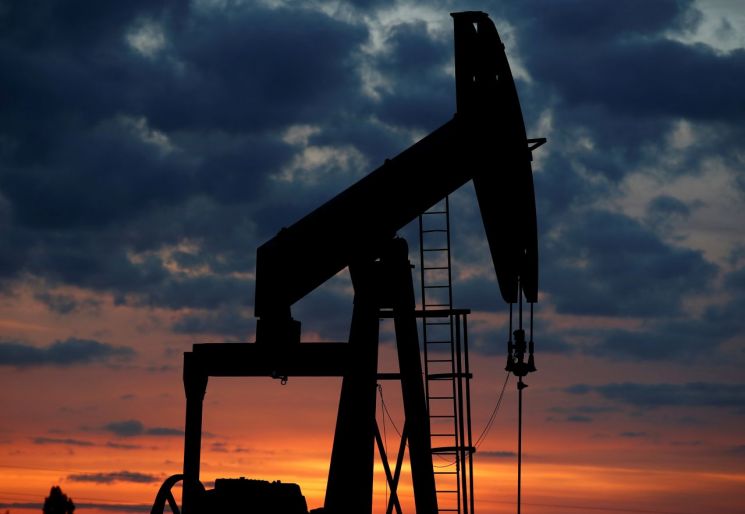
[Asia Economy Reporter Kim Suhwan] West Texas Intermediate (WTI) crude oil prices surpassed $75 per barrel for the first time in three years since 2018. This is attributed to a rebound in oil demand as consumer sentiment revives ahead of the summer vacation season amid signs of economic reopening following the COVID-19 pandemic.
Meanwhile, the extension of the meeting by one day of the 'OPEC Plus' (OPEC+) group, a coalition of the Organization of the Petroleum Exporting Countries (OPEC) and non-OPEC oil-producing countries including Russia, to decide on crude oil production policies is also interpreted as having influenced the price increase.
On the 1st (local time), WTI prices closed at $75.23 per barrel on the New York Mercantile Exchange (NYMEX), up 2.40% from the previous session. This marked the highest level since October 2018.
Additionally, Brent crude oil prices on the London ICE Futures Exchange were trading at $75.84 per barrel as of 7 a.m. Korean time on the 2nd, up 1.63% from the previous day.
The background to this rise in oil prices is interpreted as reflecting expectations that travel demand, which had been depressed due to the COVID-19 impact, will recover significantly, leading to increased demand for jet fuel and gasoline.
Earlier, WTI prices started this year at $48.5 per barrel and have risen by more than 50% since then.
Furthermore, forecasts that major oil-producing countries will pursue a policy of easing production cuts rather than expanding output have further fueled the upward trend in oil prices. The production increase announced by OPEC+ as part of easing cuts is set at 400,000 barrels per day from August to December this year.
However, with an explosive rebound in crude oil demand expected ahead of the summer vacation season, this scale of production increase is criticized as grossly insufficient to resolve supply shortages.
Jeff Currie, a commodity market analyst at Goldman Sachs, emphasized, "The scale of OPEC's production increase is insufficient to calm oil prices," adding, "As of last month, there was a daily shortfall of 2.3 million barrels of crude oil."
As supply fails to keep pace with demand, there are also forecasts that oil prices could soar to $100 per barrel. Bank of America (BoA) predicted in a report earlier last month that "oil prices could surpass $100 per barrel by next year."
John Kilduff of Again Capital said, "OPEC+ may deliberately try to raise oil prices to compensate for losses caused by the collapse in oil demand last year."
Meanwhile, the OPEC+ meeting scheduled for the 1st was extended by one day due to disagreements among member countries. Bloomberg reported that the final discussion on crude oil supply policies was postponed by a day as the United Arab Emirates (UAE) opposed the plan to increase production by 400,000 barrels per day.
According to major foreign media, the UAE, which is advocating for an expansion of production increases, is pushing OPEC+ to raise the baseline production volume that serves as the basis for oil production cuts. If the baseline is raised, the production cuts will be further eased accordingly.
However, concerns have also been raised about potential oversupply of crude oil in the medium to long term. The spread of the Delta variant could lead to renewed lockdown measures, which might again suppress oil demand.
The Joint Technical Committee (JTC), OPEC+'s market monitoring body, stated on the 29th of last month that "there is a risk of oversupply in 2022," citing the spread of the Delta variant and the polarization in the pace of economic recovery among countries as main factors.
Additionally, ongoing negotiations between the United States and Iran to restore the Iran nuclear deal are expected to be another variable. If the talks conclude early, Iran's crude oil production and exports could increase significantly, leading to a substantial rise in oil supply.
© The Asia Business Daily(www.asiae.co.kr). All rights reserved.
!["The Woman Who Threw Herself into the Water Clutching a Stolen Dior Bag"...A Grotesque Success Story That Shakes the Korean Psyche [Slate]](https://cwcontent.asiae.co.kr/asiaresize/183/2026021902243444107_1771435474.jpg)
















