Discussion on the Impact of Rising Market Interest Rates and Easing of Loan Regulations Underway
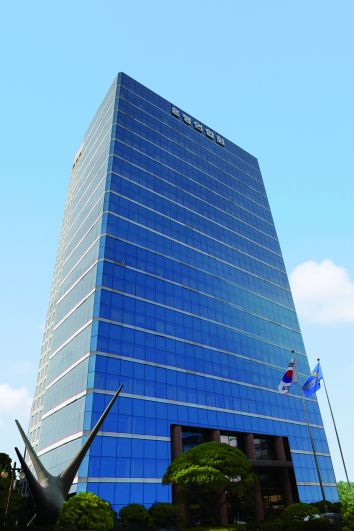
[Asia Economy Reporter Kwangho Lee] Kim Kwangsoo, Chairman of the Korea Federation of Banks, and heads of major domestic banks are coming together to discuss various current issues such as difficulties arising from the enforcement of the Act on Reporting and Using Specified Financial Transaction Information, and improvements to internal control systems.
According to the financial sector on the 28th, the Federation of Banks will hold its regular board meeting at 5 p.m. that day. The board meeting is held on the fourth Monday of every month.
At this board meeting, opinions are expected to be exchanged regarding measures to address the increased burden on banks due to the Specified Financial Transaction Information Act (Special Act) coming into effect in September.
Recently, the Federation of Banks submitted a request to the Financial Services Commission asking that banks not be held responsible if there is no intentional or gross negligence on their part during the real-name verification deposit and withdrawal account screening process, even if money laundering issues arise at virtual currency exchanges.
Under the amended Special Act, virtual asset service providers must register with the Financial Services Commission by September 24. At this time, obtaining a real-name verified deposit and withdrawal account from a bank is a mandatory requirement. This effectively places the 'comprehensive verification' responsibility for exchanges on banks. Banks are reluctant to issue real-name verified accounts due to concerns about risks related to money laundering incidents.
Additionally, due to a series of private equity fund incidents such as the overseas interest rate-linked derivative-linked funds (DLF), Lime, and Optimus cases, disciplinary actions by financial authorities against banks and their CEOs have been frequent. Therefore, improvements to internal control systems to resolve these issues are also expected to be discussed.
Currently, Son Tae-seung, Chairman of Woori Financial Group (reprimand warning), Cho Yong-byeong, Chairman of Shinhan Financial Group (caution), Jin Ok-dong, President of Shinhan Bank (cautionary warning), and Kim Do-jin, former President of Industrial Bank of Korea (cautionary warning), among others, have been disciplined by financial authorities for internal control deficiencies.
Kim Kwangsoo, Chairman of the Korea Federation of Banks, previously emphasized, "The recent problems arising in the banking sector's internal control systems occurred in a situation where legal standards are unclear and there are no similar precedents," adding, "We should approach this from the perspective of system improvement rather than disciplinary measures, considering principles of clarity and predictability."
Regarding this, a Federation of Banks official expressed a cautious stance, saying, "Nothing has been prepared yet concerning improvements to internal controls."
In addition, discussions are expected to proceed on the impact of rising market interest rates and the easing of loan regulations.
Recently, as the benchmark interest rate, which serves as the basis for market interest rates, shows signs of rising, concerns are growing about managing loans for households, insolvent companies, and self-employed individuals. If interest rates rise, the interest burden on vulnerable groups with low repayment ability, as well as households and companies, will increase, potentially adversely affecting the slowly recovering domestic economy.
Also, starting in July, ultra-long-term mortgage loans with a 40-year maturity will be introduced to reduce the burden of homeownership for newlyweds and young people. Initially, ultra-long-term fixed-rate mortgage loans with a 40-year maturity will be introduced for youth under 39 years old and newlywed couples married within 7 years, applicable to the Bogeumjari Loan and Qualified Loan products.
The Bogeumjari Loan can be used when purchasing a house priced at 600 million KRW or less, with an income limit of 70 million KRW or less (85 million KRW for newlyweds), and the loan limit per household will be expanded from the current 300 million KRW to 360 million KRW. The Qualified Loan can be obtained when purchasing a house priced at 900 million KRW or less without income restrictions, with a loan limit of 500 million KRW per household, although limits may be exhausted depending on the bank and timing.
Furthermore, from July, the statutory maximum interest rate will be lowered from 24% to 20%, and the 4th generation indemnity insurance product will be launched. The newly introduced indemnity insurance will apply a premium differentiation system (discounts and surcharges) based on the amount of insurance claims paid only for non-covered treatments not covered by health insurance. If more claims are made for non-covered treatments, premiums will increase, and if fewer claims are made, premiums will decrease, which is a distinctive feature of the non-covered special contract.
© The Asia Business Daily(www.asiae.co.kr). All rights reserved.

















