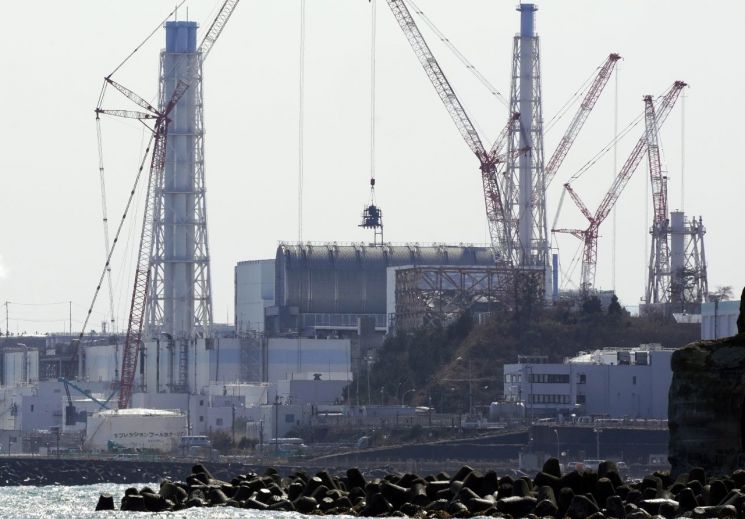
[Asia Economy Reporter Kwon Jae-hee] Japan has seen the first case of restarting an aging nuclear power plant that has been in operation for over 40 years.
Kansai Electric Power announced on the 23rd that it has begun restarting Mihama Nuclear Power Plant Unit 3, located in Fukui Prefecture, which has been in operation for more than 40 years.
Following the Fukushima Daiichi Nuclear Power Plant accident, Japan introduced the "Nuclear Reactor Regulation Act" in July 2013, which established the "40-year nuclear power plant rule," setting the operational period of nuclear reactors to 40 years in principle.
This rule allows for a one-time extension of up to 20 years beyond 40 years if the plant passes strengthened regulatory standards for natural disaster and accident countermeasures and obtains consent from the relevant local government.
The restart of a reactor over 40 years old in Japan is the first since this rule was introduced, with Mihama Nuclear Power Plant Unit 3 being the first case.
Mihama Unit 3, which began operation in March 1976, is a pressurized water reactor (PWR) with a rated output of 826,000 kW.
It was shut down following the Fukushima Daiichi Nuclear Power Plant explosion triggered by the Great East Japan Earthquake in March 2011, but passed safety standard reviews in 2016, extending its lifespan by 20 years until 2036.
Kansai Electric Power, the operator of this plant, obtained consent from the local government (Fukui Prefecture) in April this year, the last hurdle for restarting, and has been preparing for the restart.
On this day, Kansai Electric Power began reactor operation by withdrawing control rods that suppress the nuclear fission reaction, and after about a month of adjustment operation, commercial operation is scheduled to start on July 27.
However, the plant will have to halt operations again from October 23 because it will not meet the October 25 deadline for completing construction of anti-terrorism facilities mandated by new regulatory standards.
Kyodo News analyzed that although the restart of Mihama Unit 3 will be a short-term operation lasting four months, it signifies the beginning of the "60-year nuclear power plant operation era" in the year marking the 10th anniversary of the Fukushima Daiichi accident.
Before the Fukushima Daiichi accident, a total of 54 reactors were operating in Japan, but as of May this year, only nine reactors (across five nuclear power plants) have resumed operation after a complete shutdown following the accident.
According to the policy goal of Prime Minister Yoshihide Suga to realize a decarbonized society by 2050, the Japanese government plans to maintain a nuclear power generation ratio of around 20-22% as a power supply source.
Currently, nuclear power contributes about 6% of total power generation, so to meet this plan, at least 16 additional reactors need to be brought online.
Meanwhile, a postal opinion survey conducted by Kyodo News ahead of the 10th anniversary of the Great East Japan Earthquake this year, targeting 1,970 voters aged 18 and over nationwide, showed that 68% responded that nuclear power should be gradually reduced to zero.
Including those who said it should be immediately abolished (8%), a total of 76% of respondents expressed a desire for a nuclear phase-out policy.
© The Asia Business Daily(www.asiae.co.kr). All rights reserved.

















