Han Seokbong Signboard at Hanpungnu "One of the Few Two-Story Official Pavilions"
Hoeamsaji Fourth Treasure "Essence of Early Joseon Stone Art"
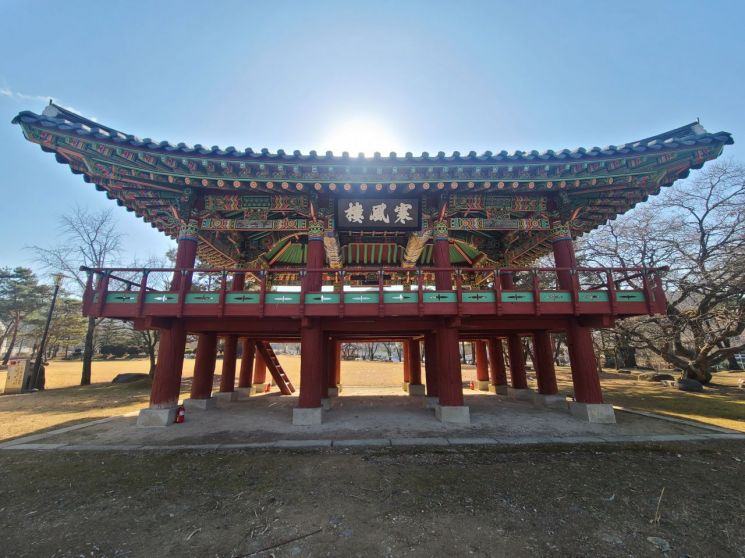
Jeonbuk Tangible Cultural Property 'Muju Hanpungnu (茂朱 寒風樓)' and Gyeonggi Tangible Cultural Property 'Yangju Hoeamsaji Saritap (揚州 檜岩寺址 舍利塔)' have been upgraded to Treasures. The Cultural Heritage Administration announced on the 22nd that the two cultural properties have been designated as national treasures. They plan to cooperate with local governments and others for systematic preservation and management.
Muju Hanpungnu is a government office building praised by Joseon scholar Baekho Imje (1549?1587) as the best among the three Han buildings in Honam (Muju Hanpungnu, Namwon Gwanghanru, Jeonju Hanbyeokru). It is a two-story pavilion with a hipped-and-gabled roof, three bays wide on the front and two bays deep on the side, rebuilt after being destroyed during the Imjin War. The name plaque is said to have been written by Han Seokbong. Numerous literati enjoyed poetry and painting here, allowing us to gauge the era and culture of the time. The exact date of construction is unknown, but based on poems written by scholars Seongim and Yusun who saw the building, and records such as the Sinjeung Dongguk Yeoji Seungnam, it is estimated to have existed since the early Joseon period.
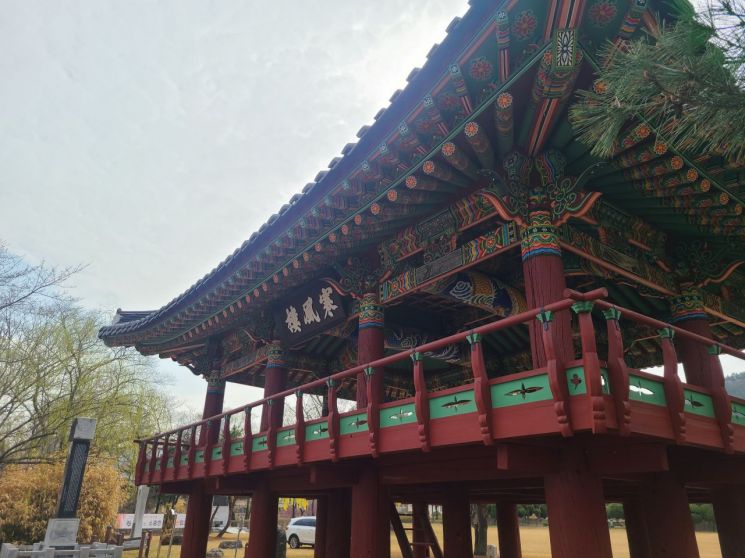
During the Japanese colonial period, Muju Hanpungnu was used as a Buddhist missionary hall and school before being sold to Japanese owners. After ownership returned to Koreans, it suffered the hardship of being relocated to Yeongdong, Chungbuk. In the 1960s, Muju residents initiated restoration efforts, and in 1971 it was moved to its current location. The building exhibits the Iikgong (二翼工) style. Features such as the flat pillars installed on the lower floor, the proportional and flowing techniques of the lower and upper pillars, the extensive use of jar-shaped bracket arms, and the eaves with strong rafters contribute to its structural stability and aesthetic value.
The Cultural Heritage Administration stated, "It is one of the few two-story government pavilions in Korea," and added, "The restoration carried out in the 16th to 17th centuries was authentic, and the pavilion embodies the sorrows and hopes of the people of Muju, giving it great historical, architectural, and academic value."
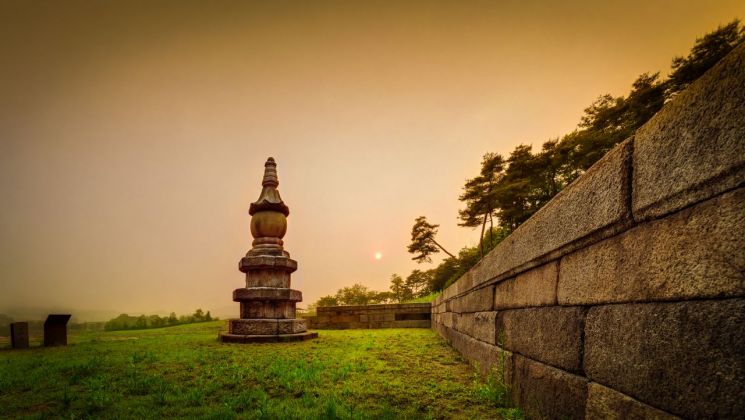
Following Seongakwangsa Monument, Muhak Daesa Pagoda, and the Twin Lion Stone Lantern in front of Muhak Daesa Pagoda, the Saritap at Yangju Hoeamsaji was designated as the fourth treasure. It was commissioned and built by the royal family in the early Joseon period. Well preserved, it retains royal Buddhist art elements such as architectural style, iconography, and decorative patterns. The basic structure consists of a multi-tiered pedestal built on an octagonal base, a cylindrical body, and a finial. The pedestal is constructed in two tiers atop an octagonal base stone (a stone placed on compacted ground). The pedestal stones are taller than those of other stone pagodas, and the capstones (flat stones placed like lids) are thickly finished. The Cultural Heritage Administration explained, "Among existing saritaps, this one has the tallest pedestal."
Each side of the pedestal is carved with various decorations, including dragons, qilins, plant and flower patterns, vine motifs, and the Eight Heavenly Guardians (Palbusinjo) who protect the Buddhist law. Decorations extend from the lower pedestal to the upper capstones. The body of the pagoda resembles another cylindrical saritap placed atop the pedestal. On the upper surface of the four-tiered pedestal, a low octagonal pedestal is placed, followed by the cylindrical body, roof stones, and the finial at the top.
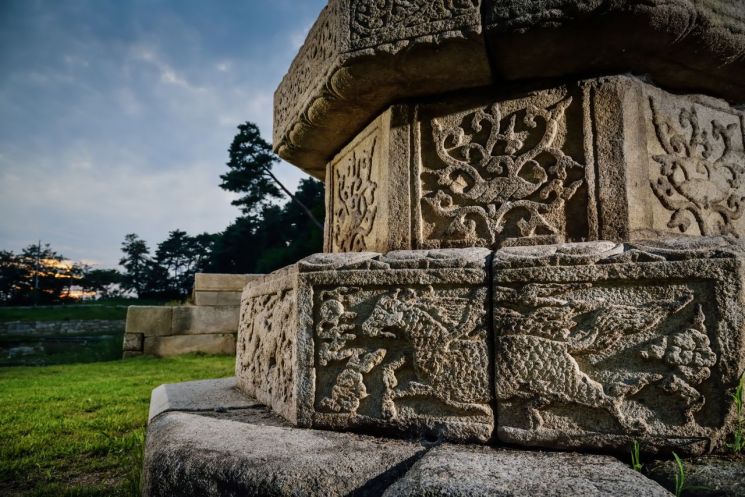
The Cultural Heritage Administration stated, "The overall style, construction techniques, and detailed patterns are similar to royal stone structures including early Joseon royal tombs," and added, "Judging by the scale of the saritap, the condition of the stone dressing, and the jointing techniques, it is presumed that the finest stonemasons of the time designed and constructed it." They also noted, "It is the epitome and representative work of early Joseon stone art, with great historical, academic, and artistic value."
© The Asia Business Daily(www.asiae.co.kr). All rights reserved.



















