[Asia Economy Reporter Seulgina Jo] “Securing future technology is a matter of survival. (Lee Jae-yong, Vice Chairman of Samsung Electronics)”
Following 5G mobile communications, Samsung Electronics and LG Electronics are accelerating their efforts to maintain technological leadership in 6G. Samsung Electronics, which announced its 6G white paper last year signaling its intention to lead the technology, will hold its first-ever Network Unpacked event on the 22nd. LG Electronics, which has withdrawn from the smartphone business, is also intensifying its efforts to establish 6G leadership by playing a key role in discussions on 6G advanced technologies and service directions alongside global companies such as Qualcomm. Theoretically, 6G is expected to be up to 50 times faster than 5G and is anticipated to be commercialized around 2028 to 2030.
◆Samsung’s First Network Unpacked... Expected to Showcase 6G Technology
Samsung Electronics will hold an online event titled ‘Samsung Network: Redefining Communication’ for about 30 minutes starting at 11 p.m. on the 22nd. This is the first online event hosted by Samsung Electronics’ Network Business Division.
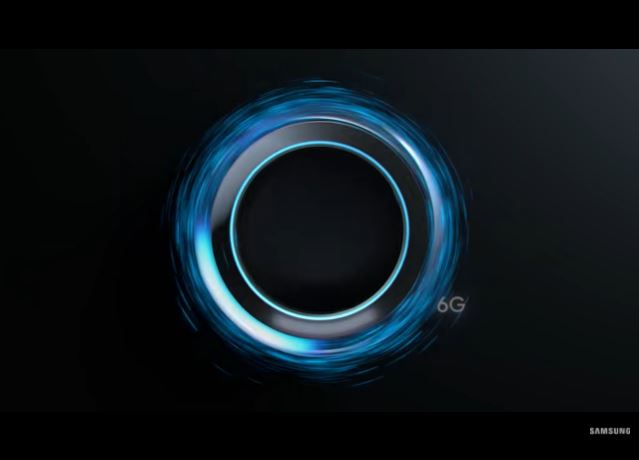
At this event, the latest 5G network technologies and products will be introduced, and updates on 6G technology development are expected. Previously, Samsung released a teaser video showing a dark screen with a rapidly rotating circular shape, illustrating the rapid evolution of networks from 2G to 6G. This is the first time Samsung is unveiling 6G technology in an Unpacked format.
Samsung Electronics established the Next Generation Communication Research Center under Samsung Research in May 2019, the first year of 5G commercialization, and has been conducting advanced research on 6G technologies early on. Last year, it also released a 6G white paper titled ‘The Next Hyper-Connected Experience,’ presenting its vision. This move is about 10 years ahead of the expected commercialization timeline for 6G.
Samsung Electronics is also the first among major global telecom operators such as Huawei, Nokia, and Ericsson to publish a 6G white paper. This is interpreted as a declaration of a ‘super-gap’ to lead the technologies required in the 6G era. This aligns with Vice Chairman Lee Jae-yong’s visit to the field early in the Year of the Ox, emphasizing that “securing future technology is a matter of survival.”
The theoretical communication speed of 6G is 1000 Gbps per second. Considering that 5G’s maximum data transmission speed is 20 Gbps, 6G is theoretically 50 times faster. Latency can be reduced to 100 microseconds (μs, one ten-thousandth of a second). It offers real-time performance that is ten times faster than 5G, which already boasts ultra-low latency. Downloading a 4K movie like ‘Avatar’ takes only 0.16 seconds. Underwater communication, which was impossible with 5G, is also reportedly feasible.
Recently, Samsung Electronics succeeded in demonstrating a 6G terahertz (THz) band communication system in collaboration with the University of California, Santa Barbara (UCSB). The terahertz band refers to frequencies between 100 GHz and 10 THz. Generally, higher frequency bands allow for wider communication bandwidths, making them suitable for the ultra-high-speed communication required by 6G. Choi Sung-hyun, head of Samsung Research’s Next Generation Communication Research Center, described the demonstration as “an important milestone showing the feasibility of commercialization by utilizing a key frequency band for 6G.”
It is not only Samsung Electronics. LG Electronics, which is withdrawing from the smartphone business by the end of July, continues to develop 6G technology and conduct standardization research. LG Electronics was recently selected as the chair company of the ‘Next G Alliance’ organized by the Alliance for Telecommunications Industry Solutions (ATIS) in the United States. The Next G Alliance was established by ATIS at the end of last year to secure leadership in 6G technology, with 48 global companies participating, including Verizon, AT&T, Qualcomm, Nokia, and Samsung Electronics.
As the chair company of the Applications Working Group, LG Electronics will be responsible for discovering 6G use cases and establishing related technical requirements. Among the six working group chairs, LG Electronics is the only Asian company. This gives LG a key role in future discussions on advanced 6G technologies and service directions. LG Electronics explained that this reflects its excellent communication technology, ranking first globally in 4G standard patents and third in 5G. Kim Byung-hoon, head of LG Electronics’ Future Technology Center, stated, “We will secure global leadership in 6G standardization and commercialization stages.”
◆"Implementing Future Technology in Everyday Life... 6G Has Rich Potential"
Even in South Korea, the first country to commercialize 5G, complaints continue that 5G services are not properly implemented. The fact that major domestic companies are investing in 6G indicates the great potential of 6G. It is evaluated that the economic effects generated through 6G implementation in everyday life will be virtually limitless, not limited to communication purposes.
The telecommunications industry expects that once 6G technology is realized, the era of extended reality (XR) using three-dimensional holograms will become commonplace, surpassing virtual reality (VR) and augmented reality (AR). Samsung Electronics also forecasts that with the arrival of the 6G era, services such as ▲ Truly Immersive Extended Reality (XR), ▲ High-Fidelity Mobile Holograms, and ▲ Digital Replicas will emerge.
Examples include hologram conference tables as seen in the movie ‘Kingsman’ and designing products in midair like in ‘Iron Man,’ turning imagination into reality. Virtual medical services will be provided in spaces similar to real environments, and fully autonomous driving services for millions of vehicles in large cities are expected to become possible. An industry insider noted, “The competition for leadership is taking place among global companies as 6G can be applied to broader industries beyond fully autonomous driving and the Internet of Things (IoT), extending to the Internet of Everything, surpassing 5G.”
Not only Samsung Electronics and LG Electronics but also global conglomerates and governments worldwide are fiercely competing to secure 6G technology leadership. China, which lost the world’s first 5G commercialization to South Korea, has been developing 6G technology under government leadership since 2018. Huawei, the world’s largest telecommunications equipment manufacturer, views 6G as an extension of 5G and is conducting research on both simultaneously. The 6G technology race clearly reflects the ongoing US-China technology hegemony conflict. Besides its own large-scale investments, the United States recently included 6G investment as an agenda item in the US-Japan summit and the US-South Korea summit, signaling efforts to counter China.
For South Korea, following the world’s first 5G commercialization achievement in April 2019 with SK Telecom, KT, and LG Uplus, it is necessary to continue global leadership in the next-generation mobile communication, 6G. Communication infrastructure typically changes generations every 10 years. Japan opened the 3G era in 2001, Europe launched 4G in 2009, and South Korea commercialized 5G last year.
Accordingly, the South Korean government has decided to focus on developing technologies that are difficult for the private sector to invest in actively, such as low-earth orbit satellite communication technology, ahead of the 6G era. Recently, the Ministry of Science and ICT announced a development strategy aiming to become a strong nation in satellite communication technology for the 6G era, which includes launching 14 low-earth orbit communication satellites by 2031. In the 6G era, low-earth orbit satellites are expected to replace ground base stations, making satellite technology crucial. However, South Korea lacks related experience and faces a significant technology gap with leading countries. Minister Lim Hye-sook of the Ministry of Science and ICT emphasized, “Utilizing satellite communication is essential for 6G services.”
© The Asia Business Daily(www.asiae.co.kr). All rights reserved.
![Clutching a Stolen Dior Bag, Saying "I Hate Being Poor but Real"... The Grotesque Con of a "Human Knockoff" [Slate]](https://cwcontent.asiae.co.kr/asiaresize/183/2026021902243444107_1771435474.jpg)
















