Bus and taxi commercial mileage is long, resulting in high emissions... Replacing with eco-friendly vehicles is over 7 times more effective than regular cars
Seoul City enhances logistics and air quality policy effectiveness by integrating public and private big data
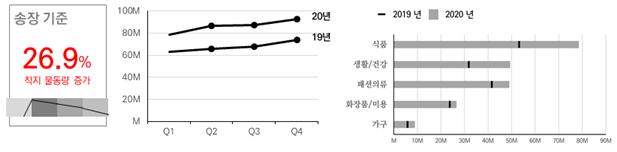
[Asia Economy Reporter Lim Cheol-young] Last year, the volume of online parcel deliveries in Seoul increased by 27% compared to the previous year. While the delivery volume for food, daily necessities & health products, and fashion apparel increased, the parcel volume for maternity and childcare products was the only category to decrease compared to the previous year.
On the 21st, Seoul City analyzed parcel volume data from CJ Logistics and financial data from Shinhan Bank to assess Seoul's parcel delivery volume. The analysis showed that last year, Seoul's online parcel delivery volume increased by 26.9% compared to the previous year. The daily necessities & health sector, including hand sanitizers and masks, showed the highest growth rate at 52%. Food (46%) and furniture & interior (39%) followed. Researchers at the Urban Science Big Data & AI Research Institute of the University of Seoul analyzed that the decrease in Seoul's birth rate from 0.72 in 2019 to 0.64 in 2020, a 10.5% decline, had an impact.
Looking at monthly trends, during the mask shortage in February-March and the second wave in July-August last year, the volume of 'health products' such as masks and hand sanitizers increased significantly. The implementation of social distancing policies (in March, August, and December) also led to an increase in the volume of DIY materials and supplies.
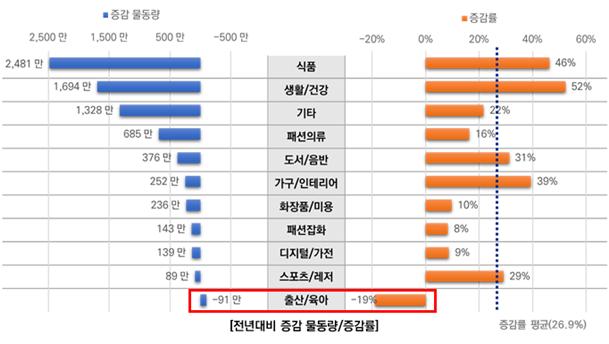
By region, the proportion of parcel delivery volume in the digital & electronics sector ranked Yongsan-gu > Geumcheon-gu > Yeongdeungpo-gu, while in the books & music sector, it ranked Seocho-gu > Yangcheon-gu > Gangnam-gu. Seoul City plans to use regional parcel product data to understand local logistics demand and apply it to urban logistics policies. Additionally, this data will be made available to citizens through the Big Data Campus.
Furthermore, Seoul City analyzed vehicle emissions. The focus was on understanding emissions from commercial vehicles, which have 2 to 3 times longer driving distances than regular vehicles, and developing a subsidy model for eco-friendly vehicles accordingly.
Analysis of cumulative mileage from vehicle inspection data of Seoul-registered vehicles (1,999,357 cases from 2019 to 2020) by the Korea Transportation Safety Authority showed that regular vehicles average about 100,000 km, while commercial vehicles average between 210,000 and 320,000 km, indicating that commercial vehicles have approximately 2 to 3 times longer cumulative mileage than regular vehicles.
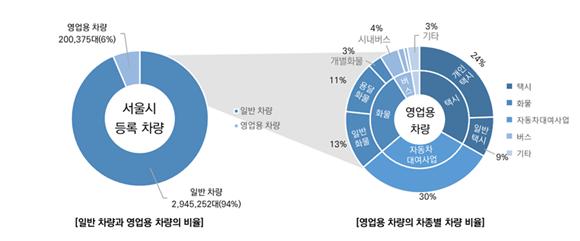
Taxis have an average daily driving distance more than 8 times longer than regular vehicles and emit about 7 times more daily emissions. Researchers at the Urban Science Big Data & AI Research Institute of the University of Seoul analyzed that prioritizing commercial vehicles when switching to eco-friendly vehicles is effective in reducing emissions. The daily emissions from taxis were approximately 576.5g, which is 7 times higher than those of regular vehicles.
The University of Seoul research team analyzed cases to maximize emission reduction effects when switching to eco-friendly vehicles and developed a subsidy model for eco-friendly vehicles for city buses and taxis. By analyzing vehicle type, fuel, model year, and mileage, they derived a priority list of vehicles with the greatest emission reduction effects.
The top priority for eco-friendly vehicle conversion was identified as CNG buses manufactured before 2015. Replacing one bus with an eco-friendly vehicle is expected to reduce CO (carbon monoxide) emissions by 8 times and HC (hydrocarbons) by 459 times compared to regular vehicles. Pre-2015 CNG buses emitted large amounts of emissions due to their heavy weight, large engine displacement, and high mileage. Also included in the top priority for eco-friendly conversion were LPG private taxis manufactured before 2013. Compared to replacing LPG regular vehicles of the same year, these taxis showed an emission reduction effect of 5 to 8 times.
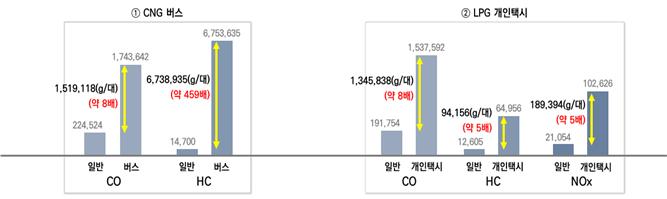
Seoul City plans to use these analysis results to promote electric vehicle distribution policies that consider emission reduction effects.
Lee Won-mok, Director of Seoul City's Smart City Policy Division, said, "The significance of this project lies in analyzing data on vehicle emissions and parcel delivery volumes, which were difficult to grasp using only Seoul City's own data, through collaboration with public institutions and private companies to improve policies and provide data to citizens." He added, "We will continue to support the implementation of scientific and rational policies based on data and enable citizens to utilize high-quality data, which is otherwise difficult to access, through the Big Data Campus."
© The Asia Business Daily(www.asiae.co.kr). All rights reserved.



















