Citizens Outraged as Juvenile Offenders Evade Justice Despite Brutal Crimes
Some Use 'Chokbeopsonyeon Law' as Shield to Commit Crimes
Calls Grow to Abolish Chokbeopsonyeon Law
Experts Say Abolishing Law Contradicts Child Protection Purpose... Lowering Age Limit More Realistic
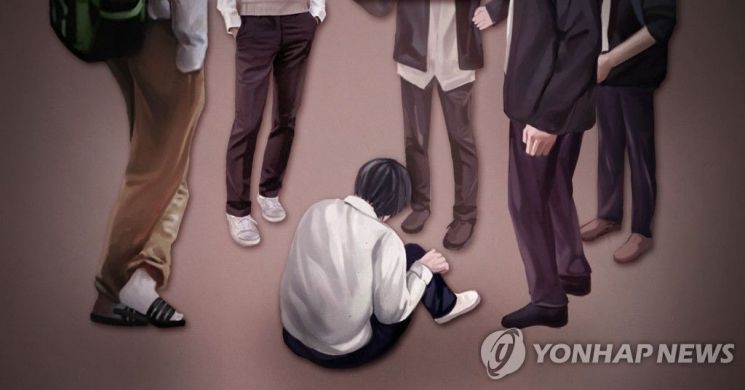
[Asia Economy Reporter Park Hyun-joo] "I'm a chokbeopsonyeon, so why do I have to go to a juvenile detention center?"
There are cases where minors who have committed brutal crimes evade the law because they are classified as chokbeopsonyeon (criminal minors), causing public outrage. As a result, public opinion is gaining momentum to abolish or revise this law altogether. Experts emphasize that a realistic response is to lower the age of chokbeopsonyeon.
Chokbeopsonyeon refers to youths aged 10 years and older but under 14 years old. Even if they commit illegal acts, they are considered to lack criminal responsibility and thus are not subject to criminal punishment. The rationale is that younger youths should be prioritized for rehabilitation rather than punishment.
However, youth crimes have been increasingly brutal. According to crime analysis statistics from the Supreme Prosecutors' Office, the proportion of violent crimes among juvenile crimes increased from 28.9% in 2009 to 33.6% in 2019. In particular, sexual violence crimes committed by minors more than doubled from 1,574 cases in 2009 to 3,180 cases in 2019. Assault crimes also rose by 66.1%, and threats increased by a staggering 13.5 times.
Meanwhile, a recent case occurred where a minor received impunity simply because they were classified as chokbeopsonyeon despite committing crimes comparable to adults. Last month in Pohang, Gyeongbuk, a group assault and sexual assault against a female middle school student happened after she refused a transactional meeting and reported it to the police. This case became known after the victim's side posted on the Blue House National Petition Board on the 17th.
According to the petitioner, several perpetrators surrounded the victim and repeatedly assaulted her indiscriminately, then sexually assaulted her while she was unconscious. They even recorded the scene on video and distributed it to peers. When the police searched the area following a student's report, the perpetrators fled, saying, "If we get caught now, we might go to a juvenile detention center, so we need to keep her until the swelling on her face goes down."
The petitioner expressed outrage, saying some of the perpetrators might avoid criminal punishment because they are chokbeopsonyeon who have not yet had their birthdays. "Is the current system for punishing chokbeopsonyeon and minors really adequate to protect our society and era?"
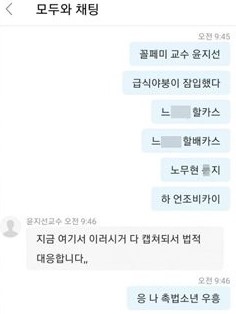 On March 22, an unauthorized outsider accessed an online video lecture by Yoon Ji-seon, a philosophy professor at Sejong University, and posted obscene content and profanity. Photo by Online Community Capture.
On the other hand, some youths use the chokbeopsonyeon system as a shield to commit crimes. They believe they will not face criminal punishment because they are chokbeopsonyeon.
In March, A, who illegally accessed an online video lecture by Professor Yoon Ji-seon of Sejong University’s Philosophy Department and spread obscene materials and insults, was found to be a chokbeopsonyeon. When Professor Yoon threatened legal action, A retorted, "Yeah, I'm a chokbeopsonyeon," and mocked her with terms like "disgusting feminist professor."
On the 7th, B (13), who was caught driving a stolen vehicle, confidently complied with the police's request for voluntary accompaniment. Despite committing vehicle theft and driving without a license, B relied on being a chokbeopsonyeon to avoid punishment. B showed a defiant attitude throughout the investigation but was released after questioning.
Citizens are outraged by repeated heinous youth crimes and are voicing opinions to abolish the chokbeopsonyeon law. They argue that the current law is ineffective in crime prevention and that juvenile offenders should receive appropriate criminal punishment according to the severity of their crimes.
Kim, a company employee in his 30s, said, "I recently saw news about crimes committed by youths," and pointed out, "They are just like adult criminals." He added, "Appropriate measures that fit the times are definitely needed."
In response, efforts to revise the law are gaining traction. In April last year, the Ministry of Justice considered lowering the chokbeopsonyeon age from "10 years and older to under 14" to "10 years and older to under 13" to prevent school violence and strictly respond to violent crimes. The Ministry of Education also expressed willingness to cooperate with the Ministry of Justice's efforts to revise the law to strengthen education and guidance for offending students.
However, the National Human Rights Commission (NHRCK) criticized the Ministry of Justice's plan announcement, saying it is "not an effective alternative for preventing juvenile crime." They pointed out that the crime rate among chokbeopsonyeon is not high, so changing the age would not be effective in crime prevention.
The NHRCK stated, "An analysis of juvenile crime statistics from the Supreme Prosecutors' Office from 2007 to 2016 showed that the proportion of juvenile offenders aged 16 to 18 remained steadily high at around 20%, but juvenile offenders under 14 (actual chokbeopsonyeon) have consistently been only about 0.1% since 2014."
Experts emphasize that adjusting the age of chokbeopsonyeon application is necessary to effectively respond to increasingly brutal youth crimes. Oh Yoon-sung, a professor of police administration at Soonchunhyang University, said, "Abolishing the Juvenile Act is difficult under the UN Convention on the Rights of the Child," adding, "Instead, lowering the chokbeopsonyeon age is a realistic alternative because there is a significant difference in criminal behavior between 13- and 14-year-olds."
Regarding strengthening penalties for chokbeopsonyeon, he expressed skepticism. Professor Oh said, "Lowering the chokbeopsonyeon age while also strengthening punishment contradicts the Juvenile Act's purpose of protecting children," emphasizing, "This is an area that requires more social discussion."
© The Asia Business Daily(www.asiae.co.kr). All rights reserved.

















