Weekly Apartment Price Increase Rate in the Seoul Metropolitan Area 0.34%
Highest Since May 2012 Statistics
Seoul's Reconstruction Expectations Grow, Highest in 1.5 Years
Gyeonggi Price Rise Expands Due to GTX New Line Benefit
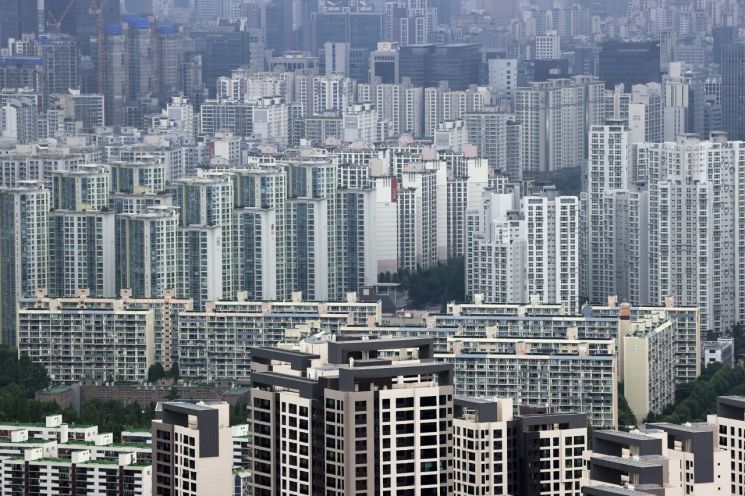
[Asia Economy Reporter Onyu Lim] The apartment price increase rate in the Seoul metropolitan area has reached an all-time high since statistics began in 2012. While the government's new housing site and urban housing supply projects are facing setbacks in various locations, in Seoul, the easing of reconstruction regulations and in Gyeonggi Province, the Seoul Metropolitan Area Express Train (GTX) are acting as catalysts for rising housing prices.
According to the weekly apartment trend report by the Korea Real Estate Board on the 18th, the apartment sales price increase rate in the Seoul metropolitan area for the second week of June was recorded at 0.34%, up 0.03 percentage points from the previous week. This is the highest figure since statistics began in May 2012 on a weekly basis.
In Seoul, prices rose by 0.12%, marking the highest increase in one year and six months since the third week of December 2019. Incheon and Gyeonggi also saw their weekly increases expand from 0.46% to 0.49% and from 0.39% to 0.43%, respectively, continuing their high-altitude rally.
The upward trend in housing prices in the metropolitan area had slowed down following the announcement of the 2·4 measures, which included plans for additional new towns, but recently it has recorded a sharp V-shaped rebound. The cancellation of the Gwacheon Government Complex supply plan due to resident opposition, along with setbacks in the supply of Taereung Golf Course and Yongsan Camp Kim, has instead heightened market expectations for rising housing prices.
Especially in Seoul, since the election of Mayor Oh Se-hoon, who promised to revitalize redevelopment projects, the rise has been steep, centered on reconstruction complexes. Although the government designated redevelopment and reconstruction promotion areas such as Apgujeong-dong, Mok-dong, Yeouido-dong, and Seongsu-dong as land transaction permission zones to strengthen regulations, this has instead stimulated housing prices in the outskirts. In fact, Nowon-gu, where mid-to-low priced reconstruction complexes are concentrated, rose by 0.25% in the second week of June, maintaining the highest increase rate in Seoul for 10 consecutive weeks.
A Korea Real Estate Board official said, "Overall, with a decrease in listings, the price increase in some areas and the impact of record-high transactions in reconstruction complexes have expanded the rise in apartment prices."
In Gyeonggi Province, the expansion of transportation networks due to the establishment of GTX is acting as a major positive factor, driving up housing prices. In Anyang Dongan-gu, where the GTX-C new station at Indeokwon Station has been virtually confirmed, the increase rate was 0.99%, the highest nationwide, approaching 1%. This area has recorded a cumulative increase rate of 15.72% this year alone.
© The Asia Business Daily(www.asiae.co.kr). All rights reserved.

















